Chemical spill response on ships is something I take seriously as a crew member with firsthand experience at sea.
The hazardous materials transported on ships keep modern trade moving, but any spill creates real risks for people, the vessel, and the environment. Over the years, I’ve learned that being prepared, understanding protocols, and using the right equipment are really important when dealing with these emergencies. I’ll walk you through the basics of chemical spill response protocols, cleanup techniques that work on a moving ship, essential gear, training programs, shipboard management tips, and answers to common questions crew often have about this demanding task.
Chemical Spill Response Protocols: What You Need to Know
Chemical spill response protocols are step by step actions I follow the moment a chemical leak, splash, or release occurs on board. These rules are designed to protect human health, limit vessel damage, and prevent any spread into the ocean.
Ships follow a set of international guidelines, often based on International Maritime Organization (IMO) rules like the International Safety Management (ISM) Code and the MARPOL Convention. Every vessel carries a Shipboard Marine Pollution Emergency Plan (SMPEP) for bulk liquid chemicals, which lists what to do for each substance on board. These plans use clear language and apply to tankers, chemical carriers, and even general cargo vessels carrying packaged chemicals.
- Immediate Notification: The first thing I do is alert the bridge and chief officer. Fast communication with the ship’s command team and any relevant authorities is super important.
- Personal Protection: I always put on the proper personal protective equipment (PPE) before approaching a spill. This might include chemical suits, gloves, boots, and sometimes respirators.
- Spill Containment: Stopping the chemical from spreading is often the top priority. I use barriers or absorbent pads from the ship’s spill kit.
- Assessment: Identifying the exact chemical helps me pick the safest cleanup method. MSDS (Material Safety Data Sheets) and cargo manifests provide all the key details.
- Reporting: Once contained, I make sure to record details for the ship’s log and, when regulations require, notify shoreside authorities.
Having clear chemical spill response protocols means nobody is left guessing about what to do if something leaks or breaks at sea. Regularly reviewing these protocols helps ensure everyone is ready for emergencies and can act swiftly without confusion.
Essential Chemical Spill Cleanup Techniques on Ships
Cleanup techniques on ships are different from those on land. The tilting of the deck, limited space, and risk of chemical vapors spreading through ventilation all change how I tackle a spill. Here are cleanup techniques that I’ve used successfully during on board emergencies:
- Use of Absorbents: Absorbent mats, pads, and pillows are my go-to tools for small and moderate spills. They soak up liquid and work on both water and oil based chemicals. I’ve made it a point to keep sufficient stock on hand, as spill size isn’t predictable.
- Neutralization: Some spills require neutralizing agents. For example, I’ve used weak acids to neutralize bases and vice versa. It’s really important to know which agents work safely with each chemical.
- Diking and Berming: Portable dikes and spill berms help me contain liquid spills so they don’t flow into drains or overboard. On deck, I sometimes use sandbags or inflatable barriers.
- Ventilation Control: For volatile chemicals, I shut off the ship’s HVAC systems in nearby compartments to keep vapors from spreading to crew quarters or engine rooms.
- Manual Collection: When safe, I use pumps, scoops, or non-sparking tools to move pooled chemicals into sealable waste containers.
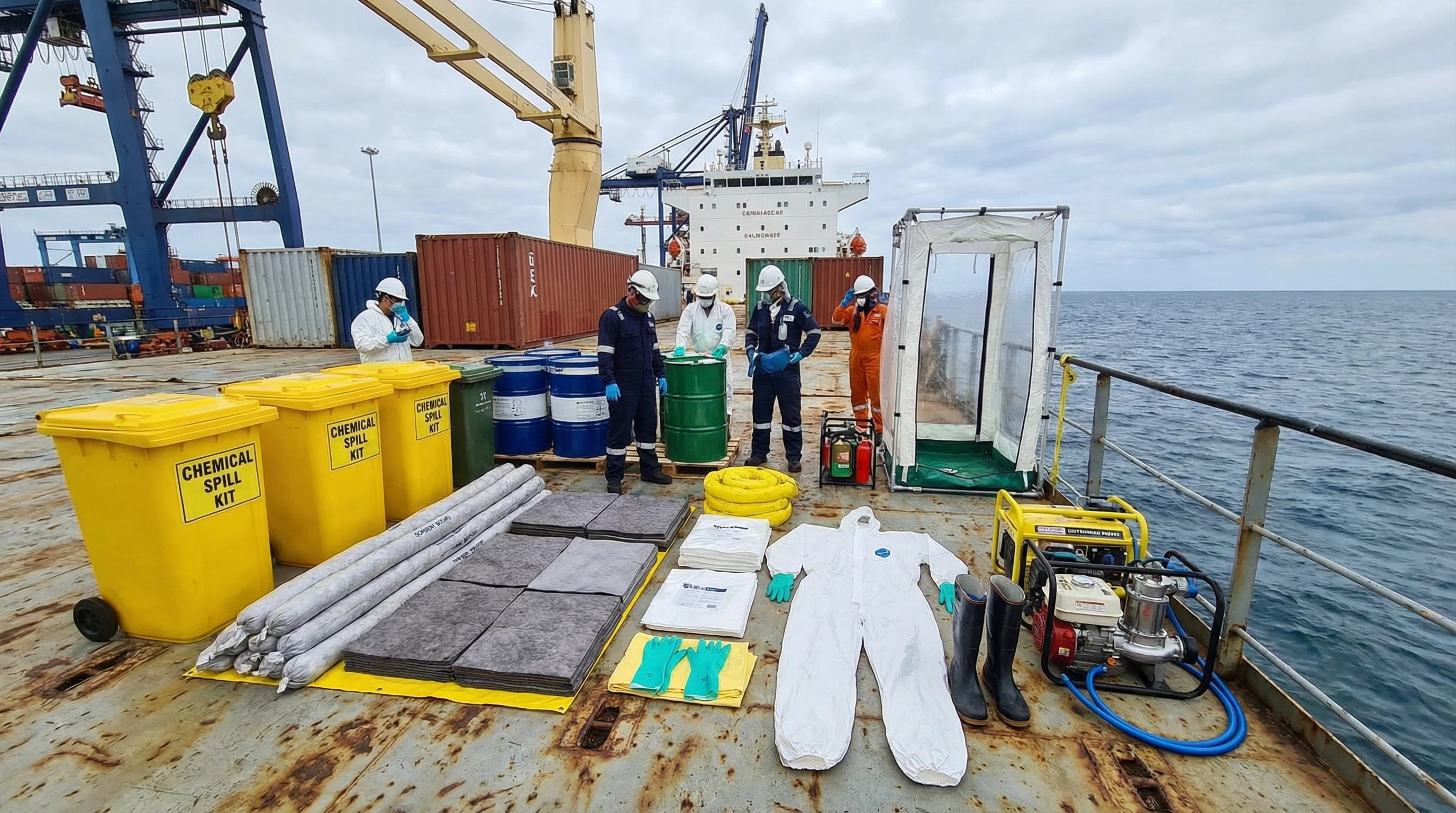
- Decontamination: I always set up a decontamination station for crew and tools used during cleanup, even for minor spills.
Proper chemical spill cleanup techniques keep the ship safe and the cleanup team out of harm’s way. Training and practice mean these steps become second nature, even during stressful situations. It pays to run simulated emergencies where crew jump into these actions to further strengthen response times.
Best Equipment for Chemical Spill Response at Sea
Having the best equipment for chemical spill response is something I never cut corners on. A well stocked spill kit can make the difference between a minor incident and a huge problem. Here’s the gear I rely on most and how each item plays a role in shipboard spill management:
- Spill Kits: Commercial spill kits include absorbent pads, pillows, socks, chemical neutralizers, and disposable bags. They’re labeled for different types of chemicals: oil only, universal, and hazmat (for strong acids and bases).
- Personal Protective Equipment (PPE): Suits, goggles, gloves, and boots must be resistant to the chemicals stored on the vessel. For strong fumes, I use a respirator or portable air supplied masks.
- Drain Covers and Barrier Tools: Reusable drainage covers stop liquid from escaping into the environment. Inflatable barriers and polyurethane mats are important for blocking scuppers or deck drains in emergencies.
- Chemical Transfer Pumps: Electric or manual pumps allow for safe transfer of hazardous liquids from damaged containers to secure tanks or drums.
- Decontamination Sprayers and Showers: Portable eyewash stations and emergency showers help treat exposure quickly and are required by law in many countries.
- Sorbent Booms: When there’s a risk of a spill going overboard, I deploy floating booms to contain any chemicals on the water’s surface before they disperse.
For specific product recommendations, organizations like the International Maritime Organization and national coast guards provide lists of approved and recommended brands. I always review these before restocking onboard supplies. Timely restocking can mean the difference between a quick response and scrambling during an emergency.
Chemical Spill Response Training Programs for Crew
Chemical spill response training programs have shaped how I respond in real emergencies. Good training ensures everyone knows what to do, even if it’s their first time dealing with a spill. Training starts at safety orientation and continues with regular drills.
- Basic Safety Training: Covers chemical hazards, PPE use, and first aid for chemical exposure. This is usually included in the STCW (Standards of Training, Certification, and Watchkeeping for Seafarers) courses all crew take.
- Shipboard Spill Response Drills: These drills are run quarterly or after new chemicals are loaded. I practice using spill kits, raising the alarm, and following SMPEP procedures.
- Tabletop Exercises: Run through maps, response checklists, and emergency scenarios with the whole team. Tabletop exercises are helpful for thinking through complex spills without the pressure of real danger.
- Advanced Chemical Handling Courses: For deck officers and engineering staff, I’ve taken extra training on hazardous cargo handling and firefighting techniques specific to chemical carriers.
For example, the IMO’s Model Course 1.19 (Proficiency in Personal Survival Techniques) and 1.21 (Fire Prevention and Fire Fighting) include some components related to chemical response. Specialist training programs from the Chemical Distribution Institute (CDI) and industry consultancies can really give a boost to confidence and readiness. I recommend checking out online refresher modules and local company updates to keep procedures fresh in your mind. Training should also include how to spot fake alarms and practice distinguishing real emergencies from false positives.
Chemical Spill Management on Ships: What Works in Practice
Chemical spill management on ships combines written protocols, crew experience, and good engineering. Sometimes reality at sea looks different from what’s written down, so I rely on practical tips and lessons from past incidents.
- Regular Inventory Checks: It’s common for containers to move or leak during heavy seas. I check chemical storage areas before and after rough weather to catch issues early on.
- Accessible Spill Kits: Storing spill kits in easy to reach and clearly marked locations means less time wasted in an emergency. I make a point to review their location with every new crew member. This helps new recruits be ready without confusion.
- Separate Incompatibles: Chemicals that react dangerously together must be separated. For example, acids and oxidizers are never stored side by side. I double-check SDS sheets when stowing new cargo.
- Regular Emergency Drills: Practicing the steps in real conditions, sometimes in darkness or with water spraying, helps prepare for worst-case scenarios.
- Open Communication: I make it clear that anyone, even the most junior deckhand, is encouraged to report concerns about leaks, odors, or damaged drums. Early action helps avoid bigger problems, and crew should never hesitate to speak up.
From cargo ships to chemical tankers, effective chemical spill management depends on a mix of good habits, attention to detail, and constant learning. Having a feedback culture for near misses ensures each incident helps grow the crew’s skills.
How to Handle Chemical Spill on Ships: A Personal Checklist
Over the years, I’ve built up a simple chemical spill response checklist for ships that I follow every time. This set of steps keeps the response organized and reduces stress during real emergencies.
- Alert the bridge or team leader right away. Don’t try to hide or handle a spill solo.
- Pull on the correct personal protective equipment for the chemical involved.
- Stop the source if it’s safe to do so. Upright knocked containers or close valves.
- Contain the spill using absorbent barriers or socks.
- Block or close nearby drains and scuppers as quickly as possible.
- Use absorbents or neutralizers to soak up or treat the spilled chemical.
- Bag and label all waste for shoreside disposal, following any local regulations.
- Decontaminate tools, suits, and hands immediately after cleanup.
- Record every action and observation in the ship’s logbook and official forms.
This practical checklist covers the basics for most chemical spill incidents at sea. Reviewing it often and practicing during drills keeps the process clear, even when tempers or anxiety run high. Having a checklist printed out on the chemical storage room wall also ensures quick reference during a real emergency.
Challenges and Solutions in Chemical Spill Response on Ships
I’ve faced some real challenges unique to chemical spill response at sea. Here’s what makes shipboard response tough, plus my tips for dealing with each problem:
- Moving Decks: Trying to contain a spill on a tilting or rolling ship is never easy. I use extra absorbents and portable dikes to fight the movement. Choosing cleanup products that stick to the deck helps keep everything in place and prevents dangerous sliding.
- Limited Space: Crew accommodation is tight, and storage space for response gear is limited. I keep spill kits small but complete, focusing on multipurpose absorbents and portable equipment that can be tucked away efficiently.
- Delayed External Help: Being far from shore means outside help could be hours or days away. Self-sufficiency is key, so I check gear, chemicals, and PPE stock every week and update the inventory after every drill or incident. Crew should also be aware that communication with shore-based support may be delayed during rough weather.
- Chemical Compatibility: Some chemicals react violently when mixed, even during cleanup, so knowing the materials on board is really important. I rely on regularly updated cargo manifests and SDS records, checking them before starting any response.
- Crew Training Turnover: With people joining and leaving at ports, regular onboarding and refresher training keeps everyone at the same high standard, which avoids confusion.
Solving these challenges means being prepared at all times and taking feedback from every near-miss or incident to improve protocols and training. Sharing knowledge between ships is also useful, ensuring that each ship benefits from hard-won lessons and tips from others in the fleet.
Frequently Asked Questions about Chemical Spill Response on Ships
Based on what I’m asked most often during drills and handovers, here are some practical answers to common questions about chemical spill response on ships:
What’s the first thing I should do after spotting a spill?
Alert the bridge or authorized officer right away. Quick reporting helps get the right response in motion and prevents a small problem from becoming a big one.
How do I know which protective gear to use?
Check the chemical’s Safety Data Sheet (SDS) stored with the cargo manifest or in the wheelhouse. The SDS has clear PPE recommendations for every hazardous substance the ship carries.
What’s the main difference between responding to a spill on land versus at sea?
The ship’s movement, limited help, and close quarters make containment and cleanup much more demanding at sea. Response teams need to work quickly, as chemicals can spread through drains or evaporate into ventilation very fast.
Can chemicals go overboard during a spill?
This can happen if scuppers or overboard drains aren’t closed quickly. That’s why blocking drains is a top priority during any spill response to prevent marine pollution.
What qualifies as a “major” chemical spill on a ship?
This is defined in the vessel’s emergency plan (SMPEP). Usually, if the volume could threaten people’s safety, the vessel’s seaworthiness, or the environment, it’s considered major and needs to be reported to shore authorities.
Best Practices for Ongoing Chemical Spill Management on Ships
Lasting chemical spill management on ships comes down to planning and clear habits. Some of my best advice comes from working with top crews and learning through drills and real emergencies:
- Review and update your ship’s chemical inventory after each loading or discharge operation.
- Inspect PPE, spill kits, and emergency barriers as part of your weekly checks. Replace what’s used or out of date to avoid last-minute surprises.
- Encourage crew to speak up about unsafe storage or container problems right away.
- Keep chemical storage areas tidy and well marked, with labels facing out for fast identification.
- Hold regular “what if?” training sessions and assign clear roles ahead of time so everyone feels ready to act in an emergency.
- Maintain open lines of communication with shoreside managers to keep up to date with new safety advice or changes in regulation regarding chemical spills.
Consistently applying these steps ensures that chemical spill management becomes part of the ship’s routine and creates a culture of safety for everyone on board. Crew members who get involved in regular safety meetings tend to pick up best practices faster and spot problems before they escalate. Keeping spill response top-of-mind is the best safeguard against the unexpected.