
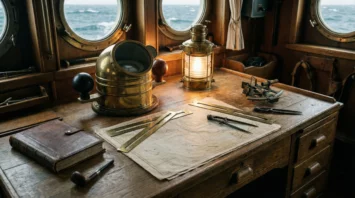
Dead reckoning is one of the oldest navigation methods used even today. Whether I want to find my way at sea, in the air, or on land without GPS, understanding dead reckoning techniques helps me estim...

Celestial navigation has stood at the heart of long sea voyages for centuries. Even with all the digital gadgets and electronic aids I use today, learning these classic skills turns me into a more con...



4 responses to “Mastering Celestial Navigation For Seafarers”
Thanks for sharing an informative article.
Celestial navigation is still valuable for seafarers because it provides a reliable backup when electronics fail and deepens awareness of position, time, and the natural environment. Using a sextant, almanac, and simple math strengthens confidence and seamanship, while connecting sailors to the long tradition of navigating by the sun and stars.
Keep up the good work!
Looking forward to your more posts.
Thank you so much for your thoughtful comment! I’m really glad you found the article informative.
You’re absolutely right—celestial navigation remains an invaluable skill, not just as a backup when electronics fail but also as a way to deepen a sailor’s connection to the sea, time, and nature. There’s something timeless and empowering about using a sextant and the stars, and it’s great to see others who appreciate that tradition.
I truly appreciate your encouragement.
More posts are on the way—stay tuned!
Excellent primer. What made celestial navigation click for me was treating it like a redundancy drill, not a museum skill. I log a weekly “no-GPS” hour, shoot a noon sight for latitude, and run a three-body fix at twilight. Biggest gains came from tight basics: honest index-error checks, careful dip correction, disciplined timekeeping, and writing every step in the sight workbook before touching a calculator. Practising on a lumpy sea taught me to average multiple sights and note heave; a cheap artificial horizon let me keep the muscle memory alive in port.
I pair HO 249 with a simple spreadsheet for sight reduction, but I always keep paper tables and a backup time source in the nav bag. Over time, the routine turned fixes from guessy to trustworthy—and made me calmer when the plotter misbehaves.
Marios
Marios, this is fantastic insight — thanks for sharing it. I really like the way you frame celestial nav as a practical redundancy routine rather than a historical curiosity. Your “no-GPS hour” is a great habit, and the emphasis on disciplined fundamentals—index error checks, dip, clean timekeeping, and step-by-step workbook entries—mirrors exactly what builds real confidence.
Your point about practising on a moving deck is spot-on too. Averaging sights and being honest about heave are the kinds of details that separate a rough fix from a dependable one. And keeping both HO 249 and a lightweight digital workflow in parallel is a smart balance between efficiency and resilience.
It’s encouraging to hear how your consistency turned celestial fixes into something calm and trustworthy. That’s the mindset I think more modern navigators would benefit from adopting.