For centuries, the conversation around life at sea has revolved around navigation, cargo, weather, and machinery. Health and wellness, when it came up at all, was treated as a secondary concern, something handled by a ship’s medical chest and a bit of common sense. Today, that view is rapidly changing. As the shipping industry grapples with longer contracts, leaner crews, isolation from family, and increasingly complex vessels, health and wellness at sea has moved from an afterthought to a core operational priority. It is no longer just a matter of compassion; it is a matter of safety, retention, and performance.
This shift didn’t happen overnight. It has been driven by mounting evidence that physical and mental health problems among seafarers are widespread, often under-reported, and directly linked to incidents, near-misses, and crew turnover. Shipowners, training institutions, and regulatory bodies, including the IMO and ILO, have responded with frameworks like the Maritime Labor Convention (MLC 2006), which sets minimum requirements for working hours, rest periods, accommodation, food, and access to medical care on board. But regulation only goes so far. Real wellness at sea requires a cultural shift — one where physical fitness, mental resilience, nutrition, sleep, and social connection are treated as essential components of a safe and functional ship, not luxuries reserved for life on land.
The Unique Health Challenges of Life Aboard
Seafaring is unlike almost any other profession in the health risks it poses. Crew members live and work in the same confined environment for months at a time, often far from medical facilities, family support, and the everyday rhythms that anchor most people’s physical and emotional well-being.
Physically, the job takes a toll that’s easy to underestimate from shore. Long periods of standing watch, repetitive manual tasks, exposure to noise, vibration, and fluctuating temperatures, combined with limited opportunities for structured exercise, can lead to musculoskeletal problems, fatigue, and weight gain over time. Diets on board, while improving thanks to better galley training and supply chains, can still skew toward processed and high-sodium foods, particularly on longer voyages where fresh produce becomes scarce. Sleep is another major casualty: irregular watch schedules, engine noise, and the stress of operational demands frequently disrupt the consistent, restorative sleep the body needs to recover and function safely.
Mental health challenges are equally significant, and arguably less visible. Isolation from family, limited internet connectivity in some regions, repetitive daily routines, and the psychological weight of being responsible for expensive cargo and crew safety can create chronic stress. Add to this the reality of confined living quarters with the same small group of colleagues for months on end, and it’s easy to see how interpersonal friction, homesickness, and even depression can develop quietly before anyone notices. Studies and surveys conducted by maritime welfare organizations have consistently found elevated rates of stress, anxiety, and loneliness among seafarers compared to many shore-based occupations, with mental health concerns now recognized as one of the leading non-physical risks to crew wellbeing and vessel safety.
Why Wellness at Sea Is a Safety Issue, Not Just a Welfare Issue
It’s tempting to frame health and wellness purely as a quality-of-life topic — something nice to have, but separate from the hard mechanics of safe vessel operation. That framing doesn’t hold up under scrutiny. Fatigue, stress, and poor physical health are consistently identified as contributing factors in maritime incidents, from navigational errors to equipment mishandling. A tired or anxious crew member is one whose judgment, reaction time, and situational awareness are compromised, regardless of how skilled or experienced they are.
This is precisely why frameworks like behavior-based safety and the broader safety culture movement in shipping increasingly treat wellness as inseparable from operational risk management. A vessel whose crew members are well-rested, properly nourished, physically active, and mentally supported is, by extension, safer to operate. This is also why fatigue management has become such a heavily scrutinized area under STCW and company-level safety management systems — not because regulators suddenly developed an interest in seafarer comfort, but because the data made the connection to safety impossible to ignore.
The Multicultural Dimension of Wellbeing
Modern merchant vessels are often staffed by multinational crews, bringing together officers and ratings from dramatically different cultural, linguistic, and social backgrounds. While this diversity brings real strengths, varied perspectives, complementary skills, and broader professional networks- it also adds another layer to the wellness conversation. Cultural attitudes toward expressing stress, asking for help, discussing mental health, or even what counts as “rest” can vary significantly from one nationality to another.
A crew member from a culture where stoicism is highly valued may be far less likely to report fatigue or anxiety than one from a culture where open communication is the norm, even if both are experiencing the same level of strain. Frameworks like Hofstede’s cultural dimensions have been increasingly applied in maritime training to help officers and crew managers recognize these differences and build wellness practices that genuinely work across a multicultural team, rather than approaches designed with a single cultural lens in mind. Effective wellness programs at sea, in other words, need to be culturally intelligent as well as medically sound.
Building Wellness into Daily Life Aboard
The good news is that meaningful improvements to health and wellness at sea don’t always require massive structural change. Many of the most effective interventions are practical, low-cost, and within reach of any vessel willing to prioritize them.
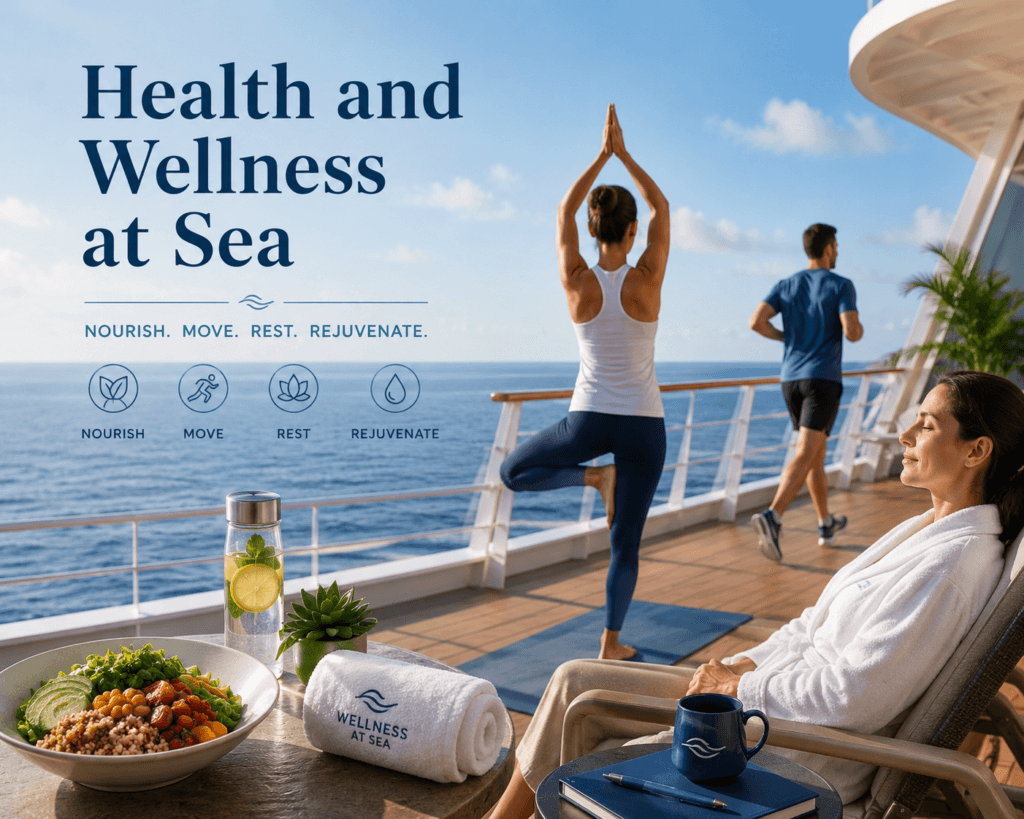
On the physical side, this includes structured exercise routines that don’t require a full gym — bodyweight circuits, resistance bands, or simple cardio sessions that fit into limited deck or accommodation space. Galley teams trained in nutrition basics can make a measurable difference by incorporating more fresh produce, balanced meals, and hydration reminders into daily routines, even with the supply constraints of long voyages. Encouraging proper compliance with rest hour requirements, rather than treating MLC and STCW rest requirements as a paperwork exercise, protects both safety and long-term health.
On the mental and social side, simple structural choices matter enormously. Reliable internet access for crew to contact family, even if limited, has repeatedly been shown to significantly improve morale and reduce feelings of isolation. Shared recreational spaces, organized social activities, and a command culture that genuinely encourages crew members to speak up about stress or fatigue without fear of being seen as weak all contribute to a healthier shipboard environment. Increasingly, shipping companies are also investing in mental health training for officers, recognizing that a captain or chief officer attuned to early signs of crew distress can intervene long before a small problem becomes a serious one.
A Shared Responsibility
Perhaps the most important shift in how the industry approaches health and wellness at sea is the recognition that it cannot rest on any single party alone. Shipowners and operators are responsible for providing the conditions, policies, and resources that make wellness achievable — adequate staffing, fair rotation schedules, proper medical provisioning, and a genuine safety culture. Officers and crew managers are responsible for modeling and reinforcing healthy practices day-to-day, watching for warning signs, and creating an environment where seeking help isn’t stigmatized. And individual seafarers, when given the right conditions, play their own role in maintaining their physical fitness, sleep discipline, and social connections, both on board and during time at home.
None of this is about turning ships into wellness retreats or pretending away the genuine hardships of life at sea. It’s about acknowledging that the people who keep global trade moving are not separate from the safety and efficiency of the vessels they operate — they are the most critical system on board. Investing in their health is not a soft add-on to maritime operations; it is foundational to them.
As the industry continues to modernize, the conversation around health and wellness at sea is likely to grow only more central, not less. Crew shortages, rising mental health awareness, and a new generation of seafarers with different expectations around work-life balance are all pushing the topic further into the operational mainstream. Companies and crews that treat wellness seriously today are not just doing right by their people, they’re building the safer, more resilient, and more sustainable maritime workforce that the industry will depend on tomorrow.