The global maritime sector is undergoing a profound transformation as environmental concerns, regulatory pressures, and technological innovation converge. With shipping responsible for around 3% of global carbon emissions and forming the backbone of international trade, the adoption of green technologies in the marine industry has become a critical priority (marine-digital.com). Today, shipbuilders, operators, and policymakers are embracing sustainable solutions to reduce emissions, improve efficiency, and ensure long term environmental protection.
Introduction to Green Marine Technology
Green technologies in the marine industry refer to environmentally friendly innovations designed to minimize the ecological footprint of shipping and maritime operations. These include advancements in fuel systems, propulsion, vessel design, and digital optimization tools.
The importance of sustainable shipping technologies is driven by strict international regulations and increasing awareness of climate change. Organizations such as the International Maritime Organization (IMO) have introduced standards targeting emission reductions and improved energy efficiency (MDPI).
The Need for Sustainability in Maritime Transport
The maritime industry transports over 70% of global trade, making it essential to global economic stability (marine-digital.com). However, traditional shipping methods rely heavily on fossil fuels, leading to significant greenhouse gas emissions and marine pollution.
Environmental challenges include:
- Carbon dioxide (CO₂) emissions
- Sulfur oxides (SOx) and nitrogen oxides (NOx)
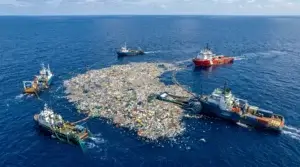
- Oil spills and ballast water contamination
- Marine ecosystem disruption
To address these challenges, the industry is adopting low emission marine technologies and transitioning toward cleaner energy systems.
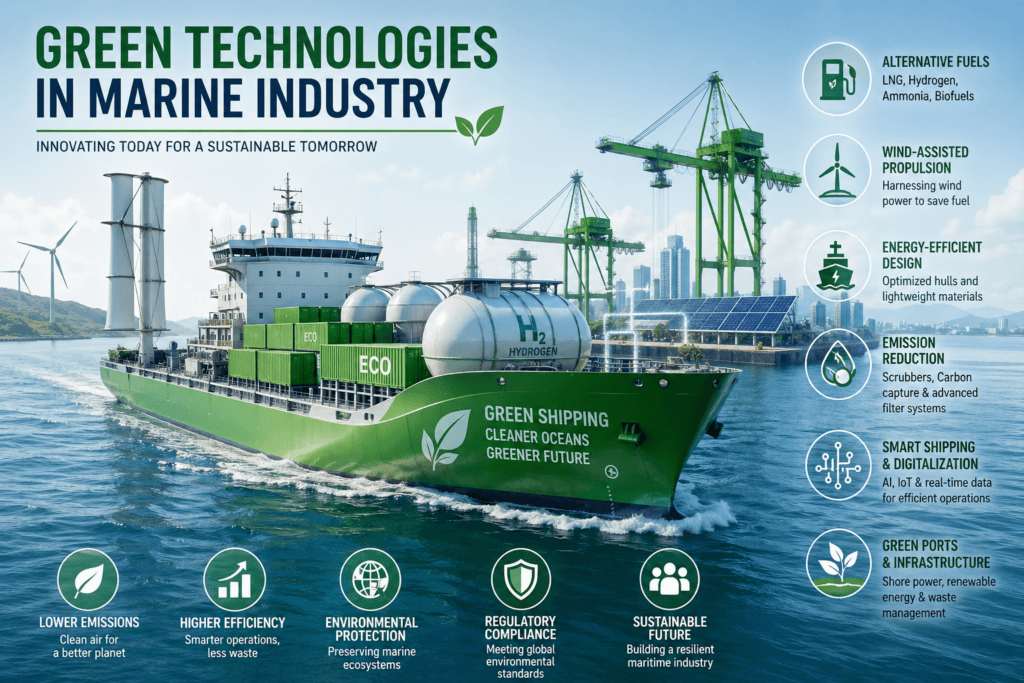
Alternative Fuels and Clean Energy Solutions
One of the most impactful developments in green shipping is the shift from heavy fuel oil to alternative fuels.
1. Liquefied Natural Gas (LNG)
LNG significantly reduces emissions, cutting sulfur emissions by nearly 100% and lowering CO₂ output compared to traditional fuels (maritimeducation.com).
2. Hydrogen Fuel Cells
Hydrogen-powered vessels produce only water as a byproduct, making them a promising zero-emission solution for the future.
3. Biofuels and Methanol
Biofuels derived from renewable sources offer a transitional solution toward fully decarbonized shipping.
4. Ammonia Fuel
Ammonia is emerging as a carbon free fuel alternative, although challenges remain in storage and safety.
These innovations are central to clean energy shipping solutions and represent a major shift toward decarbonization.
Advanced Propulsion Systems
Modern propulsion technologies are revolutionizing vessel efficiency and reducing environmental impact.
Wind Assisted Propulsion
Technologies such as Flettner rotors and automated sails harness wind energy to reduce fuel consumption by up to 15% (maritimeducation.com).
Electric and Hybrid Propulsion
Battery-electric systems are increasingly used for short-sea shipping and port operations, offering zero-emission transport in localized environments.
Air Lubrication Systems
These systems reduce friction between the hull and water by creating a layer of air bubbles, improving fuel efficiency by up to 10% .
Such innovations are key components of energy efficient marine propulsion systems.
Eco Friendly Ship Design and Engineering
Ship design plays a critical role in reducing energy consumption and emissions.
Hull Optimization
Advanced hydrodynamic designs minimize water resistance, improving fuel efficiency and lowering emissions (MDPI).
Lightweight Materials
The use of composite and lightweight materials reduces vessel weight, enhancing performance and fuel economy.
Anti-Fouling Coatings
Modern coatings prevent marine organism growth on hulls, reducing drag and improving efficiency.
Digital Twin Technology
Simulation models enable engineers to optimize ship design before construction, ensuring maximum efficiency.
These innovations fall under eco-friendly ship design technologies, a rapidly growing field in maritime engineering.
Emission Reduction Technologies
Reducing harmful emissions is a top priority in the marine industry.
Exhaust Gas Cleaning Systems (Scrubbers)
Scrubbers remove up to 95% of sulfur oxides from ship exhaust gases, significantly reducing air pollution (emsa.europa.eu).
Carbon Capture Systems
Emerging onboard carbon capture technologies aim to trap CO₂ emissions before they are released into the atmosphere.
Energy Efficiency Monitoring Systems
Smart sensors and data analytics optimize fuel consumption and reduce emissions during voyages.
These technologies are central to marine emission reduction technologies and compliance with global environmental standards.
Smart Shipping and Digital Technologies
Digital transformation is playing a crucial role in achieving sustainability goals.
Artificial Intelligence (AI) and Big Data
AI driven systems analyze weather patterns, routes, and fuel usage to optimize shipping operations.
Internet of Things (IoT)
Connected sensors monitor engine performance, fuel consumption, and environmental conditions in real time.
Autonomous Ships
Automation reduces human error and improves operational efficiency, contributing to lower emissions.
These advancements are often categorized under smart shipping technologies and digital maritime solutions.
Green Port and Infrastructure Development
Sustainability extends beyond ships to ports and maritime infrastructure.
Shore Power Systems
Ships can connect to onshore electricity while docked, reducing emissions from onboard engines.
Renewable Energy Integration
Ports are increasingly using solar and wind energy to power operations.
Waste Management Systems
Advanced systems treat wastewater and manage ship generated waste, preventing marine pollution.
These initiatives support green port development and sustainable maritime ecosystems.
Regulatory Framework Driving Green Innovation
International regulations play a vital role in accelerating the adoption of green technologies.
Key Regulations:
- IMO 2020 Sulfur Cap
- Energy Efficiency Design Index (EEDI)
- Carbon Intensity Indicator (CII)
- Ballast Water Management Convention
These regulations encourage the adoption of environmentally friendly shipping solutions and drive innovation across the industry (MDPI).
Challenges in Implementing Green Marine Technologies
Despite significant progress, several challenges remain:
High Initial Costs
Green technologies often require substantial investment, making adoption difficult for smaller operators.
Infrastructure Limitations
Lack of global infrastructure for alternative fuels such as hydrogen and ammonia.
Technological Uncertainty
Some technologies are still in early development stages and require further testing.
Regulatory Complexity
Compliance with international regulations can be complex and costly.
Addressing these challenges is essential for the widespread adoption of sustainable maritime technologies.
Future Trends in Green Shipping
The future of the marine industry is shaped by continuous innovation and sustainability goals.
Decarbonization Strategies
The industry aims to reduce greenhouse gas emissions by up to 75% through advanced technologies and alternative fuels (marine-digital.com).
Fully Autonomous Electric Ships
Zero emission autonomous vessels are expected to revolutionize short distance shipping.
Hydrogen Economy
Hydrogen is likely to become a dominant energy source for maritime transport.
Circular Economy Practices
Recycling and sustainable ship dismantling practices will gain importance.
These trends highlight the growing importance of next generation marine technologies.
Conclusion
Green technologies in the marine industry are no longer optional, they are essential for the future of global shipping. From alternative fuels and advanced propulsion systems to digital optimization and green port infrastructure, the industry is embracing innovation to reduce its environmental impact.
The integration of sustainable shipping technologies, eco friendly maritime solutions, and marine emission reduction technologies is transforming the sector into a more efficient, environmentally responsible industry.
As regulations tighten and technological advancements continue, the transition toward a greener maritime future will accelerate. Companies that invest in these innovations today will not only comply with environmental standards but also gain a competitive advantage in the evolving global market.
This article was created with AI assistance and reviewed by a human editor.