
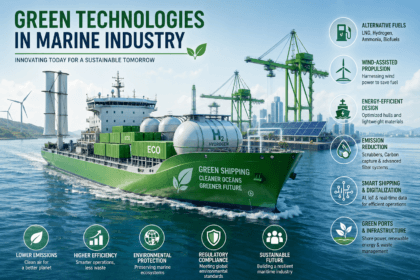
The global maritime sector is undergoing a profound transformation as environmental concerns, regulatory pressures, and technological innovation converge. With shipping responsible for around 3% of gl...
Shipping is moving quickly toward a greener future. Green shipping innovations are leading this switch up, and I see more focus than ever on how these ideas are changing marine transport. The goal is ...



2 responses to “The Future Of Shipping Is Green, Cutting Edge Clean Marine Innovations”
I appreciate how you highlighted that green shipping is not about a single breakthrough fuel but rather a combination of alternative fuels, digital optimization, wind-assist systems, and smarter port infrastructure working together. From what I have seen in other industries, the biggest gains often come from layering efficiency tools first, then transitioning to cleaner energy sources once the economics make sense, so your emphasis on hybrid approaches feels realistic. I am especially interested in how quickly fuel infrastructure for green methanol and ammonia will scale globally, since that seems to be the tipping point for making sustainable marine transport the default rather than the exception.
That’s a really thoughtful observation, I completely agree with your point about sequencing.
One of the biggest misconceptions around green shipping is the expectation of a single “silver bullet” fuel. In reality, as you noted, the more durable path looks like layered optimization: first squeeze out inefficiencies through digital routing, hull design improvements, wind-assist systems, and port electrification, then transition toward lower carbon fuels as infrastructure and economics mature.
We’re already seeing major carriers like Maersk commit to green methanol-powered vessels, which helps create early demand signals. At the same time, fuel suppliers such as Yara International are investing in ammonia production and bunkering pilots. But the real inflection point, as you mentioned, hinges on coordinated infrastructure build out, production, storage, global bunkering standards, and port retrofits all moving in sync.
Green methanol likely scales faster in the near term because it’s easier to handle within existing fuel logistics frameworks. Ammonia has strong long term potential, particularly for deep sea shipping, but safety standards, engine technology, and global bunkering networks still need wider deployment before it becomes mainstream.
Historically, heavy industries transition in phases:
Efficiency and digital optimizationHybridizationFuel switching once supply chains stabilizePolicy alignment accelerating adoption
Shipping appears to be following that same pattern.
If infrastructure expands rapidly in major hubs over the next 5–10 years, especially in Europe and Asia, we could see sustainable fuels move from niche adoption to default choice on newbuild vessels. Without that coordination, though, fleet operators may hesitate to commit fully.
Curious whether you see policy (carbon pricing, IMO regulation, fuel standards) or private capital driving that tipping point faster?