
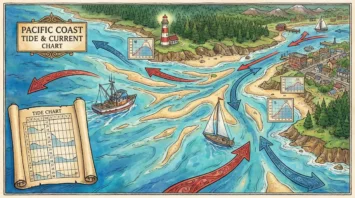
Tide and current predictions are really important for anyone spending time near or on the water. Learning how to read predictions for tides and currents can help with fishing, boating, sailing, or eve...
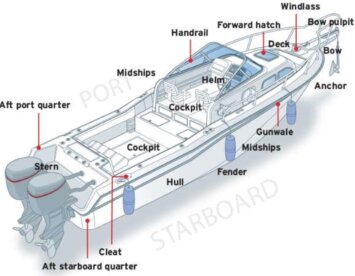
Learning ship terminology is one of the best ways to start if you want to understand how ships work or if you plan to spend time at sea. When I first began exploring nautical vocabulary, many of the w...



5 responses to “Ship Terminology Explained: A Practical Beginner’s Guide to Maritime Terms”
This is an incredibly helpful and clearly explained guide! As someone new to the maritime world, I’ve always found ship terminology a bit intimidating. This article breaks it down in a way that’s actually easy to digest and remember.
The simple definitions for terms like port, starboard, bow, and stern are perfect. I especially appreciated the clear distinction between the keel and the hull—that’s something I’ve often mixed up. This is an essential read for any beginner, making a complex subject feel much more approachable. Thanks for putting together such a valuable resource!
Thank you so much for your kind words! I’m really glad to hear the guide helped make maritime terminology feel more approachable. It can definitely seem overwhelming at first, but once the basics click—like port, starboard, bow, and stern—it all starts to make sense. I’m especially happy the distinction between the keel and hull stood out to you; that’s a common point of confusion for many beginners. I appreciate your thoughtful feedback and wish you smooth sailing as you continue exploring the maritime world!
This is a really helpful guide—thanks for breaking down those ship terms so clearly! I especially liked the sections explaining parts of the ship (bow, stern, hull) and how to learn the vocabulary through practical tools like diagrams, quizzes, and real-life observation. It makes what seemed like a complex subject feel much more approachable. I’m curious: when you practiced saying the new terms aloud, which technique did you find most effective—making up short stories, drawing sketches, or using flashcards—and why?
Thanks so much — I’m really glad you found the guide helpful! It’s great to hear that the explanations and learning tools made the ship terms feel more approachable.
When I was practising the terminology myself, I found that making quick sketches alongside saying the words aloud worked best. Something about connecting the visual layout of the ship to the spoken term really helped it stick — especially for parts like the bow, stern, and hull. I’d use flashcards later for review, but those simple drawings gave the vocabulary real context.
Hope that helps, and I appreciate you taking the time to share your thoughts!
Thank you for putting together such a comprehensive guide! I’ve always been fascinated by ships and maritime history, but the unique vocabulary often made reading articles or watching documentaries feel overwhelming. This post really breaks down the complexity and makes the information accessible for beginners.
The section on Basic Ship Structure was immediately helpful. I have often struggled to quickly distinguish between Bow/Stern and Port/Starboard. Your simple explanation that port refers to the ship’s left side when facing the bow clarifies this perfectly! It makes so much sense now that these terms exist specifically to eliminate confusion.
I’m curious if you could address a related topic in a future post: What is the primary difference between a “ship” and a “boat” in formal nautical terminology? I know it’s a common question for beginners, and I would love to read your expert perspective on it.