
Using a compass and charts for navigation might seem complicated at first, but learning these skills opens up a world of freedom and confidence in the outdoors or on the water.
Whether I’m hiking in the backcountry, boating on a lake, or sailing along the coast, knowing exactly where I am and where I’m going is really important for safety and peace of mind.
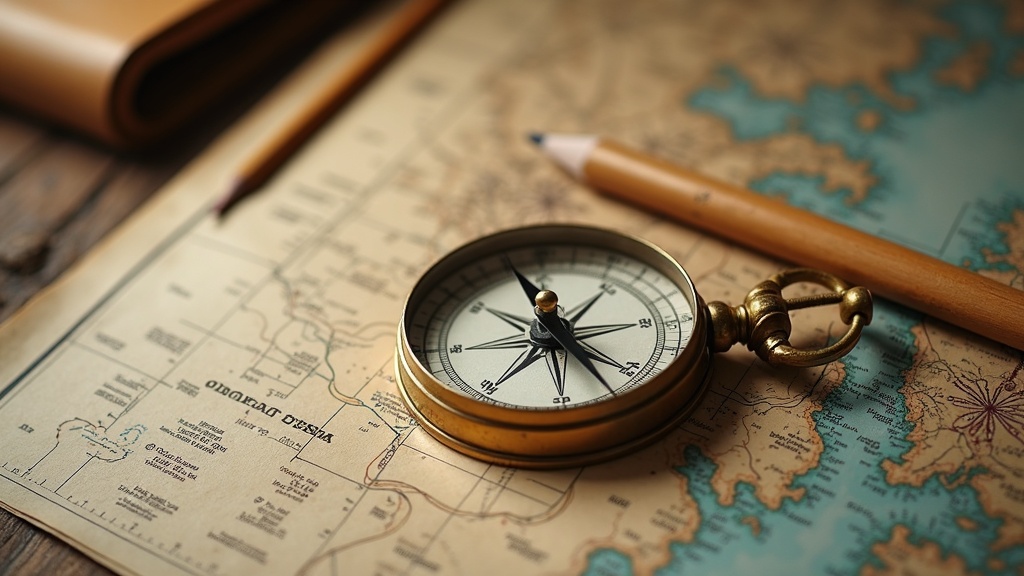
Navigating with charts for beginners
Many people today rely a lot on GPS, but batteries can die or signals fail, especially in remote places. Mastering how to use a compass and read charts accurately is a timeless skill set that helps me stay oriented and safe, even if electronics quit working. For those just getting started, breaking this down into a few easy steps can really make it easy to grasp.
This guide walks you through everything you need to know how to use a compass, how to read nautical charts accurately, and how to combine compass and GPS effectively. You’ll also find a simple approach to understanding map symbols and using charts for sailing or hiking adventures. Let’s jump in and check out how to make compass and chart navigation second nature.
Getting Started: Why Compass and Chart Skills Matter
Before I get into the details, I want to share why learning traditional navigation matters for anyone spending time outdoors or on the water. It gives me confidence to plan trips and handle the unexpected, and it connects me more deeply to my surroundings. On top of that, it helps me track down new places safely and lets me improvise if something changes on my route.
- Compasses and charts work anywhere, even when GPS or phones fail.
- Understanding my own route builds better awareness of the landscape and water around me.
- For beginners, these skills make travel safer and give a sense of accomplishment.
No matter your goal, whether it’s day hiking, multiday trekking, or boating, a solid grasp on navigation basics is a super important part of preparation, making sure every adventure goes smoothly.
What You Need, Basic Navigation Gear
Compass: What to Look For
- Baseplate Compass: Easy to use and read, perfect for beginners and pros alike.
- Rotating Bezel: Makes it simple to set bearings and follow directions.
- Ruler and Scale: Helps measure distances on charts and maps.
- Sighting Mirror: Optional, but good for taking precise bearings.
I usually choose a durable, liquidfilled compass with clear markings. I always keep it clean and away from magnets or metal objects that could affect the needle’s movement.
Charts and Maps: Choosing the Right One
- Nautical Charts: Used for sailing, boating, and sea kayaking. Show depth, hazards, and navigation marks.
- Topographic Maps: Show land features for hiking, camping, and offroad adventures.
I always doublecheck that my chart covers the correct area and is up to date. Printed versions are reliable, but digital backups on a waterproof phone or tablet are also handy, as long as I don’t rely on them exclusively.
Other Useful Gear
- Pencil for marking positions
- Ruler and protractor for accurate plotting
- A waterproof map case for protection
Understanding Chart and Map Symbols
Charts and maps can look overwhelming at first. All those numbers, lines, colors, and symbols have meaning. Learning how to read charts accurately gets much easier once I know what to keep an eye out for. It sharpens my navigation skills and makes reading any chart feel far less confusing.
Guide to Understanding Map Symbols
- Contour Lines: Show changes in elevation on topographic maps. The closer these lines are together, the steeper the slope.
- Depth Soundings: Show water depth on nautical charts. Usually measured in meters or feet.
- Navigation Aids: Such as buoys, lighthouses, and beacons. Symbols can be found in the chart’s legend.
- Landmarks: Mountains, buildings, towers, or notable points that help with orientatioan.
- Hazards: Rocks, reefs, wrecks, or shallow areas are marked to prevent accidents.
- Scale Bars: Let me measure realworld distances using the chart or map.
- Latitude and Longitude: Used for plotting precise positions and following a route.
Most maps and charts include a legend explaining the symbols used. I always take a few minutes to study the legend before setting out, especially if I’m in a new area or using an unfamiliar chart.

Click here to buy Basic Navigation Set
How to Use a Compass: StepbyStep Basics
Learning how to use a compass can feel confusing in the beginning, but with a few steps, I find it becomes second nature. Compasses point toward magnetic north, but many maps and charts use true north. The difference is called magnetic declination, and I need to adjust for it, especially when traveling long distances or crossing multiple regions with different declinations.
Step 1: Holding the Compass
- Hold the compass flat and level at waist height.
- The directionoftravel arrow points away from my body, toward where I want to go.
Step 2: Setting a Bearing
- Rotate the bezel until the required bearing is set at the index line.
- Turn my whole body (not the compass) until the red north end of the needle lines up with the orienting arrow, often marked on the bezel.
- The direction of travel arrow now points toward my chosen direction.
Step 3: Following a Bearing
- Pick a landmark (tree, rock, or buoy) in the direction of travel, and walk or sail toward it.
- Once I reach the landmark, recheck the bearing and repeat the process.
Step 4: Adjusting for Magnetic Declination
- Look up the local magnetic declination on the map or online (NOAA website for the US is a good source).
- Add or subtract declination according to whether it is east or west. Some compasses allow me to set this directly on the dial for extra convenience.
If I’m in a place where declination changes frequently, or if traveling long distances, I make sure to check and update this often so my route keeps on track.
Navigating with Charts for Beginners
Basic Steps for Using a Chart or Map
- Identify My Location: I start by figuring out exactly where I am on the map or chart. Unique land features, buoys, buildings, or compass bearings help with this.
- Set My Destination: Find where I want to go and mark it clearly.
- Plot a Course: Using a ruler or straightedge, I draw a line from my current location to my intended destination to create a clear path to follow.
- Determine the Bearing: Place my compass on the map so the edge lines up with my route. Line up the orienting lines on the compass base with the map’s north-south grid. Read the bearing at the index line to know my travel direction.
If I’m on land, I use visible features or landmarks to check my path. On water, I rely on navigation markers, buoys, and other aids along my plotted course.
Recognizing Hazards and Obstacles
Nautical charts and topographic maps highlight hazards like shallow water, rocks, cliffs, or dangerous currents. I plan my route around these whenever possible. If I’m unfamiliar with chart symbols, I keep a legend handy or review it before departing to avoid surprises.
Estimating Distance and Time
- Use the map or chart’s scale to measure how far I have to travel.
- Factor in speed (walking pace or boat speed) to estimate how long the trip will take.
- Account for changes in terrain or weather, for example, strong wind or current on the water or steep climbs on land slow progress.
How to Read Nautical Charts Accurately
Nautical charts offer super detailed information on water depth, hazards, navigation aids, currents, and more. I treat them as essential tools whenever I’m on the water. Here’s how I read nautical charts accurately and safely in various conditions:
Understanding Depth and Contours
- Depth soundings are numbers showing water depth. Shallow areas, sandbars, and underwater hazards are marked clearly, which is important for keeping my boat safe and preventing accidental grounding.
- Contour lines show changes in bottom profile. Tight lines mean a steep drop; wide gaps mean a gentle slope, so I always check these before navigating in unfamiliar waters.
Spotting Navigation Aids
- Buoys, beacons, lighthouses, and daymarks stand out on charts and help keep me oriented as I travel.
- I check the symbols carefully and note their color and numbering, since these match realworld aids on the water I’ll encounter.
Recognizing Hazards
- Rocks, shipwrecks, restricted zones, and shallow areas are clearly marked on charts. I give these areas a wide berth to avoid problems.
Reading Tidal and Current Info
- Tide times, ranges, and directions are shown on many charts, which is really important for planning safe passages, especially in shallow areas or narrow channels where timing matters.
When I’m not sure about a symbol or abbreviation, I flip to the chart’s reference section or the government’s chart symbol guide. This clears things up and keeps the trip safe and stressfree.
How to Use Charts for Sailing
Charts play a massive role in safe, smooth sailing. I use them to plan a route, spot hazards, and check for safe anchorages or harbors. Here’s how I approach using charts for all my sailing trips:
Planning a Sailing Route
- Mark my starting point and destination on the chart before setting sail.
- Plot a safe path, steering clear of marked hazards or shallow water along the way.
- Identify navigation aids I’ll pass, buoys, lighthouses, and prominent points so I always have reference points during the trip.
- Look up tide and current info to avoid surprises and make route adjustments if needed.
Checking Depths and Safe Water
- Monitor my path constantly to keep in water deep enough for my hull, especially in tidal areas where water levels can change quickly and dramatically.
- Plan alternate routes in case I need to change course due to weather or congestion. This flexibility helps me stay safe in any conditions.
Anchoring and Harbor Entries
- Pick anchorages with enough depth and shelter from wind and swell, making overnight stays calm and secure.
- Study harbor entrances for any navigation requirements or restricted zones and prepare in advance so arrival is smooth.
Keeping Up with Chart Updates
- Navionics and official government websites regularly spread the word on navigation changes, such as new buoys or hazards. I check these before each trip to avoid any outdated info.
How to Combine Compass and GPS Effectively
Modern GPS devices are helpful, but combining them with compass and chart skills gives me the strongest backup. That way, I’m never lost even if one system quits. Having both skills builds redundancy into my navigation approach so that no single glitch leaves me scrambling for solutions.
Best Practices for Combining Compass and GPS
- I always confirm my current GPS position on a paper chart, so I know exactly where I am, even if the GPS goes dark later.
- If my GPS battery dies, I continue by plotting bearings and distances on the chart using my compass, keeping me moving with confidence.
- Sometimes GPS shows a bearing to the destination. I doublecheck that this matches what I’ve plotted, especially in low visibility or foggy conditions so errors don’t creep in unnoticed.
- I use waypoints or key landmarks from the chart to crosscheck GPS data for accuracy. This cross checking strengthens my overall situational awareness.
Learning to use both tools together means I always have backup. I’m flexible if one system glitches or isn’t available. This habit has kept me safe more than once, especially during long hikes or long passages on the water where batteries can run low or tech decides to quit unexpectedly.
Common Questions & Troubleshooting
What if my compass needle won’t settle?
- I move away from metal objects or electronic devices that could interfere. Sometimes, standing too close to the car or a large piece of metal is enough to throw it off, so I step a few feet away and try again.
How do I stay on course in bad weather or low visibility?
- I use my compass frequently, pick out nearby features to aim for, and check my position on the chart often. In fog or rain, it helps to travel in short segments from one easy to spot landmark or buoy to the next, always maintaining awareness even if conditions make it tough.
What if my GPS position disagrees with my chart and compass?
- This can happen if the map datum (coordinate reference) differs. I check the chart’s data box and match my GPS settings to it so they’re speaking the same language.
How do I avoid common beginner mistakes?
- Take my time to read the map or chart before starting and doublecheck bearings. If I ever feel unsure, I stop, check my surroundings, and go back to my last known good position. Patience and caution always pay off in the outdoors.
Next Steps, Growing Your Navigation Skills
Developing confidence in how to use a compass and read charts comes through practice. I start out on simple routes close to home, then build up to more complex adventures as my comfort grows. Some ways I keep skills sharp and get even more adept include:
- Practice using my compass regularly, even when not strictly needed, in parks or on local walks.
- Explore new symbols on maps or charts and quiz myself, keeping my knowledge fresh and ready for unfamiliar terrains.
- Take a training course through an outdoor club, coast guard auxiliary, or sailing school for realworld experience. Getting hands-on with experts makes a huge difference.
- Teach a friend or family member, it helps both of us learn, and sharing skills builds more reliable teams for group trips.
As I get more familiar with these navigation tools, I’m able to plan trips further afield, enjoy more independent adventures, and help others feel safe outdoors or on the water. Mastering these timeless skills makes exploring much more fun and worry free.
The bottom line, chart and compass navigation isn’t just for old-school explorers; it’s for anyone who wants a safer, more rewarding outdoor life. Stay sharp, keep practicing, and enjoy every adventure with confidence!





Everyone should learn compass skills and not only on the water, but on dry land too. Technology is great, but from time to time it does glitch and then if you don’t know how to do it the old fashioned way you could get yourself into a lot of trouble.
Like anything, it takes practice, and you have offered a wonderful guide here to help us to navigate through this. I had no idea that there were so many different types of compasses to choose from. Thanks to the nautical charts, you can always see where the reefs, rocks and other obstacles are on your course.
Thank you so much for your insightful comment! ???? I completely agree — relying solely on technology can be risky, and traditional compass and navigation skills are truly invaluable, both on land and at sea. It’s amazing how much confidence you gain once you understand how to read a compass and a chart properly. I’m really glad you found the guide helpful and that it shed some light on the different types of compasses available. Safe travels and smooth sailing on all your adventures! ⛵????
This is such a clear and practical guide! As someone who’s always been a bit intimidated by traditional navigation, the step-by-step breakdown of taking a bearing and transferring it to the chart makes the process feel much more approachable.
I especially appreciated the emphasis on the importance of accounting for variation—it’s a small detail that makes all the difference between ending up where you planned and being somewhere completely different! This is a fantastic resource for both new and experienced seafarers looking to solidify their foundational skills. Thanks for sharing!
Thank you so much for your kind words! I’m really glad the guide helped make traditional navigation feel more approachable. Taking bearings can seem tricky at first, but once you get the rhythm, it becomes second nature. You’re absolutely right—accounting for variation is one of those small yet crucial details that ensures real accuracy out on the water. It’s great to hear that both new and seasoned navigators can find value in the post. I truly appreciate you taking the time to share your feedback!
This was such a clear and empowering guide, thank you! I’ve mostly relied on GPS during hikes and coastal trips, but I’ve been wanting to learn traditional navigation skills for those ‘just in case’ moments. Your breakdown of compass basics and chart reading really helped demystify things for me.
I’m curious, when you first started practicing with a compass, did you find it easier to learn on land or on water? And do you have a favorite resource or chart-reading exercise for beginners who want to build confidence before heading out?
Appreciate how you made this feel approachable and practical. I’m excited to start practicing!
Thank you so much! I’m really glad you found it helpful — that’s exactly what I was hoping for.
When I first started practicing, I found it easier to learn on land. There’s less movement to deal with, and it’s simpler to focus on understanding bearings, orienting the map, and getting a feel for how small compass errors affect direction. Once those basics felt comfortable, transferring those skills to the water felt much more natural.
For beginners, one of my favorite confidence-building exercises is to pick a few landmarks (like a hill, tree, or buoy) and practice taking bearings and plotting them on a chart or map — it’s a great way to see how compass readings translate into real-world locations.
If you’re looking for a solid resource, I’d recommend The Ultimate Navigation Manual by Lyle Brotherton — it’s clear, visual, and very practical.
Can’t wait to hear how your practice goes — it’s such a rewarding skill to build!
Great article — I really appreciate the way you break down traditional navigation into clear, practical steps. The section on combining compass and GPS especially resonated with me, since I too rely heavily on electronics but recognise the value in having a strong fallback system. I also like how you emphasise map symbols, hazards and making sure your chart is up to date. One question: when you first began practising the compass and chart method, did you find working on land easier than on water (or vice-versa), and do you have a favourite exercise you recommend for rapidly gaining confidence in this skill?
Thanks so much — I really appreciate your thoughtful feedback! You’ve picked up on exactly what I was hoping to highlight: the balance between electronic tools and traditional methods.
To your question: I actually found practising on land a bit easier at first, since it’s simpler to reference fixed landmarks and get quick feedback on bearings and distance estimates. Once I felt confident with that, transferring those skills to water made a lot more sense.
A good exercise I’d recommend is to plot short “legs” on a local map — even a park or open area — and navigate them using only your compass and a printed chart. Keep track of your estimated position, then check it against reality at each stop. It’s a great way to build both speed and intuition before applying the same method afloat.
Really glad you found the piece useful!
Navigating with a compass and charts is a timeless skill that builds confidence and safety, especially when technology fails. Learning to read map symbols, set bearings, adjust for declination, and plot routes gives you real control over your journey, whether hiking or on the water. It encourages awareness of your surroundings and helps you make smarter, more informed decisions. Overall, it’s a simple yet powerful skill that makes outdoor travel more reliable and enjoyable.
Keep up the good work!
Thank you for sharing such a thoughtful perspective! You summed it up perfectly—traditional navigation really does offer a level of confidence and situational awareness that technology alone can’t replace. Skills like setting bearings, reading symbols, and accounting for declination give you a deeper understanding of your environment and make every trip more intentional.
I’m glad the post resonated with you, and I truly appreciate the encouragement. Keeping these timeless skills alive makes every adventure safer and more rewarding.
Your article is a clear and useful guide to navigation anywhere outdoors. It was interesting that you mentioned compasses and navigational charts can be more reliable than GPS or phones. This guide certainly proves traditional navigation can be accomplished with practice, planning, and patience. Thank you for a very interesting post.
Best wishes,
Kent
Kent, thank you for the kind words — I really appreciate it. I’m glad the guide resonated with you. Even with all the convenience of GPS and phones, there’s something reassuring about knowing you can still find your way with a map, compass, and solid technique. As you said, a bit of practice and patience goes a long way toward making traditional navigation both reliable and enjoyable.
Thanks again for reading and taking the time to comment.
Best wishes to you as well!