Fire safety at sea is a big responsibility and a top priority for any crew. Ship fires can turn into life-threatening emergencies very quickly because of the isolated environment onboard and the special challenges of maritime operations.
I want to help you understand what it takes to keep a vessel safe from fires, what firefighting techniques make the most sense for ships, and how the latest gear, training, and fire prevention routines work together.
Why Ship Fire Safety Demands Special Training
Fire works differently at sea. Crew members might only have minutes to react in confined spaces full of fuel, wires, and cargo. So, ship fire safety training is not just another part of the job, it’s a foundation for protecting everyone onboard and the vessel itself. International codes like SOLAS (Safety of Life at Sea) require crews to practice for possible fires. But real preparation goes further. It means understanding the common risks onboard and building habits so that quick, effective action is second nature.
I’ve seen firsthand that training makes a difference. In my first year at sea, a small electrical fire could have gotten out of control if we hadn’t recently drilled a similar scenario. Because everyone recognized their role, used the gear correctly, and followed our trained response, we kept damage to a minimum and avoided injury. Over time, consistent rehearsal builds muscle memory, helping the crew react with calm under stress and making sure fires are handled before they can escalate.
How Fires Start Onboard: Common Sources and Hazards
On ships, fires often start in the engine room, galley, or cargo areas. Electrical problems, fuel spills, hot surfaces, and even careless smoking can all trigger fires. Knowing these risks shapes the best firefighting and prevention routines for vessels.
- Engine Room: High temperatures, fuel, and lubrication oils create a risky mix. Faulty insulation or maintenance shortcuts can cause flash fires.
- Galley: Cooking with open flames, hot oil, and electrical appliances increases the risk. Grease buildup makes things worse.
- Cargo Holds: Some cargo, especially chemicals, flammable liquids, and certain packaging, can ignite in the wrong conditions. Even spontaneous combustion is possible in coal or grain shipments.
- Accommodation Areas: Smoking in cabins, overloaded power sockets, or faulty wiring behind the bulkheads can spark fires where people sleep.
Additional hazards like poorly maintained ventilation systems or loose electrical panels can also contribute. Over time, wear and tear may expose new dangers, which is why regular inspection is so vital to staying ahead of possible ignition sources. Crew members should always report something unusual, no matter how small it seems, because many major fires have started from seemingly minor oversights.
Fire Prevention Strategies for Vessels
Fire prevention is all about awareness and routine. Good shipboard habits mean regular checks, careful storage, and making sure safety systems actually work. When I inspect ships, I focus on a few basic but really important habits:
- Clean galleys, engine rooms, and workspaces to remove flammable debris.
- Look over electrical systems for worn insulation or overloaded circuits.
- Store flammable liquids only in approved spaces and containers with proper ventilation.
- Keep firefighting equipment in designated spots, easy to grab and well-marked.
- Test smoke detectors and fire alarms at intervals, not just before an inspection.
- Log and review all inspections to track recurring issues and make improvements.
By building fire safety awareness for crew members into daily routines, those small actions can prevent big emergencies. I always encourage new crew to ask about anything that ‘doesn’t look right’ when it comes to fire safety. Sometimes, replacing a single frayed cable or thoroughly cleaning a neglected vent can make the difference.
Routine can mean more than just formal checks. Crew who take personal interest in safe cooking practices, handle fuel carefully, and double-check power tools before storing them set an example that raises standards for everyone. Leadership plays a role too, when officers enforce day-to-day fire prevention, it becomes part of the ship’s culture rather than just a list for the logbook.
The Best Firefighting Gear for Ships: What Every Vessel Needs
The right equipment means crews can move fast and attack fires effectively. Today’s ships carry a mix of reliable, time tested, and the latest maritime fire safety equipment. My top picks for dependable shipboard gear include:
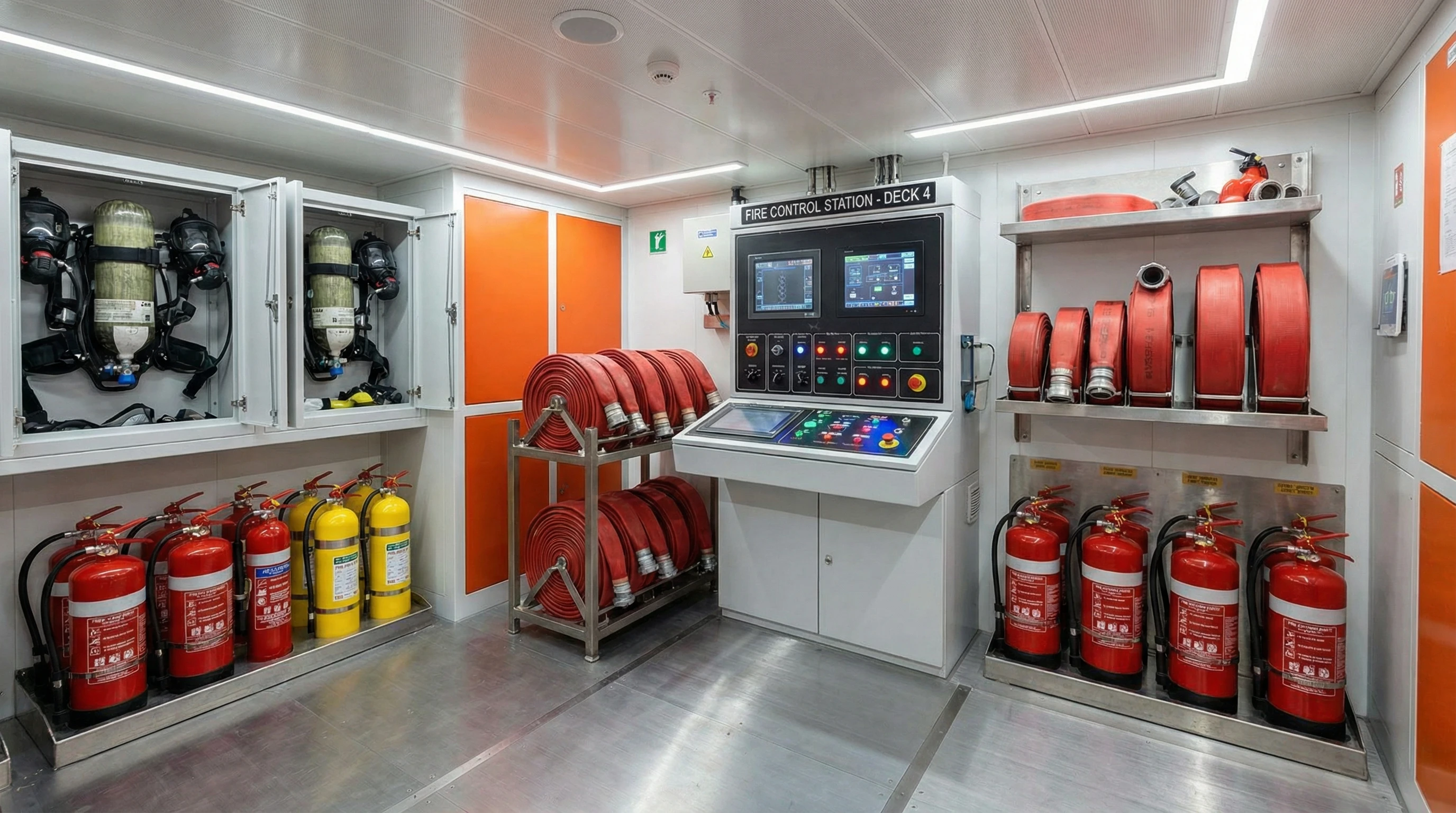
- Portable Fire Extinguishers: Ships usually carry CO2, dry powder, foam, and water mist types for different areas. You need easy to read labels and regular inspections so every extinguisher will work as expected.
- Fire Hoses and Hydrants: Fixed pipe systems with strong hoses and easy to grip nozzles help deliver water fast, especially in larger machinery spaces.
- Automatic Sprinklers and Fixed Foam Systems: These attack fires automatically, especially in critical spaces like engine rooms and cargo holds. Automated systems have helped contain fires in less than a minute in some cases, buying time for the crew to respond.
- Thermal Imaging Cameras: Handheld infrared devices let crews spot hidden fires or hotspots behind bulkheads, a big step forward in catching a smoldering fire before it flares up.
- Fireman’s Outfits: A standard kit includes a heat-resistant suit, helmet, gloves, boots, and self-contained breathing apparatus (SCBA). This set is essential PPE for any member of a firefighting team, protecting from radiant heat and toxic smoke.
- Portable Gas Detectors: Useful in detecting dangerous vapors that may explode or catch fire, especially when entering enclosed spaces after an incident.
Technology continues to improve. I’ve tried compact foam generators and lighter, high capacity SCBAs, both of which give fire teams more mobility and protection. Automated fire monitoring panels, with sensors across the vessel, have cut down response times and given bridge crews more information to coordinate an effective response. If you’re responsible for purchasing, it pays off to review what’s new every few years and not just stick with the minimum required kit.
Another often overlooked but useful piece of equipment is a fire blanket, which can smother small fires quickly, especially in galley areas. Shipbuilders are also fitting more vessels with dedicated emergency lighting and illuminated evacuation signage to help during smoke-filled emergencies when power is lost.
How to Respond to Shipboard Fires
Once a fire starts, quick, clear, and well organized action is really important. My shipboard firefighting experience always follows a logical chain:
- Sound the Alarm: Don’t assume someone else will do it. Hitting the fire alarm or shouting “fire!” gets everyone’s attention right away.
- Report to the Bridge: Give your location and details of the fire. This keeps the command team updated so they can direct the right response and warn others.
- Close Fire Doors and Dampers: This stops smoke and flames from spreading further. Training helps crew do this by instinct, even under intense stress.
- Attack with Extinguishers or Fixed Systems: Use the right extinguisher for the type of fire, dry powder for electrical, foam for oil, CO2 for machinery. Know your gear, and never use water on flammable liquids or electrical panels.
- Back Up With Fire Hoses: If an extinguisher doesn’t stop the fire, hoses are next. Always work in pairs and stay low if there’s smoke to avoid inhaling dangerous fumes.
- Rescue and Account for Crew: Make sure everyone is out and safe. Muster lists and head counts confirm no one is missing.
- Seal and Monitor: Once under control, close off the compartment and check for hot spots to prevent the fire from starting up again.
Running through this firefighting procedures checklist for ships in every drill turns it into habit and can help save lives when real emergencies strike. In high-pressure situations, the best defense is a trained, coordinated response that uses both teamwork and equipment wisely.
It’s important to remember that after the main fire, checking for secondary blazes in ventilation ducts, behind panels, or near fuel lines can make all the difference in safely wrapping up the emergency. Never rush this step, hidden hazards can flare up minutes or even hours later.
Firefighting Drills Onboard Ships: Building Real World Confidence
Drills aren’t just a formality. They give everyone a chance to practice their response under pressure, learn how to use the best firefighting gear for ships, and spot mistakes when no lives are at risk. I recommend mixing up drill scenarios, holding them at different times, and swapping team leads so everyone gets comfortable with command roles and the unexpected.
- Practice mustering at various alarms and in poor weather or darkness so the routine becomes muscle memory, not just theory.
- Use “live” drills with non toxic smoke for realism, showing how hard it is to see or move in smoky conditions.
- Rotate “casualty” roles, which prepares the team for search and rescue under poor visibility or confusion.
- Test communications, not just among firefighting teams but also between bridge and engine room, and, when possible, with shore support via radio simulations.
- Debrief and fix small mistakes right away, so learning is fresh and everyone leaves more confident for the next real emergency.
Once, during a particularly tough drill, my crew realized we had a problem relaying messages from the aft deck to the bridge. We installed a backup radio and rewrote our drill scripts, proof that real drills bring real world improvements. Spending extra time on post drill feedback means everyone can ask questions, suggest improvements, or point out confusing steps in procedures. Over the months, I’ve seen teams become sharper and more creative, finding ways to speed up their responses or protect each other better.
Latest Maritime Fire Safety Equipment: What’s Changed?
Maritime firefighting gear is constantly improving. While classic hoses, axes, and extinguishers still matter, new tech is making fire response safer and more efficient:
- Better SCBA: Smaller, lighter, with longer-lasting air and clear face shields for better vision and comfort.
- Infrared Thermal Cameras: Handheld devices help crews see through smoke, pinpoint fires or casualties hidden from view, and keep rescuers safer.
- Water Mist Systems: Safer for electrical equipment, these spray extremely fine droplets that cool and suffocate the fire fast without causing major water damage.
- Remote Monitoring Alarms: Wireless sensors detect smoke, heat, or gas leaks, and send real-time alerts to crews’ devices or the ship’s control room.
- Fire Drones: Some shipping companies are now using drones to fly into hot spots and find fires in large cargo holds or hard-to-reach areas, speeding up detection and response for complex emergencies.
Staying up to date with the latest maritime fire safety equipment gives you another layer of protection. It’s smart to review SOLAS and your classification society’s updates, as these often highlight new requirements or the most effective equipment being adopted across the industry. Shipowners who take early advantage of modern technology often set the bar for improved outcomes in both drills and real emergencies.
Robust maintenance is just as important. Even cuttingedge gear won’t help if valves are stuck or air bottles are empty. Always double check and test equipment during drills, not just on inspection days. Many crews now track safety equipment with electronic checklists or maintenance software, letting them know when a piece of gear is due for service or replacement.
Fire Safety Regulations for the Shipping Industry
International regulations guide every step of fire safety on ships. SOLAS, IMO (International Maritime Organization), and classification societies lay out what gear is required, how often you need to drill, and the minimum crew training. National authorities may also add their own rules. Some of the highlights include:
- SOLAS Chapter II-2: Details construction standards, fixed fire systems, escape routes, and more, pushing for safer ships worldwide.
- STCW (Standards of Training, Certification and Watchkeeping): Sets up the minimum ship fire safety training for crew, including hands-on sessions and leadership roles.
- Port State Control: Inspectors check visiting ships to make sure they meet fire safety laws. Vessels that fall short may get locked in port until problems are fixed.
I keep both paper and digital copies of these rules handy onboard, making it easy to reference them during crew briefings or management meetings. Compliance is more than box checking, it’s about truly being ready when it counts. Supervisors should talk through changes in regulations regularly so newer and experienced seafarers are always on the same page. Changes happen fast, so sticking with old habits can put lives at risk or lead to unexpected detentions during port checks.
Fire Safety Awareness for Crew Members: Making Safety a Habit
Culture really matters in fire safety. Every crew member plays a role, whether chief engineer, cook, or deckhand. Open talk about “near misses” and small issues helps spot problems before they explode into real dangers. I encourage teams to:
- Hold regular safety talks, keeping everyone aware of fresh risks or new equipment.
- Give rewards to people who help catch hazards or come up with smart ways to make things safer.
- Encourage new crew to ask questions, even if they seem obvious, as clear understanding often prevents accidents.
- Post clear, easy-to-understand signs for equipment and escape routes throughout the ship so no one hesitates in an emergency.
When fire safety awareness for crew members is integrated into daily life, everyone wins. I make it a personal habit to do quick visual checks during my walks through the ship, making sure exit areas are clear, extinguishers are free from obstructions, and the latest drills are posted for everyone to see. Crew should push to keep up these routines and share good practices as turnover brings new faces onboard throughout the year. Over time, this focus on asking questions and giving feedback builds a safer, more supportive shipboard community.
Frequently Asked Questions About Shipboard Firefighting
Here are a few questions I’ve been asked, along with answers that have helped many new crew members and officers build their knowledge:
What’s the most common cause of shipboard fires?
Electrical faults and engine room mishaps trigger most ship fires, followed by galley incidents and poor storage of flammable materials. Focusing on everyday good habits is usually your best defense.
How often should firefighting drills be held?
Rules often require drills every month, but running them more often, at varied times, with “surprise” situations, gives crews sharper preparation and confidence.
Can any crew member fight fires, or just the fireteam?
Everyone should know the basics, sound the alarm, shut doors, and use portable extinguishers. The trained fireteam handles larger events, but early action by anyone can make a big impact. Ask questions if you’re unsure about any step.
What’s the correct order for using firefighting equipment?
Sound the alarm, report clear details, use the proper extinguisher for the fire, and follow with hoses if the fire remains. Above all, don’t risk your life for gear. Practicing with your firefighting procedures checklist for ships makes all this second nature during emergencies.
Wrap-up: Integrating Shipboard Firefighting Into Everyday Operations
Fire safety routines, the best firefighting gear for ships, and the latest fire regulations for the shipping industry all support each other in protecting lives and cargo. Ship fire safety training and ongoing drills turn rules into muscle memory, building real resilience. I suggest weaving fire prevention strategies for vessels into daily operations, rather than treating them as just another formality.
Being proactive, supporting every crew member, and keeping your equipment both current and well maintained is how I’ve found best results. In this environment, everyone onboard develops true confidence and skill, ready to handle fires whenever and wherever they might break out.

This is a great topic to discuss when you consider there’s people traveling all year round. Boat travels are increasing more from what I’ve been seeing lately too. Fires however are situations that most people might not even think could happen on a boat, but it’s very real. I’m gonna go with a movie for example, but I would watch Jason Takes Manhattan and the same scenario happens on it. That might be a little extreme but it’s important to still have that communication to the rest of the boat sectors. That and the capability to work a mobile extinguisher. Those are the highest value skills to have in that situation.
I agreebo, at travel is definitely increasing, and with more people on the water year round, the risks increase as well. Fires are one of those hazards that many people don’t immediately associate with boats, even though they’re very real and can escalate quickly in a confined space. Your movie example might be extreme, but it still helps highlight how fast situations can get out of control if people aren’t prepared. Clear communication across all boat sectors and knowing how to properly use a mobile fire extinguisher are crucial skills. Those abilities can make a major difference in preventing a small incident from turning into a full scale emergency.