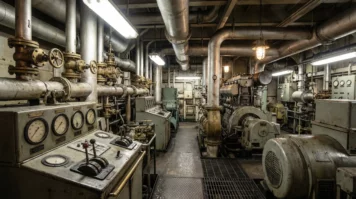
Experiencing mechanical failures on a ship can cause real stress and lead to delays or even damage if not handled quickly. I’ve seen how staying on top of ship maintenance and having a straightforward...

Seafarer Skills Development
Experiencing mechanical failures on a ship can cause real stress and lead to delays or even damage if not handled quickly. I’ve seen how staying on top of ship maintenance and having a straightforward...


This was a very informative overview — it really highlights how even small mechanical issues at sea can escalate quickly if not caught early. Problems like lubrication failure, contaminated fuel, or pump malfunctions don’t just affect performance; they directly impact safety and maneuverability.
It seems like preventive maintenance and systematic troubleshooting are just as critical as repair skills themselves. In your opinion, which type of failure tends to cause the most downtime in real operations — engine issues, pumps, or electrical systems?

Thank you for your thoughtful comment! You’ve highlighted something very important, at sea, minor issues rarely stay minor if they’re not addressed early.
You’re absolutely right that preventive maintenance and systematic troubleshooting are just as critical as hands on repair skills. In marine operations, discipline and early detection often make the difference between a short delay and a major casualty.
In my opinion, the failures that cause the most downtime are usually:
1. Main Engine Issues (Highest Downtime Impact)
Engine-related failures tend to cause the longest and most operationally disruptive downtime, especially when they involve:
Lubrication failure leading to bearing damageCooling system failure causing overheatingFuel system contamination affecting injectionTurbocharger or cylinder head damage
When the main propulsion engine is compromised, maneuverability is immediately affected. In severe cases, the vessel may require tug assistance or dry dock repairs, which means significant downtime.
2. Pump Failures (Most Frequent Operational Disruptions)
Pumps fail more frequently than engines, particularly:
Fuel transfer pumpsLube oil pumpsCooling water pumpsBilge or ballast pumps
While individual pump failures may not always cause catastrophic downtime, they can escalate quickly if redundancy is limited. A failed cooling or lubrication pump, for example, can lead directly to engine damage if not addressed immediately.
3. Electrical System Failures (Most Unpredictable)
Electrical faults can be especially disruptive because they:
Affect multiple systems simultaneouslyCan be difficult to trace (sensor faults, short circuits, automation errors)May impact navigation, control systems, or alarms
Modern vessels rely heavily on automation, so electrical failures can paralyze operations even if mechanical systems are intact.
???? So which causes the most downtime overall?
Severe engine failures – cause the longest downtimePump failures – occur most oftenElectrical issues – can create the most complex troubleshooting scenarios
From real operational experience, major engine casualties tend to result in the greatest downtime due to repair complexity and parts availability.
That said, many major engine failures actually begin as “small” pump or lubrication issues, which reinforces your point about preventive maintenance being critical.
If you’re working in marine engineering or studying it, I’d be interested to hear your perspective as well, what have you seen cause the biggest operational delays?
2 responses to “Troubleshooting Common Mechanical Failures On Ships”
This was a very informative overview — it really highlights how even small mechanical issues at sea can escalate quickly if not caught early. Problems like lubrication failure, contaminated fuel, or pump malfunctions don’t just affect performance; they directly impact safety and maneuverability.
It seems like preventive maintenance and systematic troubleshooting are just as critical as repair skills themselves. In your opinion, which type of failure tends to cause the most downtime in real operations — engine issues, pumps, or electrical systems?
Thank you for your thoughtful comment! You’ve highlighted something very important, at sea, minor issues rarely stay minor if they’re not addressed early.
You’re absolutely right that preventive maintenance and systematic troubleshooting are just as critical as hands on repair skills. In marine operations, discipline and early detection often make the difference between a short delay and a major casualty.
In my opinion, the failures that cause the most downtime are usually:
1. Main Engine Issues (Highest Downtime Impact)
Engine-related failures tend to cause the longest and most operationally disruptive downtime, especially when they involve:
Lubrication failure leading to bearing damageCooling system failure causing overheatingFuel system contamination affecting injectionTurbocharger or cylinder head damage
When the main propulsion engine is compromised, maneuverability is immediately affected. In severe cases, the vessel may require tug assistance or dry dock repairs, which means significant downtime.
2. Pump Failures (Most Frequent Operational Disruptions)
Pumps fail more frequently than engines, particularly:
Fuel transfer pumpsLube oil pumpsCooling water pumpsBilge or ballast pumps
While individual pump failures may not always cause catastrophic downtime, they can escalate quickly if redundancy is limited. A failed cooling or lubrication pump, for example, can lead directly to engine damage if not addressed immediately.
3. Electrical System Failures (Most Unpredictable)
Electrical faults can be especially disruptive because they:
Affect multiple systems simultaneouslyCan be difficult to trace (sensor faults, short circuits, automation errors)May impact navigation, control systems, or alarms
Modern vessels rely heavily on automation, so electrical failures can paralyze operations even if mechanical systems are intact.
???? So which causes the most downtime overall?
Severe engine failures – cause the longest downtimePump failures – occur most oftenElectrical issues – can create the most complex troubleshooting scenarios
From real operational experience, major engine casualties tend to result in the greatest downtime due to repair complexity and parts availability.
That said, many major engine failures actually begin as “small” pump or lubrication issues, which reinforces your point about preventive maintenance being critical.
If you’re working in marine engineering or studying it, I’d be interested to hear your perspective as well, what have you seen cause the biggest operational delays?