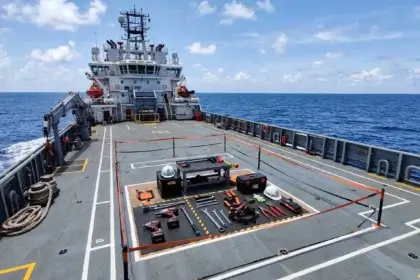
Seafaring is physically demanding work, and I know just how easily injuries can happen during daily tasks on board. Life at sea means moving heavy equipment, standing for long hours, and working in ti...
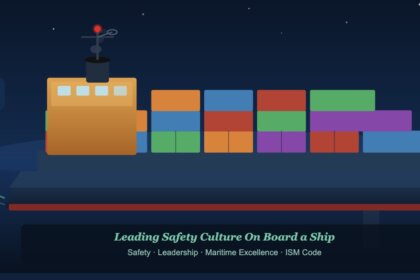
Across the world’s oceans, thousands of seafarers go about their daily work in one of the most demanding and hazardous environments humanity has ever navigated. The difference between a ship tha...



4 responses to “Leading Safety Culture On Board a Ship”
It is scary to see that 80 percent of marine accidents are caused by human error, which is why safety must be one of the most important factors on board a ship. I have a friend who works on a cruise ship and he says there are endless safety drills for staff and even passengers in case of emergencies, and it is important that the staff know what to do in every event.
I was just curious to know how often these emergency procedures are checked out by outside companies, as there is always room for improvement, no matter how good your systems are.
That 80 percent figure is striking and shifts the conversation in an important direction, because it means the biggest safety gains won’t come from better equipment alone but from better training, communication, and decision-making under pressure. Your friend’s experience on the cruise ship actually reflects one of the stronger safety cultures in the maritime industry, partly because cruise lines operate under intense public scrutiny and partly because they carry thousands of passengers who need to be drilled quickly and clearly in an emergency. The repetition of those drills might feel endless from the inside, but that muscle memory is exactly what allows people to act calmly and correctly when genuine panic is setting in around them.
To your question about external oversight, it’s actually more structured than many people realize. Ships operating internationally are subject to inspections under the ISM Code, which is administered by flag state authorities and verified by classification societies such as Lloyd’s Register, Bureau Veritas, and DNV. Port State Control inspections add another layer, in which inspectors in each country can board vessels and independently check safety systems, documentation, and crew competency, regardless of what the shipping company self-reports. On top of that, many companies voluntarily bring in third-party safety auditors to stress-test their procedures beyond what’s required.
That said, the frequency and quality of those inspections can vary by flag state and port, and, as you rightly pointed out, there is always room for improvement. The best companies treat external audits not as a compliance hurdle but as a genuine opportunity to find the gaps their own familiarity might be hiding. That mindset shift from passing inspection to genuinely improving is what really separates leaders from the rest.
Safety culture really does decide what kind of ship people are working on, because rules alone mean nothing if the crew is scared to speak up. I worked in a job before where people stayed quiet about problems just to avoid getting blamed, and that always made things worse later. The part about near-miss reporting without punishment made a lot of sense to me because small warning signs are usually ignored until somebody gets hurt. Do you think shipping companies actually support stop-work authority when delays could cost money? And how often do crews get real safety training instead of just checking boxes for inspections? In my opinion, the best captains are the ones who listen to the crew instead of acting like they already know everything.
Thank you for sharing that. Your experience perfectly illustrates the core problem. When blame is the default response to bad news, people stop delivering bad news, and the risks don’t disappear, they just go underground until they become crises. That’s exactly the dynamic that makes safety culture so much more important than safety rules.
Your question about stop-work authority is one I think about a lot, and I’ll be honest, it’s complicated. In theory, every reputable shipping company endorses it. In practice, when a vessel is behind schedule and port fees are ticking, the pressure on a crew member to stay quiet and push through can be enormous, even without anyone explicitly saying so. The best companies work hard to eliminate that unspoken pressure by making it crystal clear that a job that is stopped due to a documented safety concern will never be penalized, regardless of cost. But that commitment has to come from ownership level, not just a policy binder, otherwise it evaporates the moment money is on the line.
On training, you’re right to be skeptical. Checkbox training is unfortunately widespread because it satisfies auditors without requiring real cultural investment. Genuine safety training involves uncomfortable drills, honest debriefs, and leaders who model vulnerability by admitting their own near-misses. That last point connects directly to what you said about the best captains listening rather than performing authority. Crews follow leaders who demonstrate that good judgment includes knowing what you don’t know. That kind of humility at the top filters down and makes everyone on board safer.