STCW stands for the Standards of Training, Certification and Watchkeeping for Seafarers, and it is the one certification that every seafarer on an internationally trading vessel is legally required to hold. It is not a recommendation, not a bonus line on a CV, and not something a good employer prefers. Without it, a ship cannot legally sign you on, and port state control can detain a vessel over a single missing certificate. If you are asking what STCW certification actually is and why it carries so much weight, the answer starts with where it came from and what problem it was built to solve.
What STCW Actually Stands For and Why It Exists
The STCW Convention was adopted by the International Maritime Organization to fix a basic problem: training standards for seafarers used to vary enormously from one country to the next. A certificate issued in one nation might mean almost nothing in another, and there was no shared baseline for what a competent deck officer, engineer, or rating actually needed to know. Ships trade across borders constantly, and crews move between flag states, so the industry needed one standard that every signatory country would recognize and enforce in the same way.
STCW sets that common floor. It defines the minimum training, certification, and watchkeeping competence required for seafarers working on vessels that fly the flag of any country that has ratified the convention, which covers the vast majority of the world’s commercial shipping. A major update, known as the Manila Amendments, further modernized the convention, tightening requirements for fatigue management, security awareness, and the refresher training covered later in this article.
The practical effect for you is simple. STCW is not a national qualification. It is an international one, built so that a certificate earned in one country is accepted on a ship flagged in another, crewed by people trained in a third, sailing into ports governed by a fourth. That portability is the entire point, and it is why shipping companies treat STCW compliance as non-negotiable rather than a formality to work around.
The Basic Safety Training Courses Every Seafarer Must Hold
Before anyone steps aboard an international vessel in any capacity, deck, engine, catering, or rating, they need Basic Safety Training (BST). This is not one course, but a set of four, and all four are mandatory regardless of the rank you are aiming for.
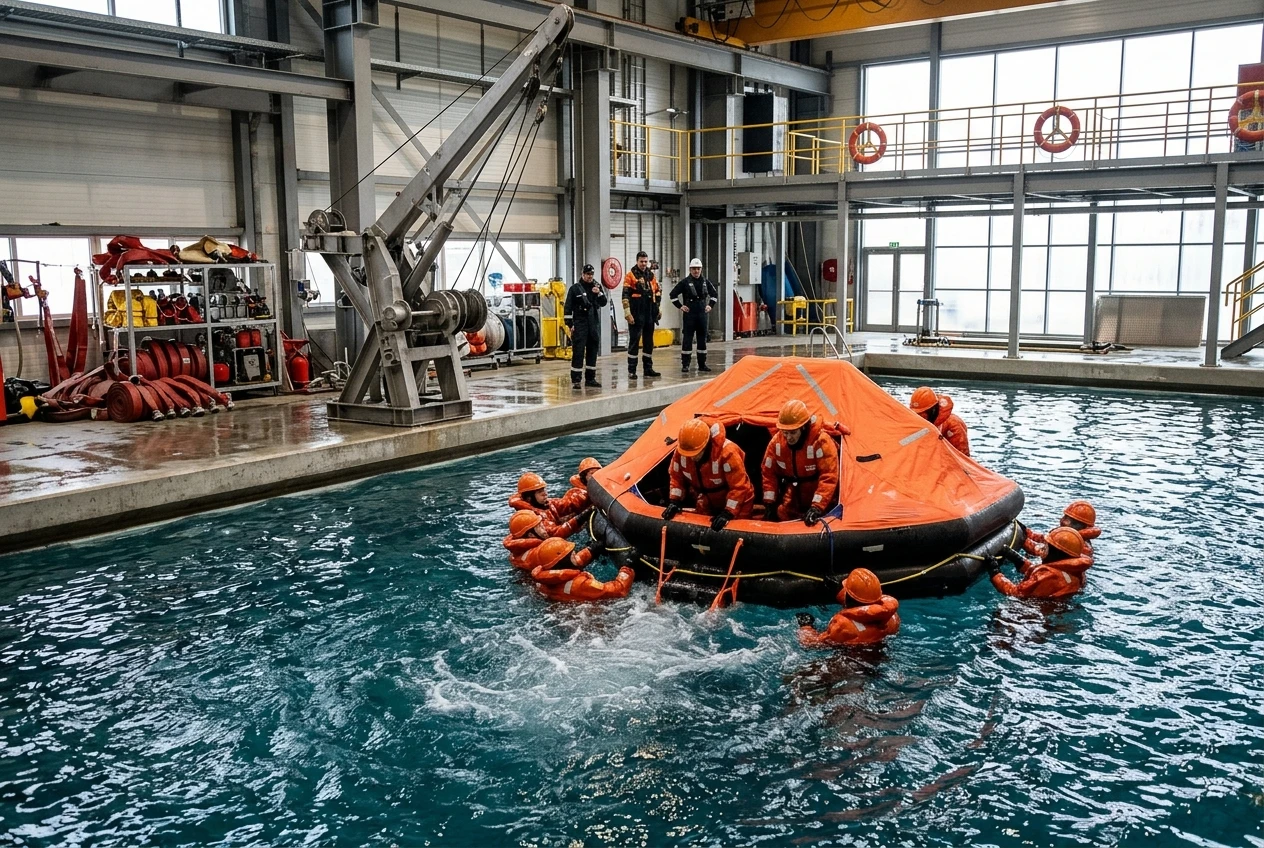
- Personal Survival Techniques (PST): covers abandoning ship, using lifeboats and life rafts, survival at sea, and handling personal flotation and immersion equipment.
- Fire Prevention and Fire Fighting (FPFF): covers shipboard fire risks, the use of fire-fighting equipment, and practical firefighting drills, usually involving live-fire exercises.
- Elementary First Aid (EFA): covers immediate first aid response to injuries and medical emergencies on board, including what to do before more advanced care is available.
- Personal Safety and Social Responsibility (PSSR): covers safe working practices, hazard recognition, emergency procedures, and understanding shipboard organization and the chain of command.
Each of these is assessed and certified separately, and all four together make up the Basic Safety Training certificate that appears on almost every seafarer’s documentation. No matter which rank or department you enter the industry through, this is the starting point. Officers and ratings alike need it, and it has to be completed before sea service on an international vessel begins, not arranged afterward as a formality.
Beyond BST, STCW adds additional mandatory courses depending on your role and the type of vessel, such as Proficiency in Survival Craft, Advanced Fire Fighting, Medical First Aid or Medical Care, and security-related training such as Security Awareness. Which of these apply to you depends on rank, which is covered further down, but BST applies to everyone without exception.
How an STCW Certificate Differs From Your National Maritime License
This is where a lot of confusion arises, and it is worth being precise, because the two documents are not interchangeable, and employers will not treat them as such.
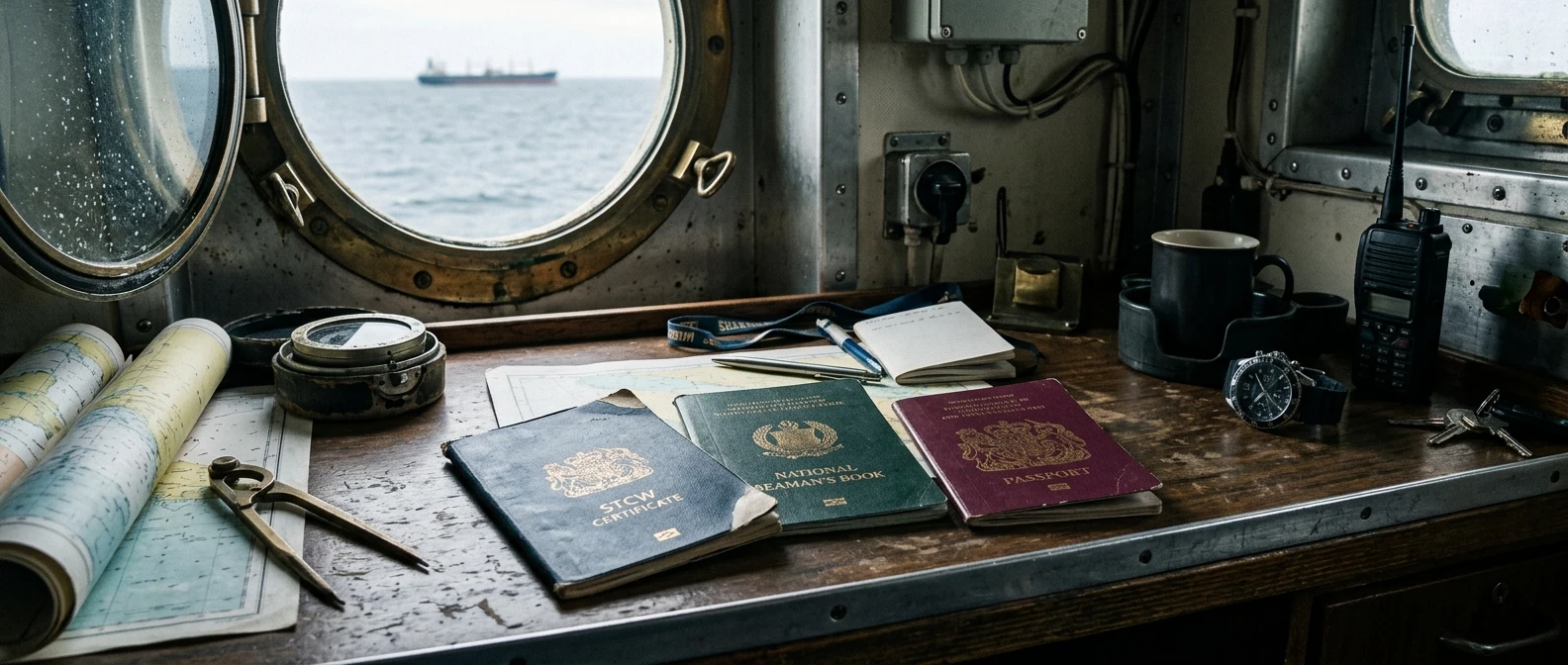
A national maritime license, sometimes called a seaman’s book, seafarer’s identity document, or a national certificate of competency, is issued by your own country’s maritime authority. It confirms your identity as a mariner, your nationality, your service record, and in some cases your competency according to that country’s own standards. It is a real and necessary document, but its authority is domestic. It indicates to a flag state or port that you are a registered seafarer under that country’s system.

STCW certification is different in kind, not just in scope. It is issued or endorsed in line with the international convention and certifies that you have met specific, internationally agreed-upon competency standards, often through a Certificate of Competency (CoC) for officers or a Certificate of Proficiency for ratings and specific functions. A flag state issues or endorses STCW certificates based on IMO-recognized training and assessment, and other countries that are parties to the convention are obligated to recognize those certificates as valid, provided they were properly issued and the flag state’s maritime training system has been audited and recognized by the IMO.
In practice, this means you can hold a perfectly valid national seaman’s license and still be unemployable on an international vessel because the ship’s manning requirements are based on STCW, not your home country’s domestic paperwork. Conversely, a strong STCW record does not replace the national documentation you need to be legally registered as a seafarer in your own country. You typically need both, and they serve different functions: the national license proves who you are within your country’s maritime system, and STCW certification proves you meet the competency bar that international shipping actually runs on.
This is also why “my license says I’m qualified” is not the same conversation as “my STCW certificates are current.” Manning agents and ship operators are looking specifically for the STCW paperwork because that is what port state control checks and what determines whether the ship can legally sail with you on board.
Mandatory Refresher Courses and When They Expire
STCW certificates are not permanent. Some of the Basic Safety Training components, specifically Personal Survival Techniques and Fire Prevention and Fire Fighting, require refresher training on a recurring basis, commonly every five years, to keep the certificate valid. This was reinforced by the Manila Amendments, specifically because skills like firefighting and survival craft handling degrade if not practiced, and a certificate earned a decade ago without renewal does not reflect current competence.
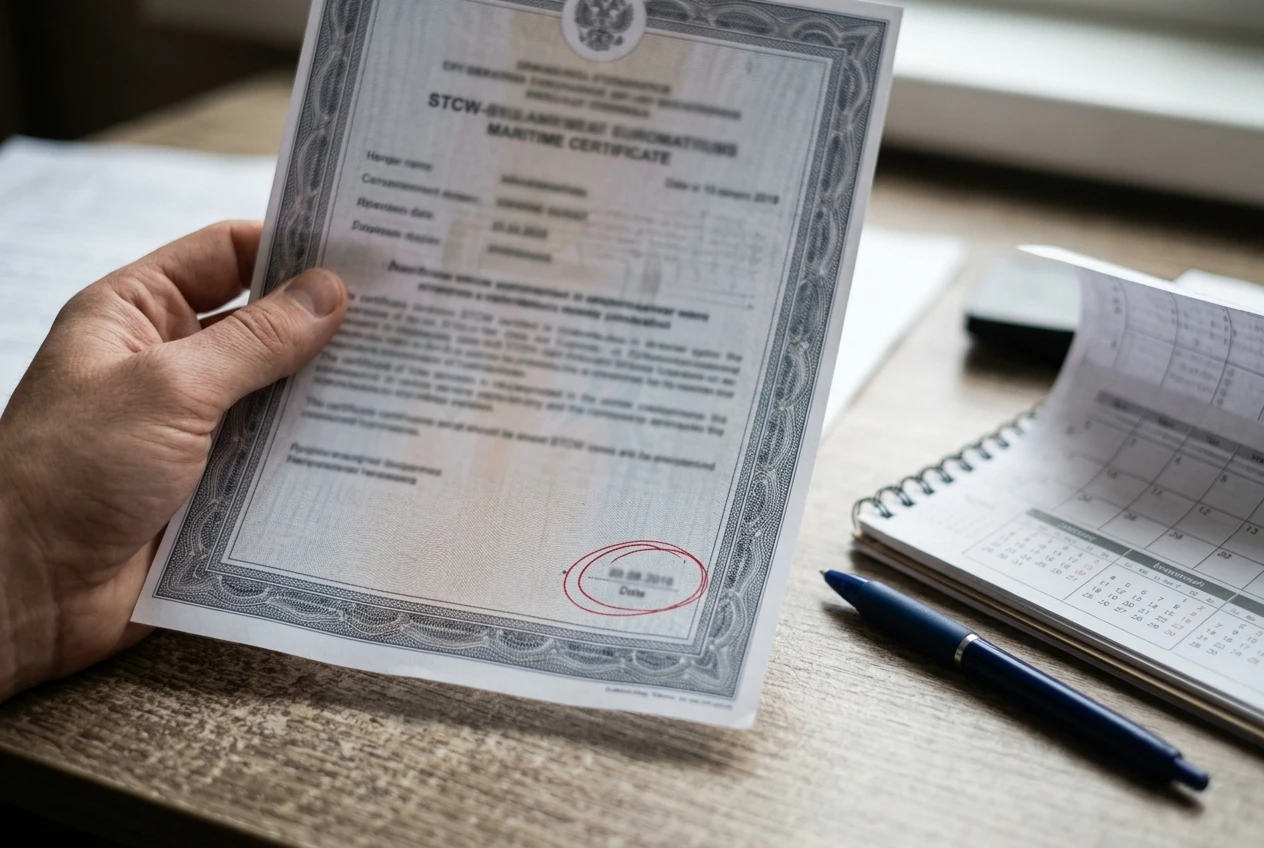
Other certificates, like Elementary First Aid and PSSR, have historically not carried the same mandatory refresher cycle in the same way, though requirements can vary depending on flag state interpretation and specific employer policy, so it is worth checking the validity dates printed directly on your certificates rather than assuming based on what a colleague’s paperwork says.
The practical risk here is straightforward: if your refresher training lapses while you are mid-contract or between contracts, your certificate can expire before you realize it, and a ship cannot sign you on with expired STCW documentation. This is one of the most common and entirely avoidable reasons seafarers get turned away or delayed at the start of a contract. Treat your certificate expiry dates the same way you would treat a passport expiry date: check them well ahead of your next contract, not the week before you are due to fly out.
Keeping a simple record of issue and expiry dates for every STCW certificate you hold, not just BST but any additional proficiency certificates relevant to your rank, is one of the most useful habits you can build early in a seafaring career. Agencies and manning companies will ask for this information repeatedly, and having it ready and current saves you from scrambling to book a refresher course on short notice.
STCW Requirements by Rank: Deck, Engine, and Rating Pathways
While Basic Safety Training is universal, the full set of STCW requirements expands significantly depending on the department and rank you are working toward.
Ratings (deck ratings, engine ratings, and ratings forming part of a navigational or engineering watch) need BST plus, depending on their specific function, additional certificates such as Proficiency in Survival Craft and Rescue Boats, and security training appropriate to their role. Ratings forming part of a watch also need to meet specific STCW competency standards tied to watchkeeping duties, even though they are not officers.
Deck officers working toward a Certificate of Competency need BST, Proficiency in Survival Craft and Rescue Boats, and, depending on the vessel and the officer’s intended role, additional certifications covering radar observation and ARPA, bridge resource management, and, in many cases, GMDSS radio operator certification. Officers also need to meet specific sea service requirements in addition to the training courses, since STCW competency is assessed through a combination of coursework and verified time on board.
Engineering officers follow a parallel track, with BST as the foundation, plus engine-specific competency training covering machinery operation, engine room resource management, and depending on the vessel’s propulsion and equipment, specialized certification for specific systems.
Certain vessel types add further layers regardless of rank. Tanker operations, for example, typically require tanker-specific familiarization training beyond the general STCW baseline, because the cargo and firefighting risks on a tanker differ from those on a general cargo or passenger vessel. Passenger ships bring their own additional requirements for crowd and crisis management training. The specifics depend on the vessel type and the flag state’s implementation of STCW, so it is worth confirming exactly which additional certificates your intended role and vessel type require rather than assuming BST alone covers every ship you might work on.
The throughline across every pathway is that STCW requirements scale with responsibility and risk, not just seniority. A rating with watchkeeping duties has real certification obligations beyond BST, and an officer’s paperwork grows heavier as the role carries more responsibility for navigation, cargo, or passenger safety.
Where to Get Certified and What an Approved Course Looks Like
Not every training provider offering a course labeled “STCW” is authorized to issue certificates recognized internationally. This matters enormously, because a certificate from an unapproved provider can look identical to a valid one on paper and still be worthless when a port state control officer or a manning agent checks it against the official registry.
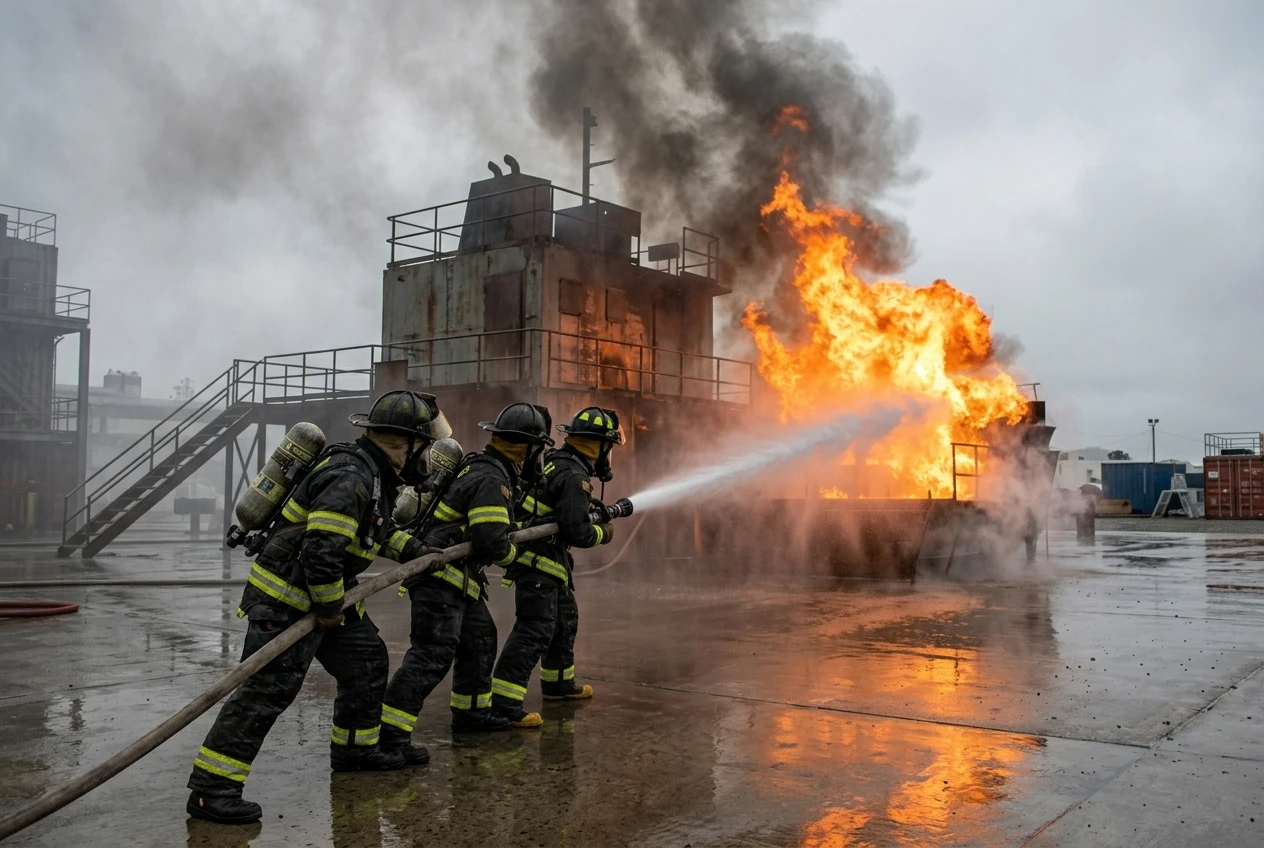
An approved course is one delivered by a training center accredited by a maritime authority recognized under STCW, and that follows the specific syllabus, instructor qualifications, equipment standards, and practical assessment requirements set out in the convention. For something like Fire Prevention and Fire Fighting, that means access to real firefighting equipment and live-fire exercises, not just a classroom and a slideshow. For Personal Survival Techniques, it means actual in-water drills with life rafts and survival equipment, not a theoretical walkthrough.
Before enrolling anywhere, it is worth confirming a few specific things:
- The training center’s approval status with the relevant maritime authority, and whether that approval is current, not expired or under review.
- Whether the certificate issued will carry an STCW endorsement recognized by the flag states you intend to work under.
- Whether the course includes the required practical assessment component, not just a written exam, since STCW competency standards are built around demonstrated skill, not just knowledge.
- The total duration of the course should align with the syllabus hours STCW requires, since a course significantly shorter than the standard hours is a warning sign.
Costs, exact course lengths, and specific provider names vary by country and training center, so it is worth treating any country-specific pricing or duration claim with some skepticism until you confirm it directly with an accredited provider local to you or with the maritime administration under which you intend to be certified. What does not vary is the underlying standard: if a course cannot produce a certificate that is recognized under the STCW framework by an IMO member state, it is not serving the purpose you need it to serve, regardless of how it is marketed.
Common Reasons Employers Reject STCW Paperwork
A surprising number of seafarers get turned away or delayed not because they lack training, but because their paperwork has a problem that is easy to miss until someone checks it closely. Understanding the common failure points helps you avoid becoming one of them.
Expired refresher certificates. As covered above, PST and Fire Fighting certificates typically need renewal on a recurring cycle. A certificate that was valid when you signed off your last contract can expire while you are home, and employers check expiry dates against your expected joining date, not just today’s date.
Certificates from unapproved or unrecognized training centers. A certificate that looks professionally produced but was issued by a center without proper accreditation will fail verification. This happens more often with certain additional proficiency certificates than with BST, but it can happen anywhere.
Mismatched names or details between documents. Inconsistencies between your passport, seaman’s book, and STCW certificates, misspelled names, mismatched dates of birth, or different document numbers across paperwork create red flags that manning agents and flag state administrations take seriously, because document fraud is a real and ongoing problem in the industry.
Missing endorsements for the specific vessel type or role. Holding BST and general proficiency certificates does not automatically qualify you for a tanker or a passenger vessel if those vessel types require additional specific training you have not completed.
Confusing a national license for STCW compliance. As discussed earlier, a valid national seaman’s license does not substitute for STCW certification. Seafarers sometimes assume that because they are legally registered and licensed at home, their documentation is complete, without realizing that the ship’s requirements follow international standards, not domestic ones.
Certificates that were never properly endorsed by a flag state. In some cases, the underlying training was legitimate, but the formal endorsement process that makes the certificate officially recognized under STCW was never completed or was completed incorrectly. This is a procedural gap rather than a training gap, but it results in the same rejection at the gangway.
None of these problems are difficult to avoid once you know to check for them. The pattern across nearly all of them is the same: paperwork that looks complete on the surface but has not been verified against the specific, exacting standard STCW actually sets. Before any contract, it is worth going through every certificate you hold, checking expiry dates, confirming the issuing center’s accreditation, and making sure every document matches across your full file. That ten minutes of checking is far cheaper than being sent home from the gangway.
If you’re still mapping out your first steps into the industry, read Getting Started In The Maritime Industry for what comes before and after certification.
This article was created with AI assistance and reviewed by a human editor.
Disclosure: This post contains Amazon affiliate links. If you buy through them, we may earn a small commission at no extra cost to you.