
Choosing where to train is one of the few decisions in a maritime career that you cannot easily undo later. The flag state certificates on your license, the sea time logged in your training record book, and the name on your diploma all trace back to one institution, and employers read that trail closely. Two academies can advertise almost identical course titles and produce graduates with very different job prospects because the gap between them lies in details that a glossy prospectus rarely spells out.
This article gives you a working checklist for how to choose a maritime training academy, built around the three factors that actually predict whether a cadet gets hired: whether the accreditation is real and current, whether the academy has fleet partnerships that translate into actual berths for sea time, and how much of the program happens on a simulator, in a workshop, or on a vessel rather than in a lecture hall. We will also cover instructor credentials, class sizes, red flags, and the questions worth asking before you commit.
Why the Academy You Pick Shapes Your Whole Career
A maritime academy is not just a school; it is the gatekeeper for the paperwork that lets you work at all. Your STCW certificates, your cadetship record, and your initial sea time all originate from your training provider, and a shipping company’s manning department will check each of them before an offer is made
Beyond paperwork, the academy shapes the skills you actually walk away with. A cadet who spent two years on a simulator bridge and three months on an actual vessel arrives at their first contract with muscle memory a classroom-only graduate simply does not have. Officers who interview cadets for permanent positions notice the difference within the first week aboard.
The stakes are higher than when choosing a university for a shoreside career, because a maritime qualification is only valuable if it is recognized by flag states and accepted by employers. Get this choice wrong, and you can spend a year completing a program whose certificate nobody wants to honor. Get it right, and the academy becomes the foundation your entire licensing ladder sits on, from rating up through officer of the watch and beyond.
Start With Accreditation: What to Verify and Where to Check It
Accreditation is the first filter, and it is also the one families most often take on faith because the academy’s own website says the magic words “STCW compliant” somewhere on the homepage. That claim needs to be checked independently, not accepted because it is printed in bold.
Start with the flag state or maritime administration that actually issues the certificates the academy claims to prepare you for. Most maritime administrations publish a list of approved training institutions, and if the academy you are considering does not appear on that list, no amount of marketing copy makes up for it. If you intend to sail under a flag other than your home country’s, confirm that the certificates the academy issues are recognized under that flag as well, since recognition is not automatic between administrations.
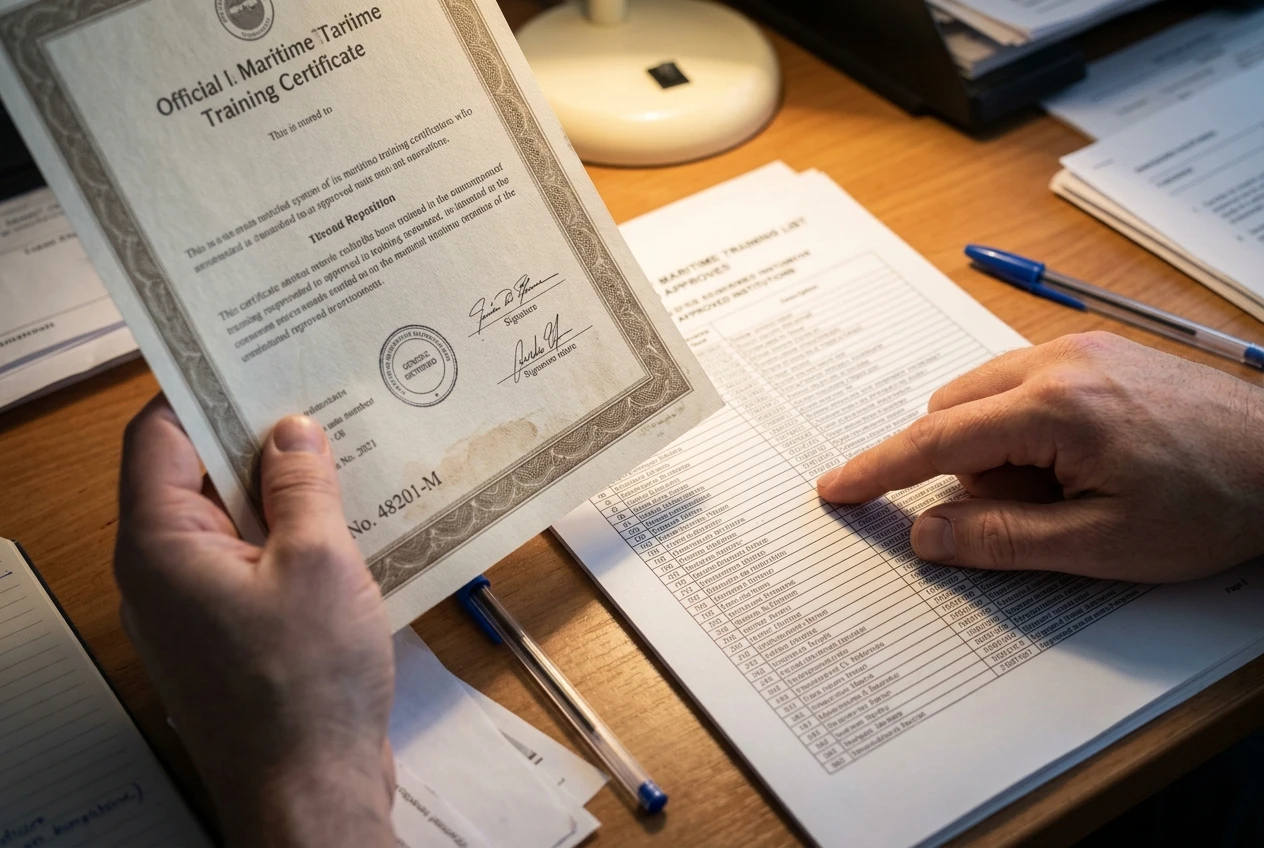
Next, look for the specific course approvals rather than a blanket claim. An academy might hold valid accreditation for basic safety training but not for more advanced courses like radar observer, ship simulator, or bridge teamwork. Ask the academy directly for the certificate numbers and the issuing authority for each course you intend to take, and verify those numbers yourself rather than taking a photocopy at face value.
Also check whether the academy is listed with the relevant maritime authority for your country’s seafarer registration, since some administrations only recognise certificates earned at institutions on their own approved list, independent of what the academy’s home country recognises. A certificate that is valid in the country where you trained can still be worthless for registration back home if that link is missing.
Finally, confirm how current the accreditation actually is. Approvals lapse, course curricula get revised under amendments to the STCW convention, and an academy that was compliant three years ago may not have updated its syllabus since. Ask when the accreditation was last renewed and whether the course content reflects the most recent STCW amendments, not an older version of the convention. Once you have an academy shortlisted, it is worth reading STCW Certification Explained: What Every Seafarer Needs to Know so you know precisely which certificates the program is supposed to deliver and can check the academy’s course list against that standard line by line.
Fleet Partnerships: Why Sea Time Placement Matters More Than the Prospectus
A cadetship on paper is not a cadetship until it includes actual sea time aboard a working vessel, logged and signed off by a qualified officer. This is where many academies quietly fall short, because classroom teaching is easy to deliver in-house, while berths on real ships depend on relationships the academy must maintain with shipping companies.
Ask every academy on your shortlist a direct question: which shipping companies currently take their cadets for sea time, and how many berths were filled last year. A strong answer names specific companies and gives you a sense of scale. A vague answer, something like “we have industry contacts” with no company named, should make you cautious.
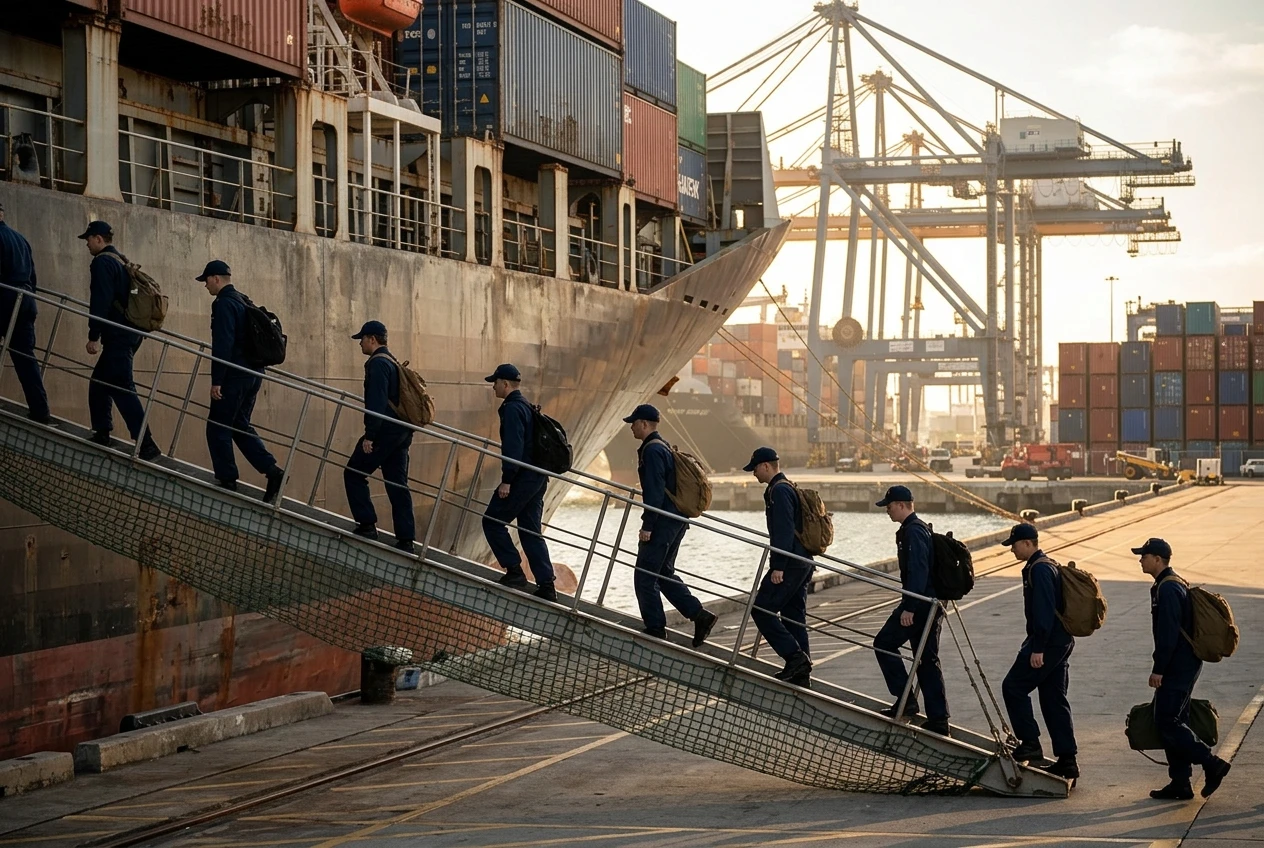
It also matters whether the placement is guaranteed as part of the program fee or left for the cadet to arrange independently. Some academies build sea time placement into the cost of enrolment and handle the logistics of matching cadets to vessels. Others leave cadets to find their own placement after classroom training finishes, which can mean months of delay waiting for a company to accept you, or paying a separate agency fee on top of what you already spent on tuition.
Ask how long, on average, a cadet waits between finishing shore-based training and boarding a vessel for sea time. A gap of a few weeks is normal. A gap measured in many months suggests the academy’s fleet partnerships are thinner than advertised, or that demand for berths from that cohort regularly exceeds supply.
It is also worth asking what type of vessels the partner fleet operates. Sea time on a bulk carrier provides a different experience from sea time on a container ship or a tanker, and if your intended career path is toward a specific vessel type, an academy whose fleet partners operate elsewhere will not serve that goal well, even if the placement rate itself looks healthy.
Finally, ask what happens if a placement falls through. Does the academy have backup arrangements with other companies, or does the cadet simply wait for the next opening? An academy with a single fleet partner is more fragile than one with several, because any disruption to that one relationship, whether from a change in company policy or a downturn in that company’s hiring, leaves every cadet in the pipeline stranded at the same time.
Simulators, Workshops and Vessels: Judging the Hands-On Training on Offer
Classroom theory explains how a radar set or an engine room works. It does not teach the reflexes needed to operate one under pressure, and that gap is exactly what hands-on training is meant to close. When you compare academies, ask for the actual number of simulator hours and workshop hours built into the curriculum, not a general statement that simulators are “available.”
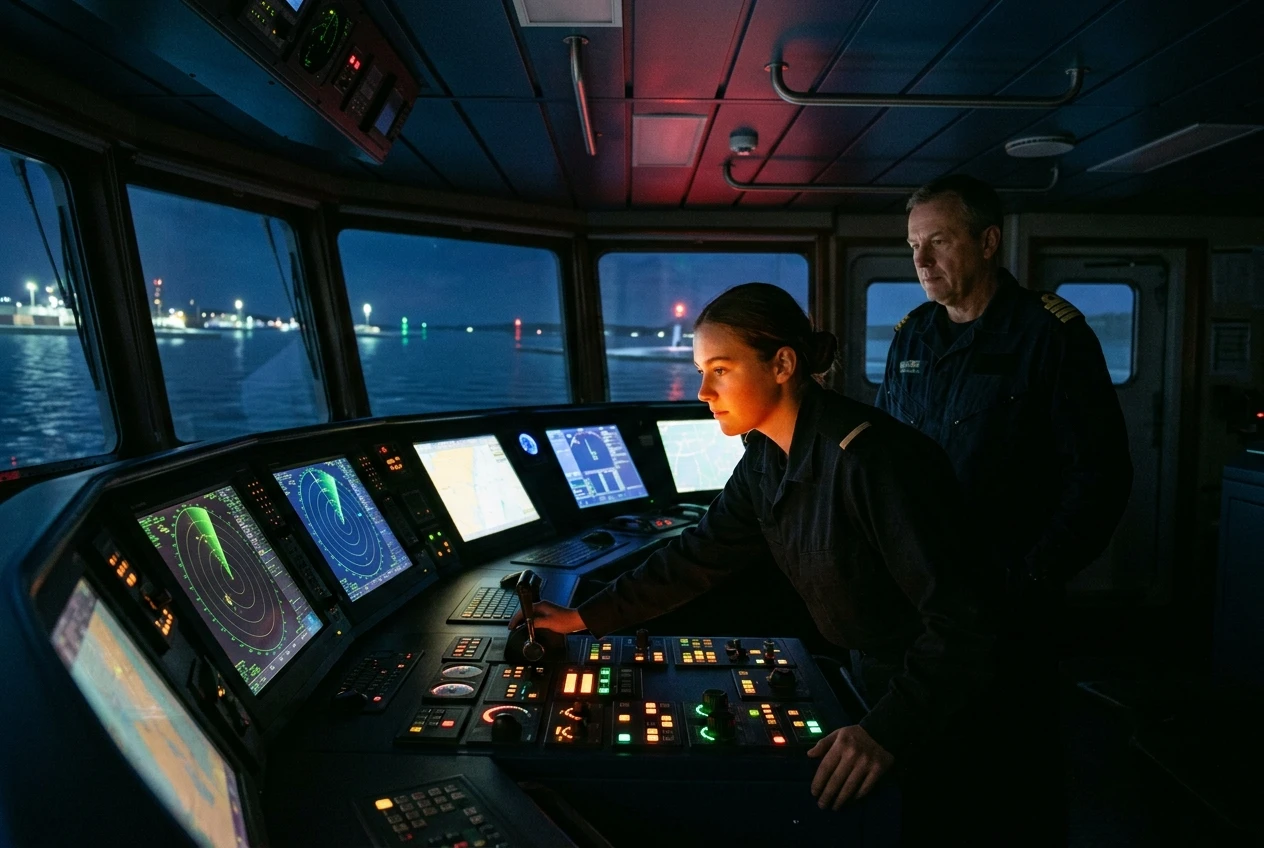
A full mission bridge simulator, the kind that replicates a ship’s bridge with working instruments and realistic traffic scenarios, is expensive equipment, and not every academy that claims to have one actually runs it on a current, well-maintained system. Ask when the simulator hardware and software were last updated, and ask whether the simulator sessions are scheduled as a core part of every cadet’s timetable or offered only to cadets who pay an additional fee.
For engineering cadets, ask about access to a working engine room simulator and to physical workshops with real machinery, not just diagrams and models. The difference between reading about a diesel engine’s fuel injection system and actually disassembling and reassembling one under supervision is the difference between passing a written exam and being useful on your first watch.

Ask, too, whether the academy owns or has regular access to a training vessel, as distinct from the fleet partnerships used for extended sea time. A training vessel allows cadets to gain short, repeated exposure to real shipboard conditions throughout the program, rather than saving all practical experience for a single placement at the end. Academies that run their own training ship or have a formal arrangement for one tend to produce cadets who are noticeably more comfortable on their first real contract.
Request a breakdown of the total program hours split between classroom theory, simulator time, workshop time, and sea time. If an academy cannot produce that breakdown clearly, or resists giving you a number, treat that as a sign the hands-on component may be thinner than the marketing suggests. A program that is 70% lecture and reading, with hands-on work compressed into a short final block, is a very different experience from one that integrates practical sessions throughout.
Instructor Credentials and Class Sizes Worth Asking About
Who is actually teaching the course matters as much as what the course covers. Ask whether instructors hold the certificates of competency relevant to what they teach, and ask how recently they themselves served at sea. An instructor who left sea service decades ago and has not kept current with modern vessel technology, bridge equipment, or current regulations will teach a version of the job that no longer matches what you will find aboard a ship today.
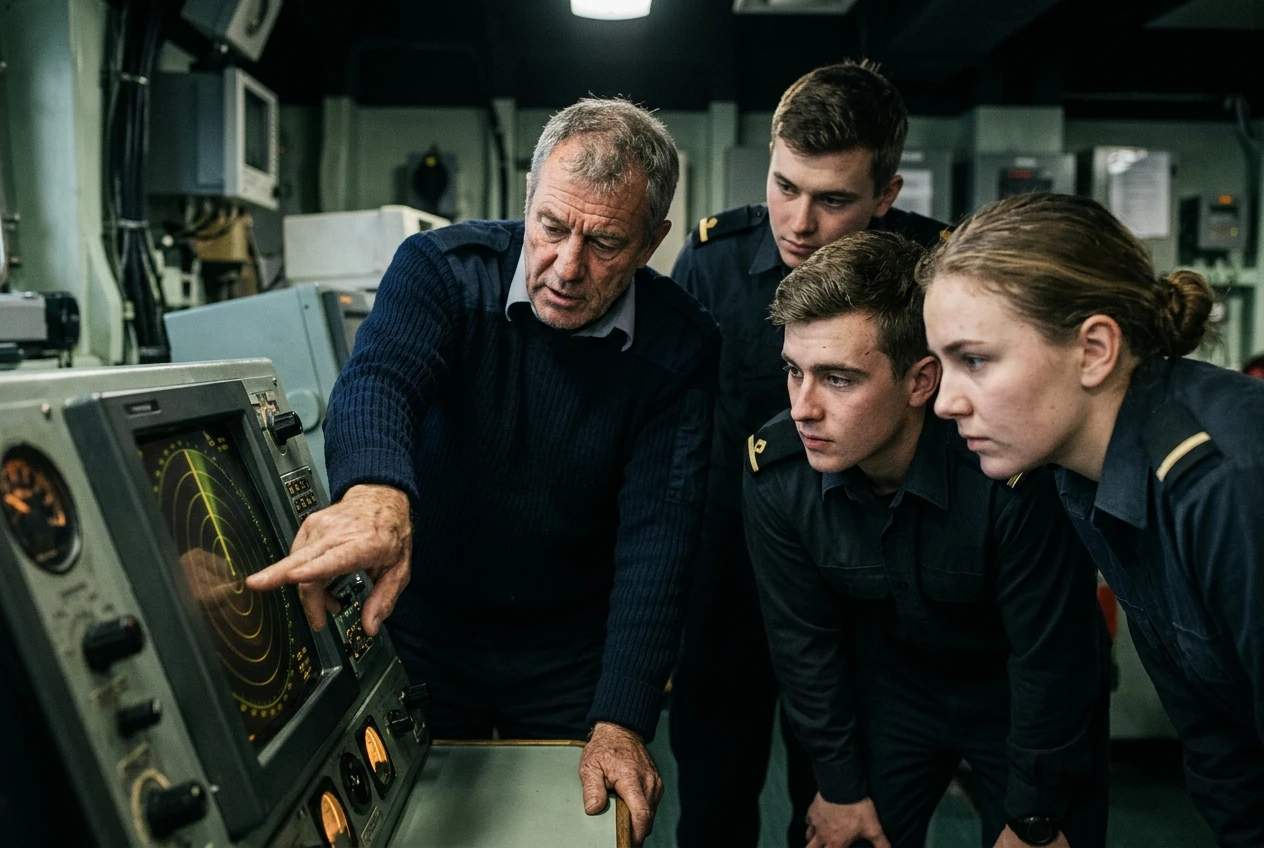
Ask about the instructor-to-cadet ratio for simulator sessions and workshop time. A lecture hall can reasonably accommodate a large group, but a simulator exercise or a hands-on workshop loses its value if one instructor is trying to supervise so many cadets that most of them spend their time watching rather than doing. Ask directly how many cadets are in each simulator group and how much individual console time each cadet gets per session.
Also ask about instructor turnover. An academy where the same core instructors have taught for several years tends to have more stable, better-refined practical sessions than one that relies heavily on rotating or part-time staff, because institutional knowledge about how to run a workshop safely and effectively takes time to build.
Class size for the program overall is worth asking about too, separate from the simulator ratio. A very large cohort can mean the academy’s fleet partnerships are stretched thinner across more cadets competing for the same limited berths, even if each individual company placement is genuine. A smaller, well-matched cohort size relative to the academy’s confirmed placement capacity is often a better sign than a large enrolment number used as a marketing point.
Red Flags That Should Make You Walk Away
Some signs are serious enough to be deal-breakers, regardless of how good the rest of the academy’s pitch sounds.
- The academy cannot or will not provide specific certificate and approval numbers for its courses when asked directly.
- Marketing materials describe “guaranteed job placement” without naming any shipping companies or showing any verifiable placement history.
- Simulator or workshop facilities shown in photos or on a tour appear outdated, with no clear answer about when the information was last serviced or updated.
- Instructors cannot describe their own recent sea service or hold certificates below the level they are teaching toward.
- The program fee bundles sea time placement into the cost, but the contract contains no specific commitment about timeframe, vessel type, or what happens if placement is delayed.
- Past graduates you manage to contact independently report long, unexplained gaps between finishing coursework and actually boarding a vessel.
- The academy pressures you to enroll quickly, offering limited seats or a closing discount, before you have had a chance to independently verify its accreditation.
- Fees are significantly lower than those of comparable academies, with no clear explanation, which may indicate that they cut costs on simulator time, workshop maintenance, or qualified instructors.
None of these signs alone is necessarily disqualifying; when they appear together, it is a strong reason to keep looking rather than hope the rest of the program compensates.
Questions to Ask on a Campus Visit or Call
A campus visit, or a thorough phone and video call if visiting is not practical, is where you convert the research above into direct answers. Bring a written list and do not leave until each question has a specific answer, not a general reassurance.
On accreditation:
- Which flag state or maritime administration approves this program, and can you give me the cerprovidee number to verify indepso I candently?it
- Which specific courses are covered under that approval, and which, if any, are not?
- When was the curriculum last updated to reflect the current STCW amendments?
On fleet partnerships and sea time:
- Which shipping companies currently take cadets from this academy, and how many berths did they fill in the last intake?
- Is sea time placement guaranteed as part of the fee, and what is the typical wait between classroom finish and boarding?
- What types of vessels does your fleet operate, and do they match the career path I want?
- What is the backup plan if a placement with one company falls through?
On hands-on training:
- What are the total hours for simulator time, workshop time, and sea time, as a share of the full program?
- When was the simulator hardware and software last updated?
- What is the instructor-to-cadet ratio for simulator and workshop sessions?
On instructors and cohort size:
- What certificates does my intended course offer, and how much experience does it provide?
- How large is the current cohort, how much recent sea service do they have, and how does that compare to confirmed placement capacity with partner companies?
Write down the answers as you get them, and if possible, ask for anything significant in writing rather than relying on verbal assurances. An academy confident in what it offers will have no difficulty providing documentation for every one of these points.
Choosing a maritime training academy well is largely a matter of refusing to take claims at face value and checking each one against independent sources: the flag state’s approved list, named shipping companies you can look up, and concrete hours rather than vague descriptions of “hands-on learning.” Once you have narrowed your shortlist down using the checklist above, read STCW Certification Explained: What Every Seafarer Needs to Know so you know exactly which certificates your chosen program needs to deliver, and can hold the academy to that standard before you sign anything.
This article was created with AI assistance and reviewed by a human editor.
Disclosure: This post contains Amazon affiliate links. If you buy through them, we may earn a small commission at no extra cost to you.