If you want to understand merchant navy career progression, start with this: each promotion on deck depends on a certificate, and each certificate depends on sea service, approved courses, and usually an exam. Time served alone does not move you up. A deckhand with ten years on board and no certificate of competency stays a rating, and a newly qualified officer with the right papers can sign on as third mate.
This article maps each step from entry-level rating to Master and on to shore roles, and names the certificate that opens each one. The international baseline is the STCW Convention, but each country (the flag state) issues the actual certificates and sets its own sea service and exam rules. Read the details below as a guide to the structure, then check the exact figures with your own flag state.
The deck ladder at a glance
The deck department has four main rungs, each tied to a level of responsibility under STCW.
Rung Typical rank Level under STCW What it unlocks Rating Deckhand, ordinary seaman, able seafarer Support level Lookout, helming, mooring, deck maintenance Officer of the Watch Third mate, second mate Operational level Keeping a navigational watch on the bridge Chief Mate Chief officer Management level Second in command, cargo operations, deck department Master Captain Management level Command of the ship
Under the Convention, the certificate for the officer of the watch comes under Regulation II/1. The management-level certificate for chief mate and Master on ships of 3,000 gross tonnage or more comes under Regulation II/2. Ships below those tonnage thresholds have their own provisions, and your flag state decides how to apply them.
Ratings who stand a navigational watch are covered by Regulation II/4, and able seafarers on deck by Regulation II/5. The names of the ranks differ between companies and countries. The certificates behind them follow the same pattern almost everywhere.
Starting out as a deckhand
Before a first contract, you need a set of entry certificates. The core of them is basic safety training, which STCW splits into four parts: personal survival techniques, fire prevention and firefighting, elementary first aid, and personal safety and social responsibilities. Most seafarers also complete security awareness training, and many flag states and employers add their own requirements.
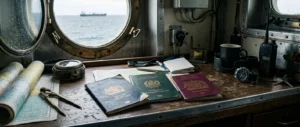
You will also need a valid seafarer medical fitness certificate from a doctor approved by your flag state, plus whatever identity or seafarer’s book your country issues. Employers check these documents before they check anything else.
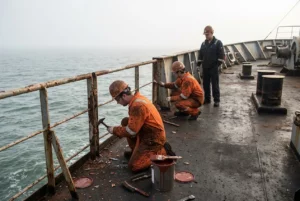
On the first contract, a deckhand or ordinary seaman works under the bosun and the officer of the watch. The work is mostly practical:
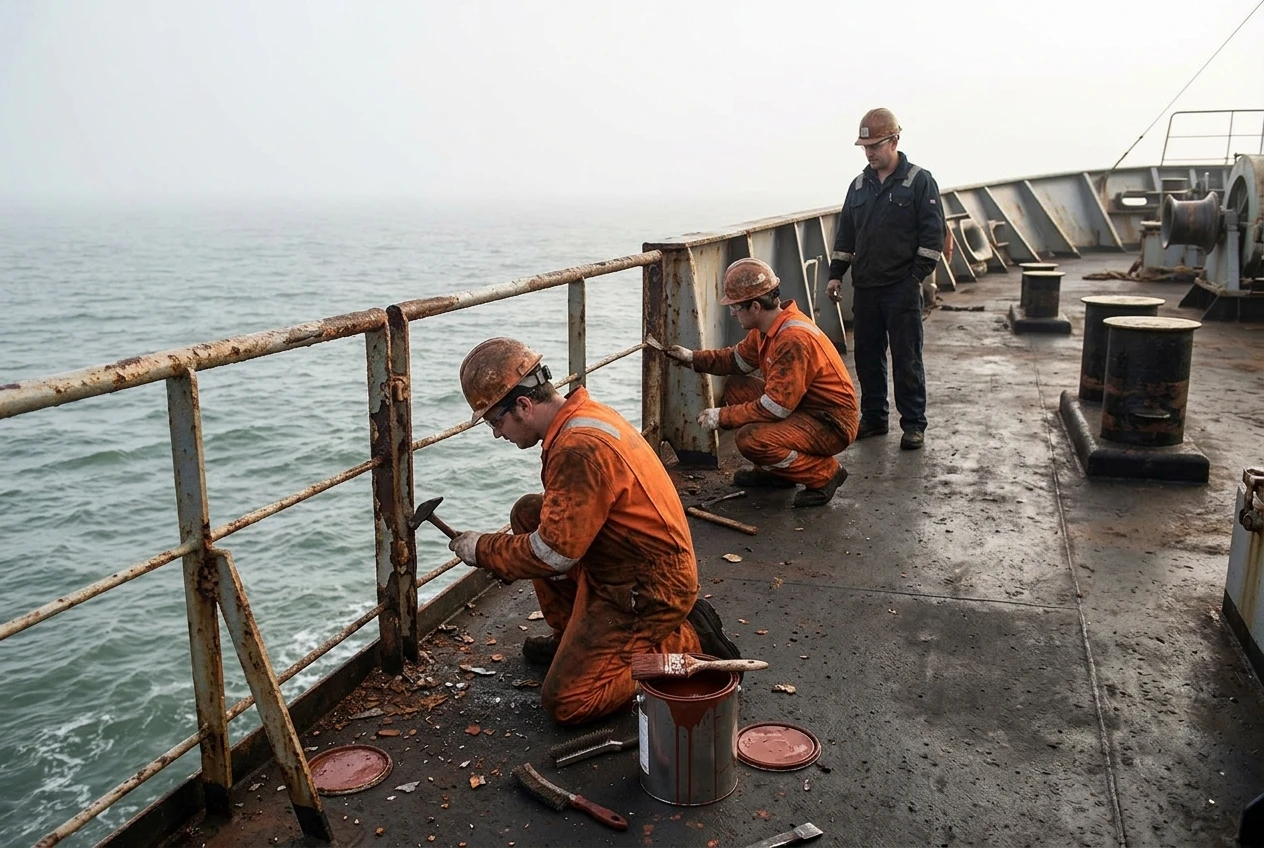
- Chipping, painting and general maintenance of the deck and hull
- Handling mooring lines during arrival and departure
- Standing lookout when assigned
- Cleaning cargo holds or tank decks, depending on ship type
- Learning the ship’s safety equipment, drills and routines
This period is also when the ladder first becomes visible. You see what the third mate, second mate and chief mate each do all day, and you can ask them what they studied. Sea service from this first contract starts counting toward later qualifications, so keep your discharge records and any training record book your flag state or company requires.
Your health on board counts from the start. Fatigue, sleep and seasickness all affect how well you learn on a first contract, and the site covers them in Managing Fatigue For Ships Crew During Long Voyages and other safety and wellbeing guides.
Moving up to able seafarer
An able seafarer deck (often called an AB) holds a certificate under STCW Regulation II/5, which was added to the Convention by the 2010 Manila amendments. The Convention sets a minimum of seagoing service in a navigational watch, with a shorter period allowed if you complete approved special training. Flag states may ask for more, so confirm the number with yours.
The jump in responsibility is real. An AB is trusted to steer by hand and with the autopilot, keep a proper lookout, and carry out the mooring, rigging, and cargo-related work that ordinary seamen assist with. ABs also tend to perform more safety-critical tasks: rigging pilot ladders, operating deck machinery, and serving as crew during lifeboat and fire drills.
The paperwork changes too. You move from basic entry certificates to a rated certificate, and you may need proficiency in survival craft and rescue boats (Regulation VI/2), depending on your ship and flag state. Your sea service now serves two purposes: it qualifies you as an AB, and it can count toward officer qualification if you choose that route.
The senior rating on most deck crews is the bosun, who supervises the other ratings and takes work orders from the chief mate. That is a respectable career endpoint in its own right, and plenty of seafarers stay in it. The rest of this article is for those who want to move onto the officer track.
Rating to officer or cadet to officer
There are two main routes to an officer’s certificate, and they suit different people.
The cadet route
A cadet enrolls in an approved maritime college or academy and follows a structured program. It combines classroom study with a period of approved sea time as a trainee, and the sea time is recorded in a training record book, which a company officer signs off on. At the end, the cadet sits the flag state’s exams and applies for an officer-of-the-watch certificate. The Convention’s baseline for this route requires at least 12 months of approved seagoing service as part of an approved training program, though programs usually run longer.
The advantages are a clear structure and a recognized degree or diploma in many countries. The cost is also up front: tuition fees and often a period with no income, unless a shipping company or government scheme sponsors you.
The hawsepipe route

The hawsepipe route is the name for going from rating to officer. You work as a rating, accumulate the watchkeeping sea service your flag state requires, then complete approved shore-based courses and sit the same officer-of-the-watch exams. In many flag states the sea service requirement for this route is around three years, but this varies, so do not take that figure as universal.
The advantages are that you earn a wage while you qualify and you know the working side of the ship before you hold a rank. The challenges are that you often have to organize the study yourself, find a college that accepts ratings, and arrange leave from your employer for the courses.
Some countries have a dedicated pathway with shorter or part-time college courses for ratings. Others make the hawsepipe route very difficult or close it altogether. Some companies sponsor selected ratings; others do not. The cadet route is easier to find in some countries, and the hawsepipe route is easier in others, so the best choice depends on where you hold your seafarer documents.
A useful way to decide is to ask three questions: Can I afford a period without wages? Does my flag state recognize the hawsepipe route? Is there a company I could work for that sponsors either route? If the answer to the third is yes, that sponsor’s conditions often settle the question.
Officer of the Watch
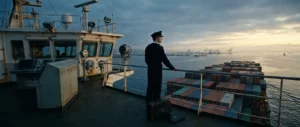
The officer of the watch is the person on the bridge who is responsible for the safe navigation of the ship during a watch. On most ships this is the third mate or second mate. The certificate of competency for this role is issued by your flag state under STCW Regulation II/1 and sits at the operational level.
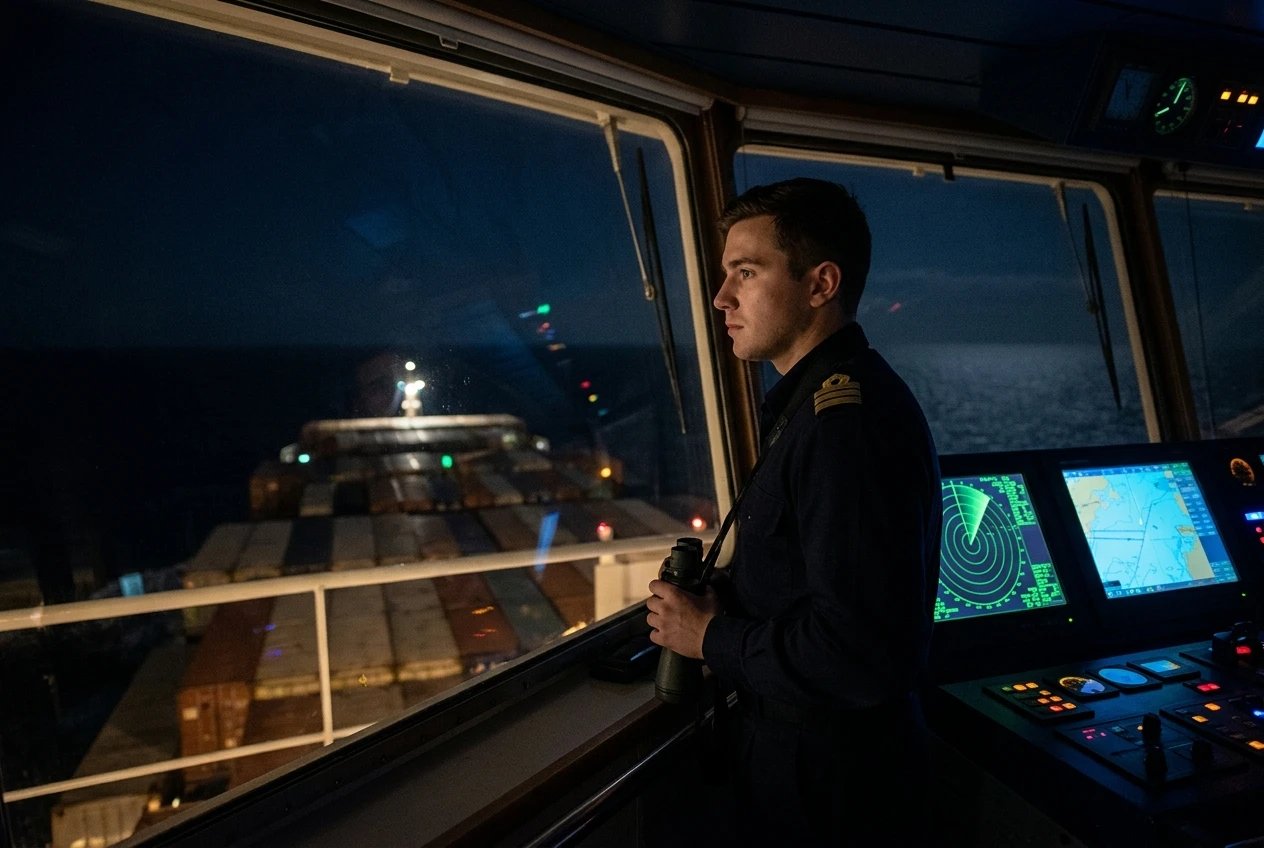
To qualify, you need to meet four kinds of requirements:
- Approved education and training, either through a cadet program or through approved courses taken as a rating
- Approved seagoing service, recorded in your training record book or discharge records
- Flag state examinations, which test navigation, collision regulations, meteorology, ship stability, cargo handling and related subjects
- Medical fitness and specific training, including radar and ARPA, ECDIS, GMDSS radio operator qualifications, leadership and teamwork, and the updated safety courses your flag state requires
The operational-level certificate allows you to stand a navigational watch on ships of 500 gross tonnage or more. It does not allow you to command or serve as chief mate on larger ships. Those need the management level.
On many ships the third mate is also responsible for the lifesaving and firefighting equipment, and the second mate for passage planning and navigation charts. These assignments are a convention of company practice rather than a certificate requirement, so they vary between ships.
The Convention also has a framework of endorsements, refresher courses, and revalidation. If you want a fuller picture of how those pieces fit together, the STCW certification explainer walks through the structure.
Chief Mate and Master
The management-level certificate under Regulation II/2 qualifies you to serve as chief mate or Master on ships of 3,000 gross tonnage or more. The Convention sets minimum periods of approved sea service as an officer in charge of a navigational watch and as chief mate before you can be certified as Master. Many flag states set longer periods or add their own conditions, so read your flag state’s current rules before planning a timeline.
Alongside sea service, candidates usually need:
- Management-level courses, often including advanced firefighting, medical care, leadership and managerial skills, and ship handling or bridge team management
- Flag state examinations, which are more demanding than the officer-level set and usually cover voyage planning, cargo operations, stability and trim, ship construction, maritime law, and emergency management
- Oral examinations, which in many countries are conducted by a surveyor or examiner and test judgment under realistic scenarios, not only recall
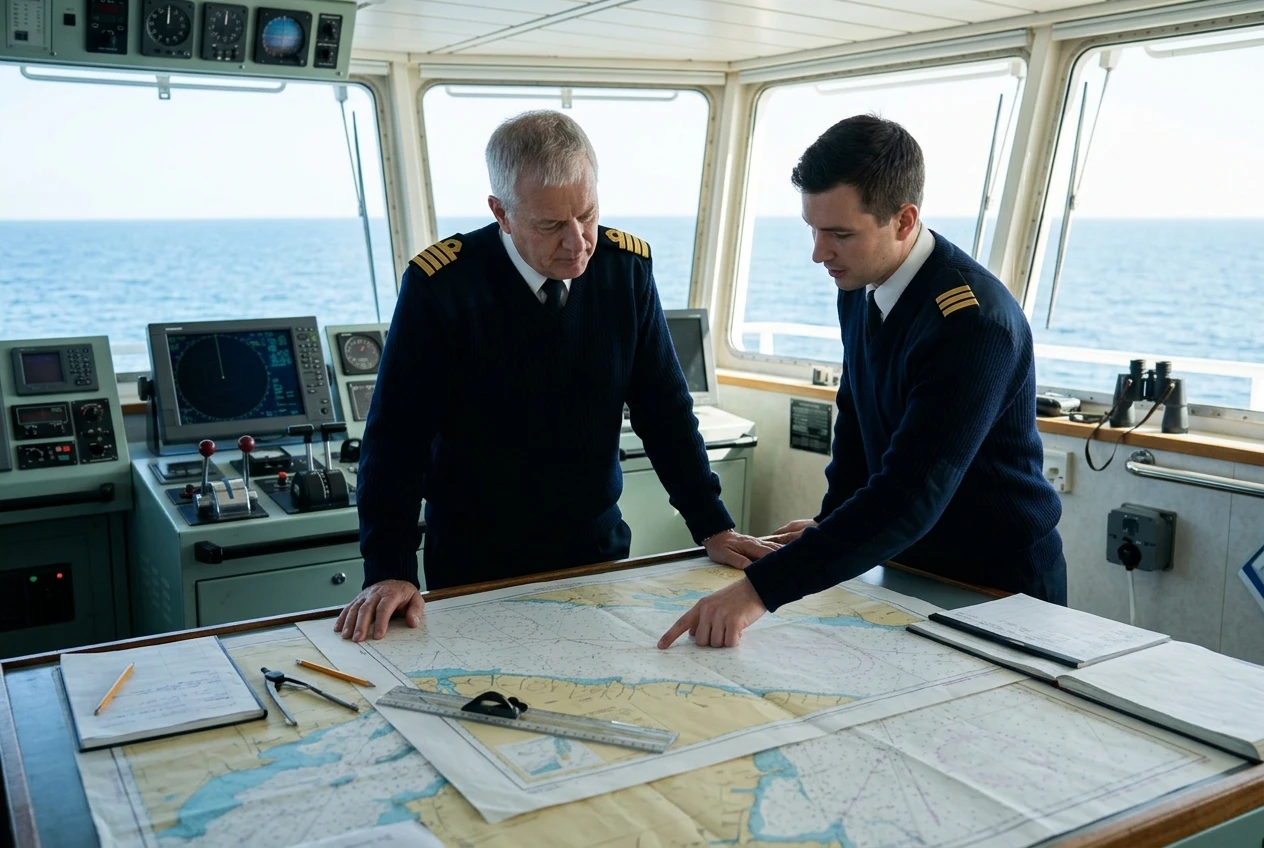
A chief mate is the second-in-command and the head of the deck department. Cargo planning, stability calculations, maintenance programs, crew supervision and safety management all sit with the chief mate on most ships. This is the rank where managerial skills become as important as navigational ones, and the exams reflect that.
A Master carries ultimate responsibility for the ship, the crew, the cargo and the environment. The Master also deals with the company, the charterers, the port authorities, and the flag state, and signs the documents that carry legal weight. Few ranks in any industry combine this much authority and accountability.
Large ships, special vessel types such as tankers, gas carriers and passenger ships, and certain trades need additional endorsements. Each adds courses and sea service on that ship type, so check which apply to the ships you want to work on.
Beyond the bridge: shore roles
Many seafarers eventually come ashore, and deck qualifications open up several career paths. Requirements for these roles vary by employer, country, and authority, so treat the list below as typical routes, not fixed rules.
- Marine superintendent. A superintendent manages a fleet of ships for a shipping company, overseeing operations, inspections, safety management, and technical or commercial issues. Companies usually hire people with a chief mate or Master certificate and sea experience on similar ships.
- Pilot. A pilot boards ships to guide them through ports, rivers, or restricted waters. Pilotage authorities set their own entry requirements, which commonly require a Master’s or chief mate’s certificate, a minimum amount of command or watchkeeping experience, and a selection process that includes local training.
- Marine surveyor. Surveyors inspect ships, cargo and equipment for classification societies, flag states, insurers and cargo interests. Deck officers with command experience are a common source of recruits, and employers usually provide further training.
- Maritime trainer or lecturer. Academies and training centers hire experienced officers and Masters to teach cadets, ratings and certificate candidates. Some countries require a teaching qualification or an instructor course in addition to the seafaring certificate.
- Designated person ashore and other safety roles. Shipping companies appoint staff to manage safety and environmental compliance, and sea experience at officer or Master level is valued.
Each of these roles needs its own application route and, sometimes, additional qualifications. The sea time you do now is useful for all of them, so it is worth recording what ship types, trades and responsibilities you cover on each contract.
How to plan your next move
Planning works best when you set a target rung and then work backward to determine what you need to reach it. Start with a clear answer to which certificate comes next, then ask the right people the right questions.
Questions for your flag state’s maritime administration:
- Which certificate applies to my next rank, and which STCW regulation does it come under?
- How much approved sea service do I need, and what counts as approved?
- Does my flag state recognize the hawsepipe route, and what are the conditions?
- Which courses and exams are required, and how long are certificates valid before revalidation?
- Are there extra endorsements for the ship types I want to work on?
Questions for an academy or training provider:
- Is the course approved by my flag state for the certificate I want?
- What is the total cost, including exam fees, accommodation, and course materials?
- How are the exams and any sea time arranged or supported?
- What are the pass rates and where do graduates find work?
- Do you have partnerships with shipping companies?
The guide on choosing a maritime training academy covers these checks in more detail, including how to confirm approval status before you pay a deposit.
Ask your current employer too. Some companies run their own career development schemes, offer paid study leave or sponsor courses in return for a service commitment. If you are sponsored, read the commitment terms carefully before you sign.
Finally, keep records. A discharge book, sea service letters, training record book entries and copies of every certificate will save time and trouble at each application. Flag states check the paperwork closely, and a gap in documentation can delay a certificate by months.
Rules change. The STCW Convention is amended from time to time, and flag states update their own requirements. Use this article to understand how the system fits together, then confirm the current details with the authority that will issue your certificate.
Before you choose a course for your next rung, read the STCW certification explainer to check which certificates that rung requires.
This article was created with AI assistance and reviewed by a human editor.
Disclosure: This post contains Amazon affiliate links. If you buy through them, we may earn a small commission at no extra cost to you