If you hold an officer-in-charge of a navigational watch certificate and want to move up, start with the chief mate training requirements. They look like a list of courses and an exam, but the jump from second mate to chief mate changes what you are responsible for. A watchkeeper answers for a safe watch. A chief mate is responsible for the deck department, cargo, the ship’s stability, and the people doing the work.
This article explains what changes at the management level and which training addresses each change. Bridge resource management and advanced cargo operations get the most space, because they cover the two biggest shifts. For the certificate sequence from deckhand to master, see From Deckhand to Master: The Certificates That Mark Each Rung of the Deck Ladder. This piece covers what that list does not explain.
What actually changes when you become Chief Mate
On most ships, a second mate’s day revolves around the watch and the navigation tasks that go with it: passage planning, chart and publication corrections, and keeping the bridge equipment running. The work is demanding, but the boundaries are clear. You take the watch, hand it over, and your responsibility for that period is well defined.
A chief mate usually works on a different kind of schedule. Exact duties differ by company and vessel type, but the role commonly includes:

- Planning and supervising cargo operations, including loading, discharge, ballast and stability.
- Directing the deck crew’s daily work and maintenance program.
- Acting as second-in-command to the master and deputizing when needed.
- Managing rest hours and work allocation to keep the crew within limits.
- Preparing for port state, flag state, and company inspections.
- On many ships, acting as safety officer or taking a leading part in safety drills and records.
The change is that you now plan work for others and answer for how it turns out. A second mate who is good at the watch can still find the first contract as chief mate hard, because most of the new work has no watch routine to follow. You decide the order of jobs, who does them, and what has to give when port time is short.
Each of those changes maps to a type of training. Navigation at management level, cargo and stability, leadership and teamwork, and the practical safety and medical competences all appear in the certification you will need. The next sections take them in turn.
Management-level certification and why it is more than an exam
The STCW Convention sets the competence standards for management-level deck officers on ships of 500 gross tonnage or more. This level covers chief mates and masters. The competencies are grouped into functions such as navigation, cargo handling and stowage, controlling the operation of the ship and care for persons on board, and leadership and management. For more background on the convention itself, STCW Certification Explained: What Every Seafarer Needs to Know covers it.
Your administration, meaning the maritime authority of your flag state, issues the certificate. It decides how you demonstrate the competencies. That usually means three things together:
- Approved sea service, often with a documented training record book.
- Approved courses, assessments or simulator-based training.
- An examination or oral assessment set by the administration.
The STCW Code sets a minimum for sea service as an officer in charge of a navigational watch before you can qualify as chief mate on ships of 500 gross tonnage or more. Individual flag states can set longer periods or add their own conditions, so confirm the figure with the authority that will issue your certificate rather than relying on a general rule of thumb.
This is more than an exam because the assessed competences are practical. You are expected to plan and manage a loading operation, judge whether a ship is within its stability limits, and lead people. An exam can test whether you know the formulas and the regulations. It cannot show whether you can run a deck department. The courses and sea service are where you build that, and the exam only checks part of it.
Treat preparation as three parallel tracks: the sea service you accumulate, the courses you complete, and the knowledge you consolidate for the assessment. Neglecting one tends to delay the others. If you don’t record sea time properly, it may not count, and a course taken too early may sit unused for years.
Bridge resource management: from watchkeeper to team leader
Bridge resource management, usually shortened to BRM, trains deck officers to use all available resources on the bridge: people, equipment and information. It grew out of the same thinking as crew resource management in aviation. Its core idea is that most serious incidents involve a chain of small failures in communication, workload and decision-making, rather than a single mistake by one person.
As a second mate, you may already have taken a bridge teamwork or leadership course at the operational level. Management-level BRM goes further in three ways.
You are now the person setting the culture of the bridge. The master sets the overall tone, but the chief mate’s habits spread through every watch on the ship. If you welcome challenge, junior officers will speak up when something looks wrong. If you do not, they will keep quiet, and you will lose the information you need.
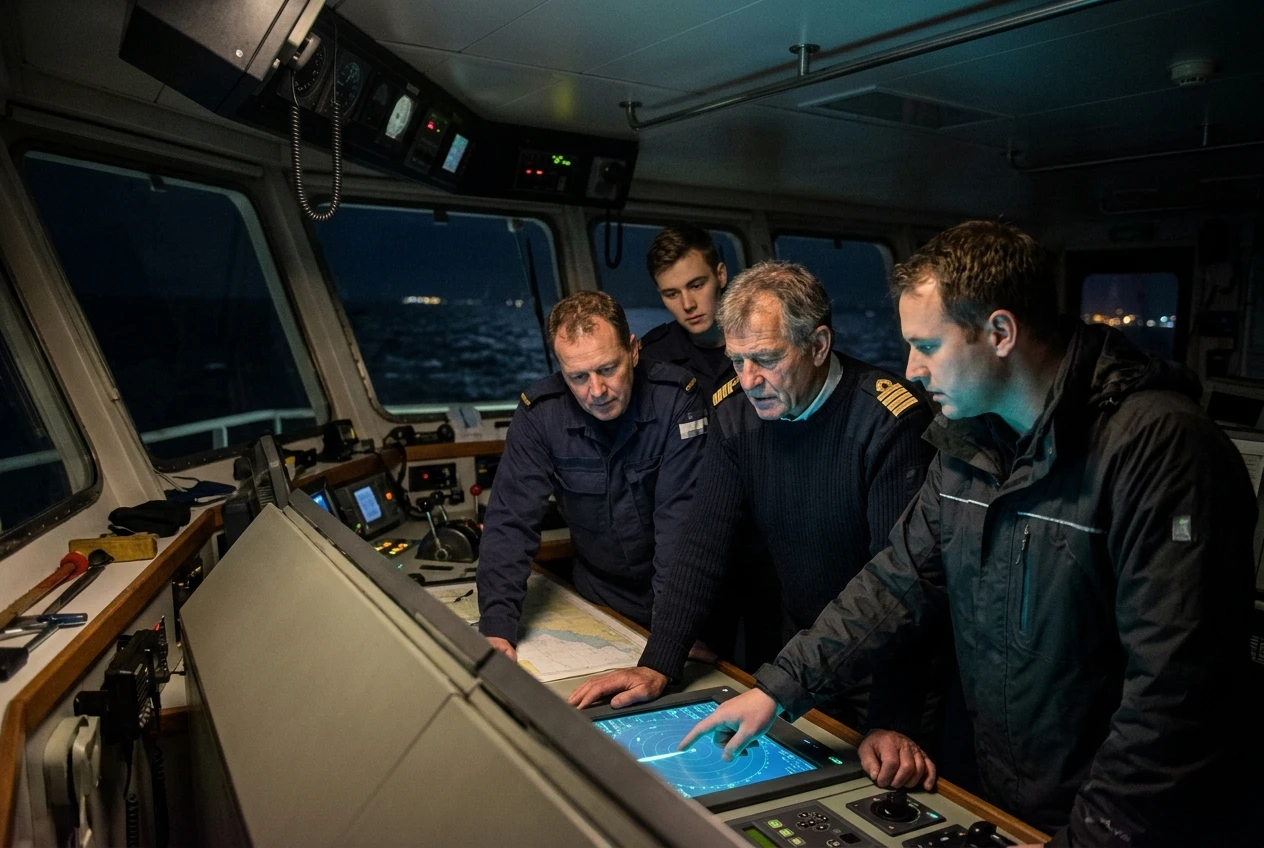
You manage workload across the team, not just your own. In port or in pilotage waters with heavy traffic, you decide who monitors what, when to call the master and when to add a lookout. BRM courses practice this with simulator exercises where tasks pile up at once.
You manage the master-pilot relationship. Good BRM teaches structured communication: briefing the plan, agreeing triggers for when to speak up, and using closed-loop communication so an order is confirmed back, not assumed understood. A chief mate who also serves as the master’s standby must be able to challenge a senior person clearly and politely.
What a good BRM course contains:
- Simulator scenarios with realistic communication pressure and a debrief afterward.
- Case studies of real incidents from marine accident investigation reports.
- Practice at briefing and handing over.
- Discussion of fatigue, complacency and hierarchy as causes of error.
When you evaluate a course, check how much of it is hands-on. A course that is mostly slides will not change how you behave on the bridge. Ask whether an instructor with sea experience debriefs the simulator work, because the discussion after the exercise is where the learning happens. For more on the human side, the member site’s pieces on effective communication among ship crew and teamwork skills for maritime crews are a useful companion.
Advanced cargo operations, stability and loading plans
If BRM is the biggest change in how you work with people, cargo is the biggest change in the technical content. On many ships, the chief mate is the officer responsible for the cargo plan. You decide how the cargo goes aboard, what the stability and stress will be at each stage, and how the ship will be ballasted to keep within limits.
The technical areas at the heart of this training are:
- Intact stability. Understanding metacentric height, free surface effect, righting levers, and the criteria the ship must meet, and applying them to real loading conditions rather than textbook examples.
- Longitudinal strength. Keeping shear forces and bending moments within the permitted limits during loading, discharge and ballast operations.
- Trim and draught. Meeting berth and channel draught limits while keeping the ship properly trimmed for propulsion and handling.
- Cargo-specific knowledge. Securing, segregation, ventilation, hazards and documentation for the cargo your vessel type carries.
- Use of the loading computer. Knowing what it calculates, what it assumes, and how to cross-check its output.
The last point deserves attention. Most ships carry approved loading instruments, and the chief mate relies on them daily. Management-level training builds the skill to notice when a result doesn’t make sense. If the computer shows a comfortable stability margin but the ship is behaving differently, you need enough underlying understanding to question the input data before you trust the output.
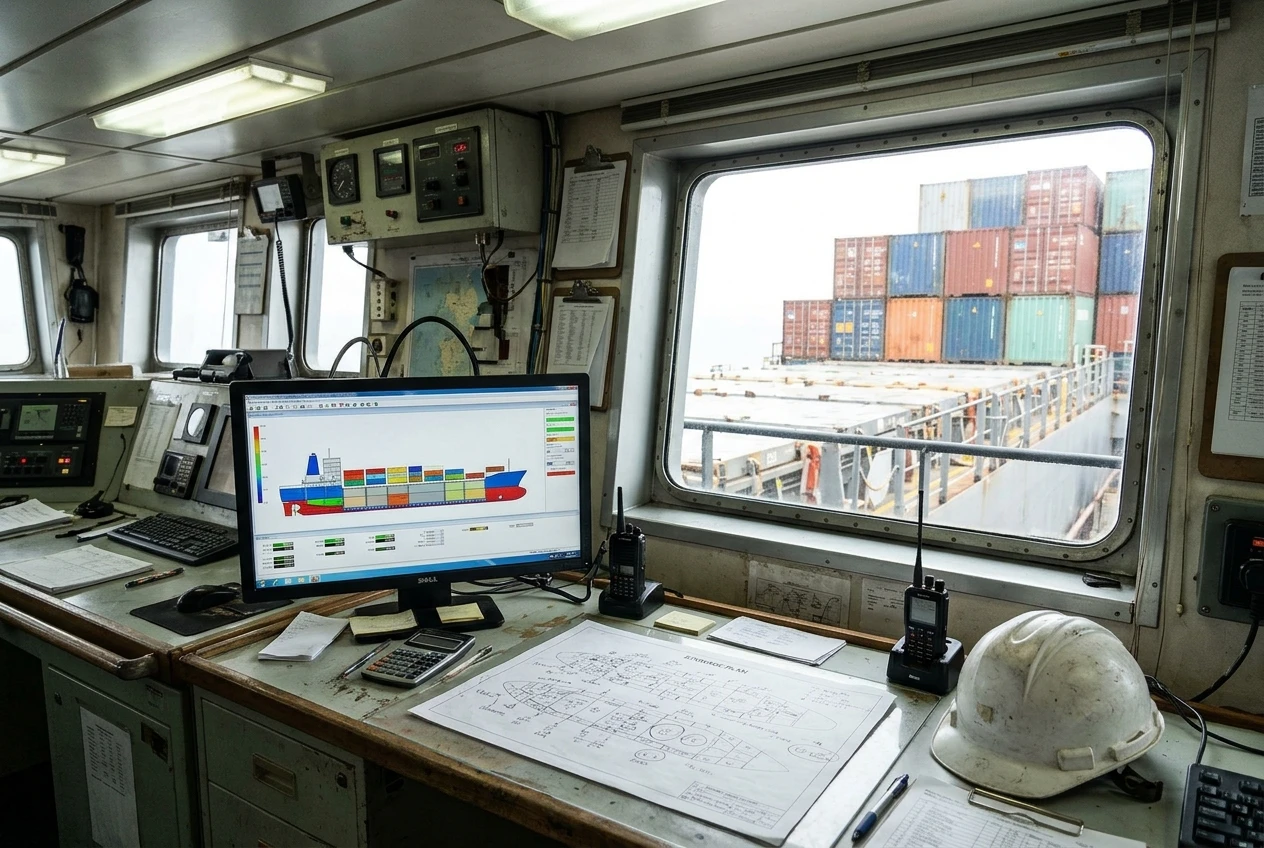
Cargo training varies widely by vessel type. Tanker, bulk carrier, container ship, and general cargo ship officers need different knowledge, and tanker and gas carrier work usually requires specific endorsements on top of the basic certificate. Which of those applies to you depends on your ship type, and Which Specialist Certificates Does Your Vessel Type Actually Require? compares the main ones. Take cargo-specific training based on the vessel type you are likely to serve on, so the material is usable in your first contract and not forgotten.
A practical way to prepare: before a course, take a loading plan from your current ship and work through it by hand. Identify each assumption it makes about weights, tank contents, and sea conditions. You will arrive on the course with real questions, and the instructor’s explanations will stick much better.
The leadership and management skills no one tests at sea
At sea, nobody tests your ability to run a morning work meeting, resolve a disagreement between two able seamen, or stop a job because the crew is too tired. Yet these tasks will take up most of your time as chief mate.
STCW management-level competence includes leadership and managerial skills, and many training providers offer dedicated leadership and management courses. The content generally covers:
- Setting priorities and allocating tasks and resources.
- Decision-making techniques and their limits.
- Communicating instructions and feedback to a mixed-nationality crew.
- Managing conflict and handling disciplinary matters.
- Assessing and developing the people you supervise.
Three areas cause the most difficulty for new chief mates.
Fatigue. You are responsible for making sure the crew’s work and rest hours comply with the rules, including your own. It is easy to take on extra work yourself, run short on rest, and then make worse decisions. Planning work around rest, not the other way around, is a management skill. The member site’s article on managing fatigue for ships’ crew during long voyages covers the practical side.

Planning the work. Deck maintenance, drills, cargo operations, and inspections all compete for the same hours. A good chief mate builds a weekly plan, communicates it clearly, and revises it when weather or port delays change the picture. Organizing Work Schedules And Duties On Ships goes into this.
Conflict and morale. Small disagreements on a ship are hard to avoid, and the chief mate often hears about them first. Dealing with them early and fairly prevents them from becoming larger problems that reach the master.
No course will make you a leader, but a good one gives you the vocabulary and tools to practice. The real development happens when you apply them, so look for opportunities as a second mate to supervise a job, brief the crew on a task, or run a drill. Ask the chief mate you work under to let you lead a part of the routine and give you feedback afterward.
Sequencing your courses around sea time and leave
Courses compete with leave, sea service and your contract schedule. Taking them in a sensible order saves money and avoids repeating anything.
A reasonable approach is to work backward from the date you want to apply for the certificate:
- Confirm your sea service requirement and the date you will meet it. Courses taken too early may expire or lose relevance, while courses taken too late can delay your application.
- List the required courses and their validity. Some safety and medical courses require periodic refreshers. Check whether the ones you already hold will still be valid when you apply.
- Place the knowledge-heavy courses first. Stability and cargo courses give you material to apply on your current ship. If you take them while you are still a second mate, you can practice on real loading operations.
- Place BRM and leadership courses when you can apply them soon after. These benefit from practice, and the best time is when you are about to supervise others, ideally a few months before or during a trial role.
- Leave the assessment preparation to the final stretch. Revision lasts better when it is close to the exam.
Leave is limited, so check how long each course lasts and whether the provider offers modular or distance-learning options for the theoretical parts. Some elements, such as simulator-based BRM and practical firefighting, usually require in-person attendance. Where distance learning is offered, confirm that your administration accepts it for the competence in question.
Budget for cost and time at the same time. Courses, travel, accommodation and unpaid leave add up, and some employers sponsor part of the training. Ask about this early, because sponsorship often comes with conditions about the length of service you agree to afterward.
What to check with your flag state and employer before you book
Approval matters more than the course title. A course may sound right but not be approved by your administration, so it may not count toward your certificate, and you will have wasted both money and leave.
Before you book anything, confirm these points with the issuing authority and your employer:
- Which courses your administration requires for the management-level certificate, and whether it publishes a list of approved providers.
- Whether your flag state approves the provider and the specific course, not just another country’s authority. Recognition rules differ between administrations.
- The exact sea service requirement and how it is documented, including whether time on certain vessel types or in certain roles counts in full.
- Whether your current medical certificate will still be valid when you apply. The member site’s piece on ENG1 medical requirements and how other seafarer medical certificates compare explains how these differ between states.
- Any company-specific requirements. Many operators require training beyond the statutory minimum, such as in-house cargo systems or their own bridge procedures.
- Whether the company will sponsor, schedule, or recognize the courses you plan to take, and any repayment conditions.
- Assessment format and booking lead time, since examination places can be limited.
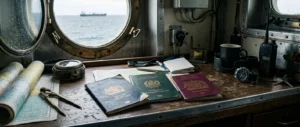
Put the answers in writing where you can, in an email from the authority or your crewing manager. Rules change, and a written answer protects you if a provider or officer later gives different information. It also helps to keep a single file with your sea service records, course certificates, medical certificate, and passport so nothing is missing when you apply.
How to tell if you are ready to apply
There is no single test for readiness, but several signs help you judge. First, the formal ones: you meet or will soon meet the sea service requirement, your required courses are complete or booked, and your documents are in order. Those are easy to check.
The harder question is whether you can do the job. Ask yourself these questions honestly:
- Can you build a loading plan for your ship type and explain why each tank and hold is filled as it is?
- Can you check the loading computer’s result independently with a rough calculation?
- When something goes wrong in port, do you know whom to call, in what order, and what to record?
- Have you led a job, a drill or a work party, and could you describe what you would change?
- Do you know the ship’s work and rest rules well enough to plan a week of work around them?
- Are you comfortable telling a senior officer that you disagree, and explaining why?
If most answers are no, that does not mean you should wait indefinitely. It tells you where to put your effort. Ask the chief mate and master on your current ship to involve you in cargo planning, let you draft the weekly work plan, and review your work. Officers who ask for this are generally seen as preparing seriously for promotion, and the experience shortens the learning curve once you take the role.
When you can answer yes to most of these questions, and the paperwork is ready, you are ready to apply. Remember also that the first contract as chief mate is itself part of the training. Nobody arrives in the job knowing everything, and your company and master will expect you to keep learning on board.
Before you book management-level courses, read Choosing a Maritime Training Academy: What to Check Before You Enroll so you know what to ask any provider.
This article was created with AI assistance and reviewed by a human editor.
Disclosure: This post contains Amazon affiliate links. If you buy through them, we may earn a small commission at no extra cost to you.