How a day on an OSV differs from a tanker or bulk carrier watch
On a deep-sea tanker or bulk carrier, the work pattern centers on the passage. Watches run in a steady rhythm for days or weeks, and the intense stretches cluster around arrival: pilotage, berthing, cargo operations, departure. Between those, the job is navigation, maintenance, planning, and keeping to the voyage schedule.
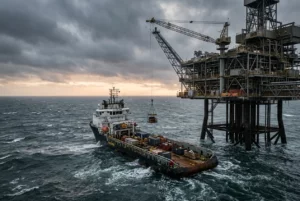
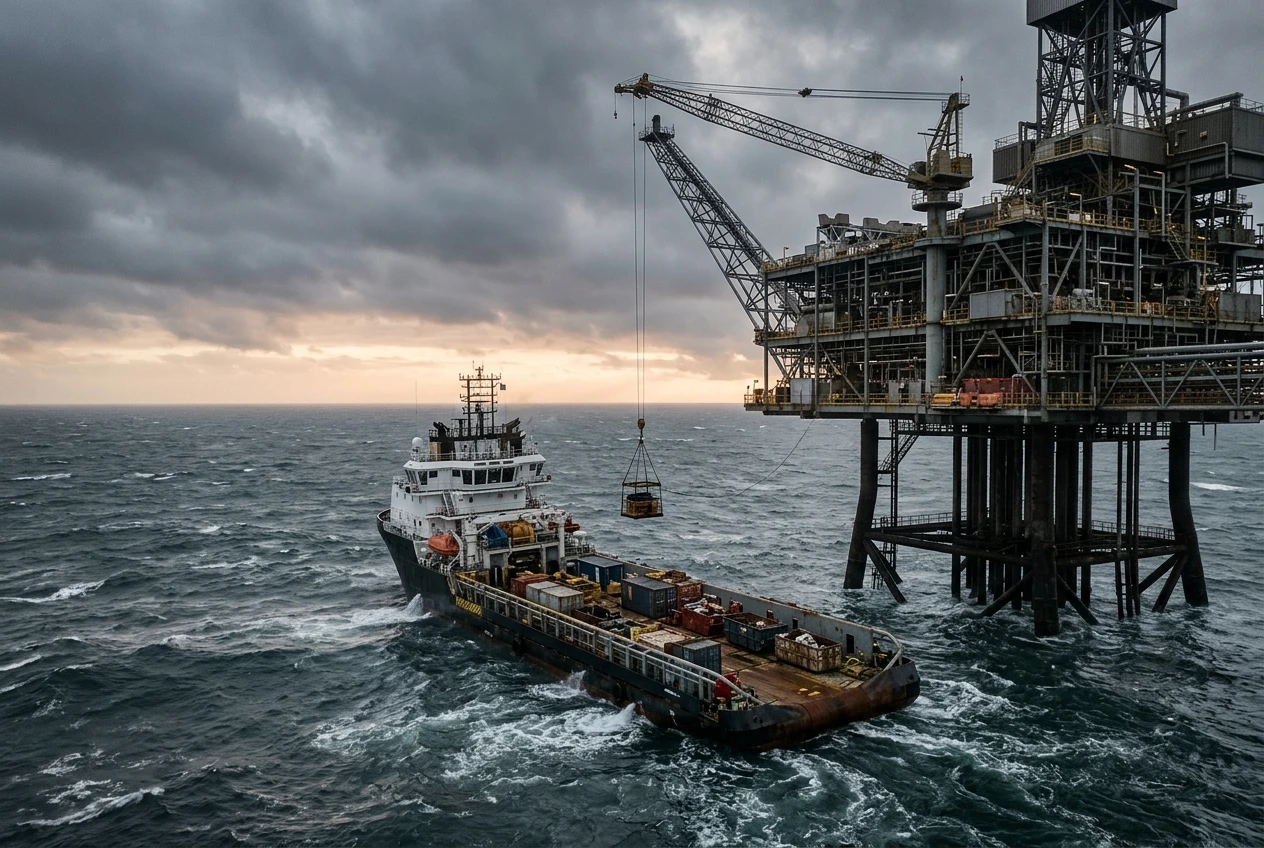
An offshore supply vessel (OSV) reverses that pattern. Platform supply vessels, anchor handling tug supply vessels (AHTS) and similar ships spend most of their time within a short distance of fixed or floating installations, or on short runs between a shore base and those installations. The work is intense, and it repeats: approach an installation, work cargo, move off, go back to base, load, repeat.
That changes what the people on board focus on. A tanker officer’s skill is mostly passage planning, cargo planning, and watchkeeping discipline over long periods. An OSV officer’s skill is mostly handling the ship precisely, close to something that cannot be hit, while cargo moves between the vessel and a crane. Deck crew shifts from maintenance and mooring to cargo handling and lashing, often within a weather window the installation controls.
The offshore supply vessel training requirements follow from this. The basics you already hold still apply, but the extra training focuses on three things: handling the vessel at close quarters, working unfamiliar cargo types, and surviving or responding to an emergency in an offshore setting. The sections below take each in turn.
Close-quarters work at an installation: why maneuvering skills matter more than passage-making
Most deep-sea officers have berthed a ship, often with tugs and a pilot. Few have held a ship a short distance off a fixed structure for hours, in a swell, while a crane lifts cargo from the deck. That is routine on an OSV.
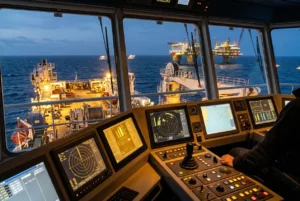
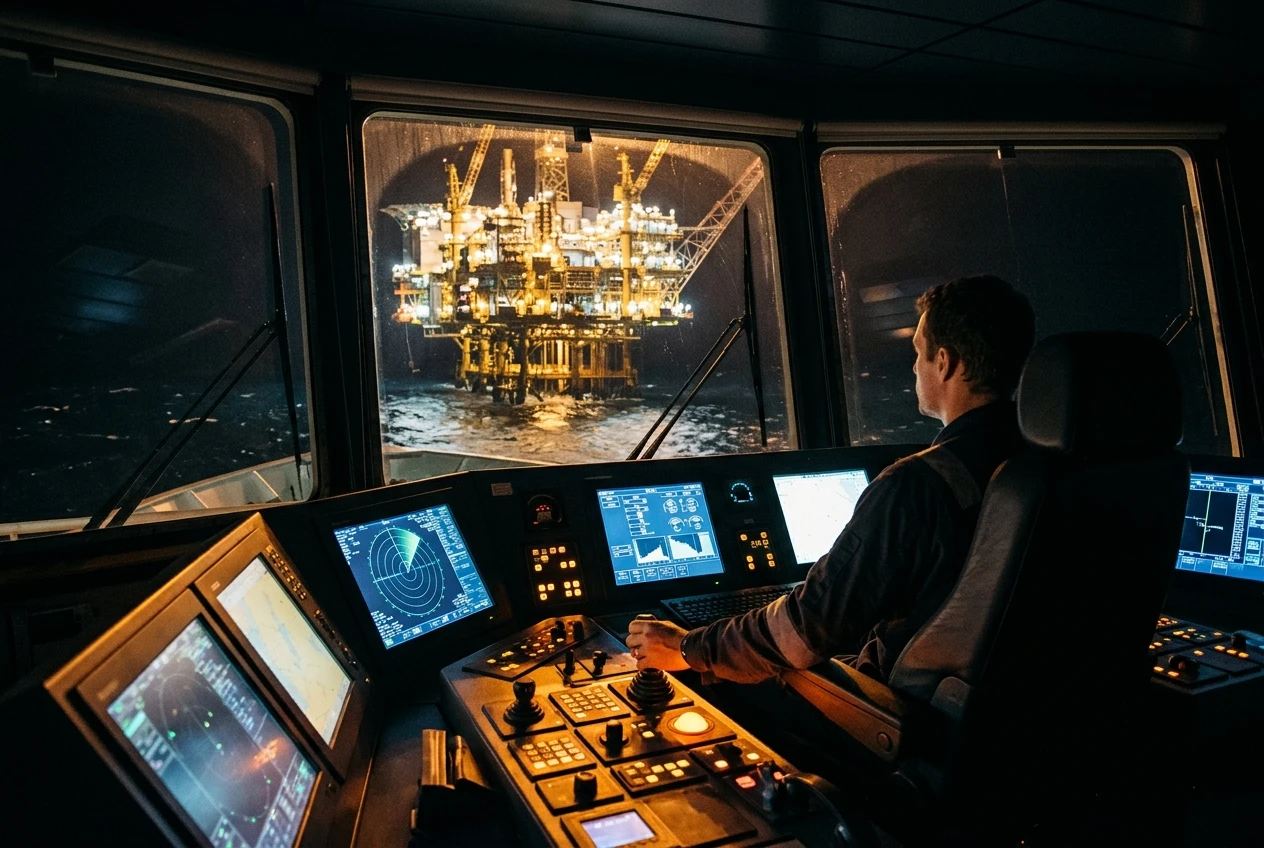
The difference is partly equipment. Many OSVs have azimuth thrusters or a combination of main propellers, tunnel thrusters and rudders, often controlled by a joystick or an integrated control system rather than by engine telegraph and helm orders. The ship can move sideways, rotate on the spot, and hold position in ways a single-screw bulk carrier cannot. You learn what each control does to the vessel, how thrust interacts with wind and current, and what happens when one thruster fails.
It is also partly procedure. Installations have safety zones, approach routes, and rules about which side to work and when to leave. Officers need to read the weather and the installation’s own limits, and decide before arriving whether the job is doable. A tanker master rarely decides to abandon a berthing because the swell has grown. An OSV master does it as part of the job.
What helps you prepare:
- Simulator time. Ship-handling simulators let you practice approaches, station-keeping, and failure scenarios without risking an installation. Courses that include azimuth or twin-thruster handling are the most relevant for a deep-sea officer.
- Bridge team habits. Close-quarters work uses a bridge team differently, with one person on the controls, another monitoring position, and another on the radio. Your bridge resource management training carries over, but the roles are more specific.
- Reading the environment. Wind, current, and swell act on the ship from different directions, and the combination changes throughout the job. Learning to anticipate this is a skill that builds with experience, and a good employer will pair new officers with experienced ones to help them develop it.
Engineers see a version of the same change. Engine rooms on OSVs often run multiple generators and thrusters under changing loads, and the machinery must keep working during close-quarters operations because losing power next to an installation is an emergency. Engineers coming from slow-speed diesel plants should expect diesel-electric systems and power management to be unfamiliar, and should seek familiarisation with those systems.
Deck cargo, bulk transfers and anchor handling: the operations you will not have met before
On a tanker or bulk carrier, cargo is in holds or tanks, and the cargo plan is the main document. On a supply vessel, a lot of the cargo is on deck, and the work is more varied.
Deck cargo
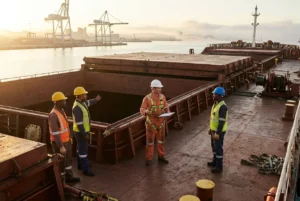
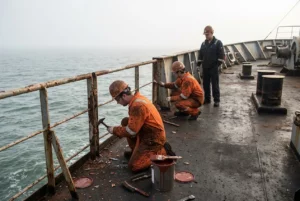
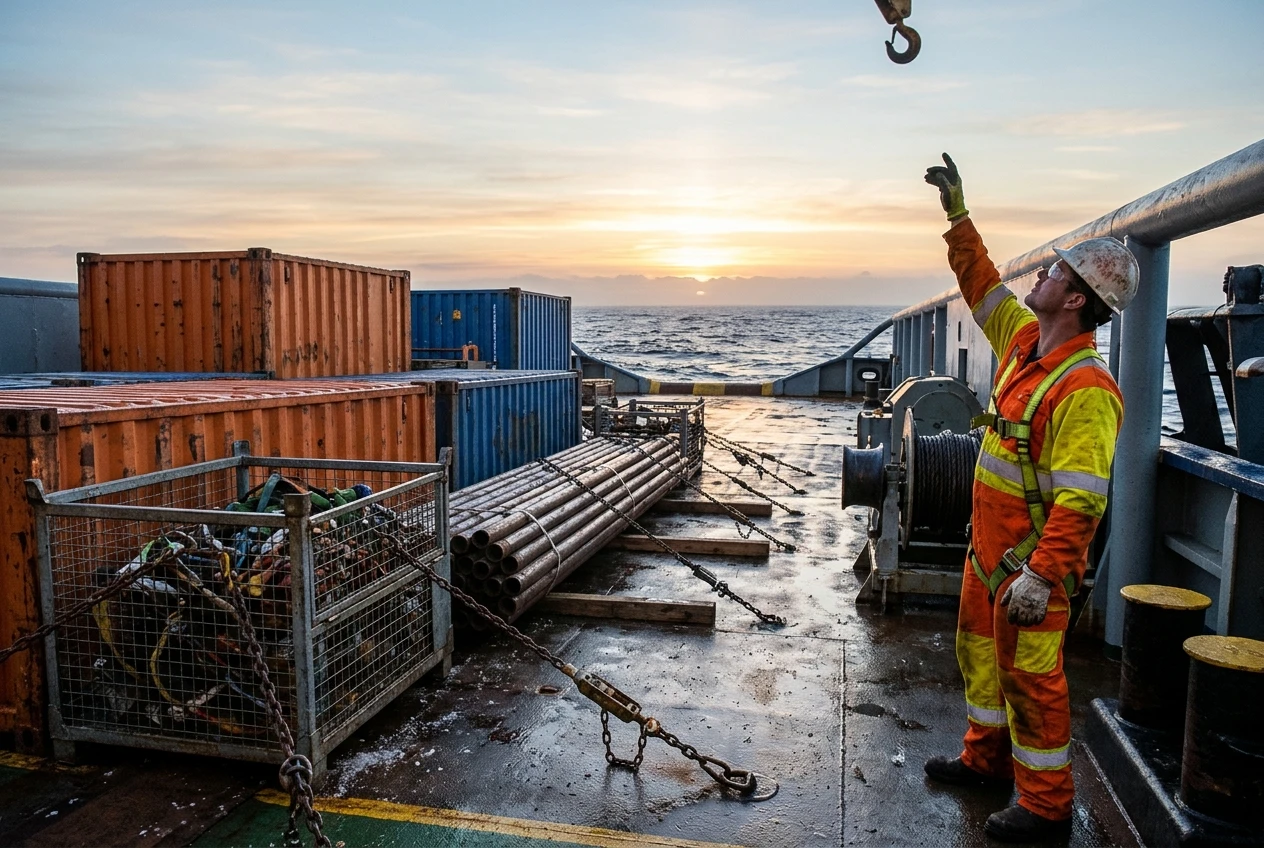
Typical deck cargo includes containers, baskets, tubulars, drilling pipe, and equipment of all shapes. The installation’s crane lifts it on and off, and the crew must prepare it, check the lifting equipment, secure it, and keep the deck stable and safe. You need to understand how deck cargo affects stability, how to lash and secure loads, and how to signal to a crane operator. The deck crew’s work is far more cargo-focused than on a bulk carrier, and the ratings’ lashing and rigging skills matter day to day.
Bulk transfers
Supply vessels also carry liquid and dry bulk for the installation: fuel, water, drilling fluids, and similar products, along with dry bulk powders moved by pneumatic systems. If you come from tankers, you already know the discipline of a cargo transfer: checklists, communication, tank monitoring and spill prevention. That is a real advantage. What is new is the scale and variety of products, the hose connections made while the vessel holds position beside an installation, and the need to coordinate transfer with the vessel’s position and the weather.
Bulk carrier crew have less background in this area, so they should expect to learn liquid transfer procedures and relevant safety rules from the start.
Anchor handling
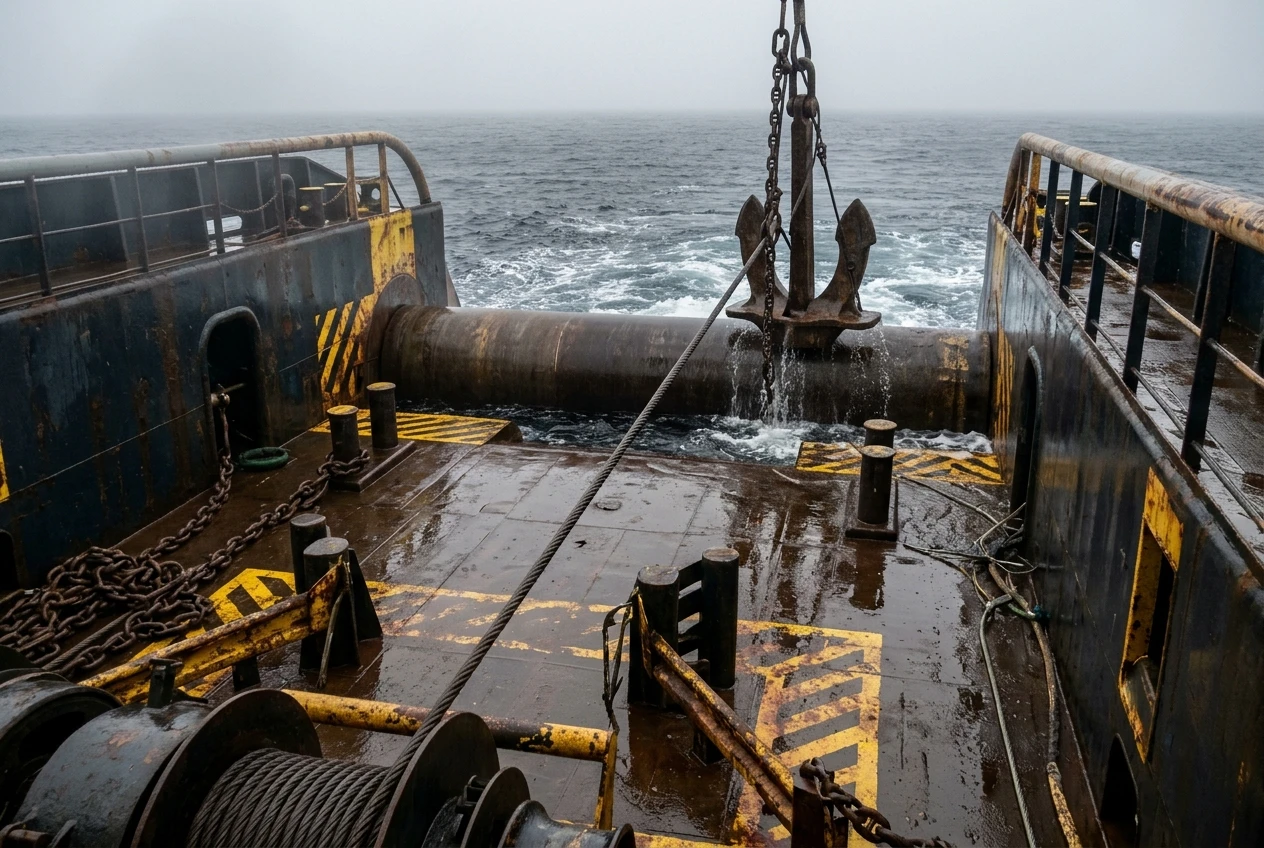
On an AHTS, the work involves handling anchors, chain and wire for rigs and other floating structures, and sometimes towing. It uses heavy winches, towing pins, stoppers, and other equipment found on few other ship types, and it carries more risk to deck crew than most merchant work. Wires under load can injure or kill. Officers need to understand the vessel’s stability and the loads on the tow wire. Ratings need to understand where they can and cannot stand.
Anchor handling is the operation most worth leaving until you have a job offer, because employers value specific experience and often provide their own training and supervised exposure. Even so, it is better to know what the work involves before you apply, so that you can decide whether it suits you.
Dynamic positioning: when it enters the picture and how the pathway usually runs
Dynamic positioning (DP) is a computer-controlled system that uses thrusters and propellers to automatically hold the vessel’s position and heading, using position references such as satellite navigation. Many OSVs are fitted with DP systems, and crews use DP for much of the close-quarters work at installations.
For deck officers, DP qualification is common for those who operate the system, and many employers expect it for watchkeeping roles on DP-equipped vessels. Engineers may also need DP-related knowledge, as the system relies on power and thruster availability. Ratings usually do not need a DP certificate.
The most common pathway is the Nautical Institute’s DP training scheme. It runs in stages:
- An induction course. This covers DP principles, the equipment, and operating concepts.
- A simulator course. You practice operating the system and responding to failures.
- Supervised DP sea time. You operate the system on a vessel under supervision, with your time recorded in a logbook.
- An assessment and certificate. After you complete the sea time and the logbook is reviewed, you receive a certificate. Further certificates exist for those who go on to work on more demanding DP vessels.
The order matters. The sea-time stage requires a DP vessel, which means you need a job on one, and many officers find this is when the employer gets involved. Some companies sponsor or arrange the later stages for new hires. Others expect you to complete the induction and simulator courses before you apply.
Because this varies by employer, region and vessel class, it is worth asking prospective employers which stage they expect you to have reached. Our comparison of which specialist certificates your vessel type requires covers how DP sits alongside the other specialist certificates, so this article does not repeat that.
Offshore safety and emergency training: what is added to your STCW basics
Your STCW basic safety training covers personal survival techniques, fire prevention and firefighting, elementary first aid, and personal safety and social responsibilities. If you need a refresher on what that covers, our guide to what STCW certification is explains it. Offshore work adds training that reflects the particular hazards of working near installations, and often traveling to them by helicopter.
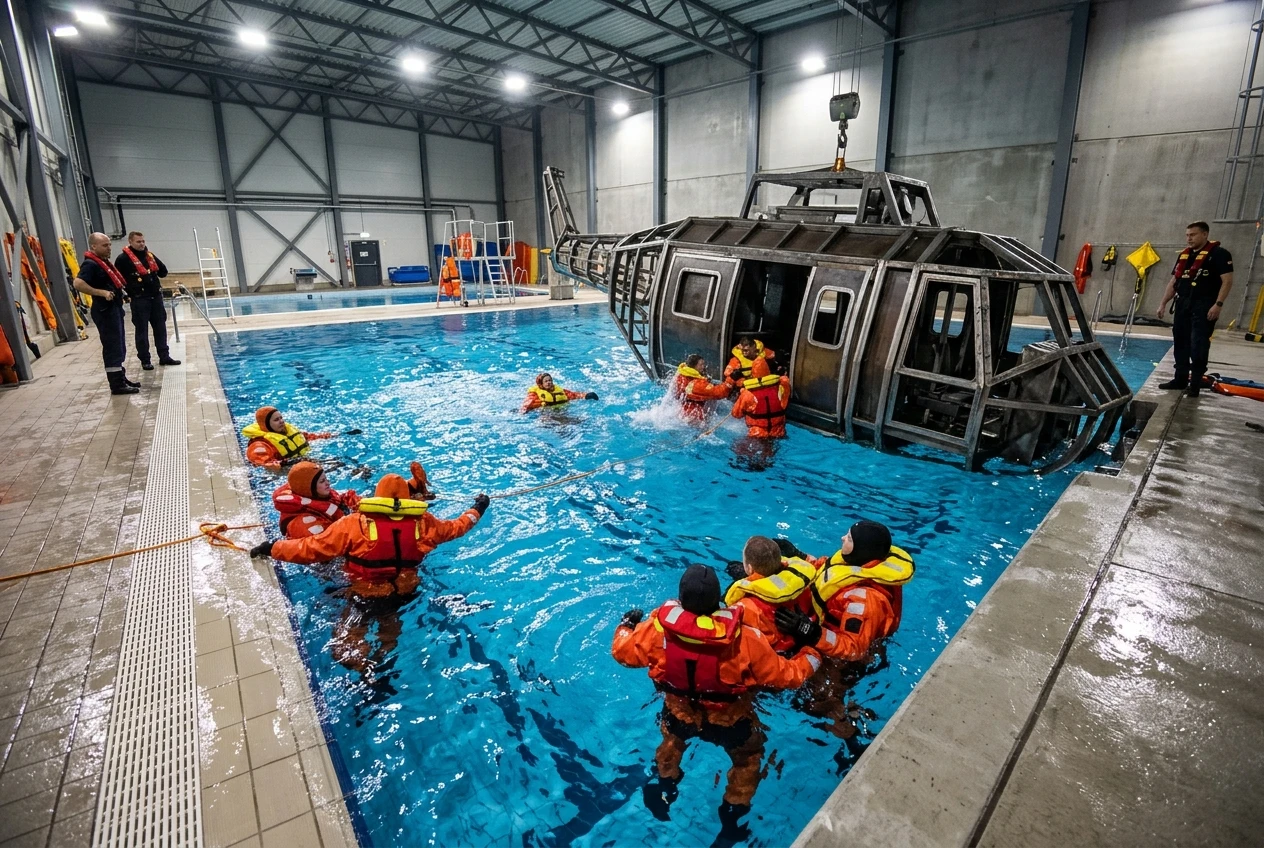
The most widely recognized example is the Basic Offshore Safety Induction and Emergency Training course, usually abbreviated BOSIET. It generally covers:
- Safety induction for offshore installations
- Helicopter safety and escape training, including underwater escape practice
- Sea survival
- Firefighting and self-rescue
- Emergency response and first aid
Many courses are approved by OPITO or a similar body, and some regions have equivalent standards, so the certificate name may differ. Which one an employer accepts depends on the region, the client, and the type of work. Courses also have a validity period and need renewal, so check the expiry date before you book travel or interviews.
Beyond the basic course, some roles require further training, such as advanced firefighting, crane and rigging competence, or higher-level first aid. Your medical certificate also matters: offshore work can require a fitness standard beyond the one you already hold, and the details depend on the regulator and the employer. Our article on what happens at your ENG1 medical compares the different medical certificates.
For most seafarers moving from deep-sea work, this is the first training to get. You usually need it before you step on board, and it is a common condition of employment.
Short rotations, fast turnarounds, and the fatigue and communication habits they demand
The pace of an OSV differs from the pace of a long voyage, and so do the risks to people.
On a deep-sea ship, fatigue builds slowly across weeks. On an OSV, the work comes in concentrated periods, often around the clock, and operations at an installation may start at an inconvenient hour because the weather or the client’s schedule demands it. Crew can find themselves working a demanding operation after a short rest, then doing it again soon after. Rotations vary by employer and region, but are usually shorter than deep-sea contracts, meaning more frequent travel and handovers.
Fatigue management matters more when each operation requires full attention. Keep to your rest hours, and use time off between operations to sleep rather than to catch up on tasks. Our articles on managing fatigue for ships’ crew and sleep hygiene for seafarers cover this in more detail.
Communication is the other habit that changes. A lift from an installation involves at least the crane operator, the vessel’s deck crew, the bridge and often a banksman or deck supervisor, all coordinating by radio. Misunderstandings in that chain cause dropped loads and injuries. Good practice includes:
- Using clear, standard phrases rather than informal speech
- Repeating back instructions so the sender knows they were received
- Agreeing stop signals before the operation begins
- Speaking up when something looks wrong, whatever your rank
Handovers also carry more weight when crew changes often. The person arriving needs to know the state of the cargo, the equipment and any ongoing jobs. Our article on effective communication among ship crew covers the basics that this builds on.
Mapping your gap: a checklist for tanker and bulk carrier crew moving offshore
Use this checklist to see where you stand. Tick what you already hold or have done, and note what is missing.
Documents and qualifications
- Your STCW basic safety certificates are valid and not near expiry
- Your seafarer medical certificate is valid, and you know whether your target employer requires an additional offshore medical
- You hold the certificate of competency appropriate to the rank you are applying for
- You have an offshore safety induction and emergency certificate, such as BOSIET or the regional equivalent, that your target employer accepts
Ship handling and bridge skills (deck officers)
- You have operated a vessel with thruster or azimuth controls, or have simulator time on one
- You have completed, or are enrolled in, the DP induction course
- You have done DP simulator training
- You understand what close-quarters work at an installation involves, including approach, station-keeping and withdrawal
Cargo and deck work
- You are familiar with deck cargo handling, lashing and crane signals
- You understand liquid and dry bulk transfer procedures for supply vessels
- You know what anchor handling involves, and whether the roles you are targeting include it
Engine room (engineers)
- You are familiar with diesel-electric propulsion and power management systems
- You understand how thruster and generator availability affects DP and close-quarters operations
Working habits
- You have a plan for rest during intense operations and short turnarounds
- You are comfortable with structured radio communication and closed-loop confirmation
Anything left unticked is a gap. The next section helps you decide which ones to deal with first.
Choosing the order: what to train for first and what can wait for the job offer
Not every gap needs to be closed before you apply. Some training is a condition of getting a job, and some is better done once an employer has chosen you and may pay for it.
Do first
- Keep your existing certificates in date. An expired basic safety or medical certificate delays everything else.
- Get the offshore safety induction and emergency training. Employers commonly ask for it, it is recognized across the sector, and it shows employers you are serious. Check which version your target region and employers accept before you book, and choose your provider carefully. Our guide to choosing a maritime training academy lists what to check.
Do next, if you are a deck officer
- The DP induction and simulator courses. These put you ahead of other applicants, and they don’t require a DP vessel. Consider whether the cost suits your situation, and ask a few employers whether they prefer to arrange it themselves.
Leave until you have an offer
- Supervised DP sea time. It needs a DP vessel, so it follows the job.
- Anchor handling and vessel-specific procedures. Employers train for their own equipment and methods, and hands-on experience under supervision is the main teacher.
- Client-specific or company-specific courses. These depend on the contract and are usually arranged by the employer.
Use the time in between
- Learn the vocabulary and the operations. Read about supply vessel work, ask crew you know who have worked offshore, and watch how they describe the operations. It helps in interviews and shortens your first weeks on board.
Spending money on advanced courses before you know what the target employer expects can be wasteful, and an employer might fund them. Spending too little on the first two items can stop you from being considered at all.
Read our comparison of which specialist certificates your vessel type requires, then pick the one gap from your checklist that you will close first.
This article was created with AI assistance and reviewed by a human editor.
Disclosure: This post contains Amazon affiliate links. If you buy through them, we may earn a small commission at no extra cost to you.