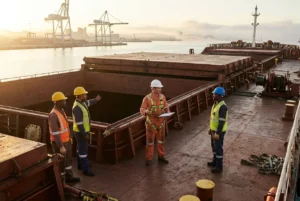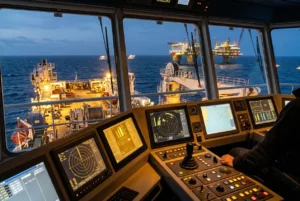
Most pages on maritime pilot and tug master training requirements end with a list of courses. The list is useful, but it describes the entry ticket. A pilot is trusted with a 300-meter ship because they know one stretch of water, and a tug master is trusted with a line under load because they know one set of berths, one set of ships, and one set of currents. No classroom holds that knowledge, so you have to plan for both kinds of learning.
Why a license alone doesn’t make you a pilot or a tug master
A certificate shows you met a general standard. It says you can navigate, manage a bridge team, handle a vessel and follow the rules. It cannot say how the ebb sets across a particular berth entrance at half tide, where the water shoals after a dry summer, or which terminal manager wants vessels alongside early.
Pilotage authorities and tug operators know this, which is why almost every route into the work includes a long period of supervised, port-specific experience after the formal qualifications. The qualification gets you considered. The logged hours in one harbor get you authorized.
This matters for planning. If you treat training as a box to tick, you will finish the courses and find you are at the beginning of the real process. If you treat it as the first of two stages, you can prepare for the second while you are still doing the first.

The formal training that gets you to the starting line
The exact requirements depend on the country, the port and the authority, so any general list is a map of categories and not a checklist for your harbor. The categories are fairly consistent, though.
- A deck officer or master’s certificate. Many pilotage authorities expect candidates to hold an officer or master’s certificate of competency, often with a minimum period of sea service at officer or command level. For an overview of how the certificates stack up, see our guide to the deck ladder from deckhand to master.
- STCW basics. The mandatory safety and watchkeeping training behind your certificate is the baseline for everyone at sea. If you want the background, our STCW explainer covers it.
- Bridge resource management. BRM courses teach how to work with a bridge team, and with a pilot, in a way that catches errors before they matter. They matter even more for pilots, who step onto a bridge of strangers.
- Ship handling and maneuvering courses. These are usually simulator-based and cover turning, stopping, wind and current effects, and handling in confined water.
- Medical fitness. You will need a valid seafarer medical certificate. Pilotage authorities may set their own medical standards on top of it, so check them.
- Authority entry assessments. Many authorities run their own exams, interviews or selection processes. Some have written tests on local regulations, signals, and port geography.
- For tug crew: a certificate appropriate to the role and the towing operation, plus whatever the operator or national administration requires for tug and towing work. These rules vary widely by flag and region.
Treat this list as the first questions to put to the authority or operator you are aiming at. Requirements are set locally and change, so confirm each one with the body that will actually license you.
What a port teaches that a classroom can’t: tides, berths, bank effect and local habits
Local knowledge is a large body of small facts, and the facts interact. A few of the categories show why a course cannot cover them.
Tides and currents
A tide table gives heights and times. It doesn’t tell you how the stream behaves in the channel bend at different tide states, where it sets you toward a pier, or how a strong river flow after heavy rain changes everything for a week. Pilots learn these patterns by seeing them repeatedly, in different conditions, and by being corrected by people who have seen them thousands of times.
Eddies and swing areas
Eddies form in particular places, behind particular structures, at particular states of tide. A ship turning in a basin feels them as a push on the bow or quarter that no chart marks. Knowing in advance that the eddy is there is what lets you turn early and gently instead of correcting late.
Berths
Every berth has its own character: how much room there is ahead and astern, how the wind funnels between buildings or stacks, where the fenders are weak, how the bottom shoals near the quay, and which lines and bollards are reliable. A pilot who knows the berth plans the approach around those details. One who doesn’t is reading them off the chart while the ship is already committed.
Bank effect and shallow water
Bank effect pushes a ship’s bow away from a close bank, and the stern is drawn in. Squat increases as speed rises in shallow water. Textbooks describe both, and you can rehearse both on a simulator. The textbook can’t tell you how strongly they act in your channel, at your usual speeds, for the types of ships that call there. You learn that by watching them happen and hearing an experienced pilot say, “Slow down here, she’ll start shearing.”
Local habits
Ports have conventions that are rarely written down: where vessels usually wait, how pilots and tugs agree on positions over the radio, which terminals run to schedule and which run late, how other traffic tends to behave, and what the harbor authority expects when something goes wrong. These habits keep a busy harbor moving, and outsiders who ignore them are hard to work with and sometimes unsafe.
How tug work differs from pilotage: line handling, escort and ship-tug interaction
Pilotage and tug work share a port, but the skills overlap less than people expect. A pilot advises or conns the ship. A tug master puts a small, powerful vessel exactly where it is needed, often very close to a moving ship.
Line handling is the first difference. Making fast, passing lines, working with the ship’s crew, and managing a towline under load are practical skills built on deck and at the wheel. Towline mistakes are dangerous, and the right technique depends on the tug, the line, and the ship’s fittings.
Escort work is the second. Escorting a ship through confined or sensitive waters means being ready to steer or brake it if its own steering or propulsion fails. It requires knowing how your particular tug generates force at different speeds and angles, and agreeing beforehand with the pilot on who does what.
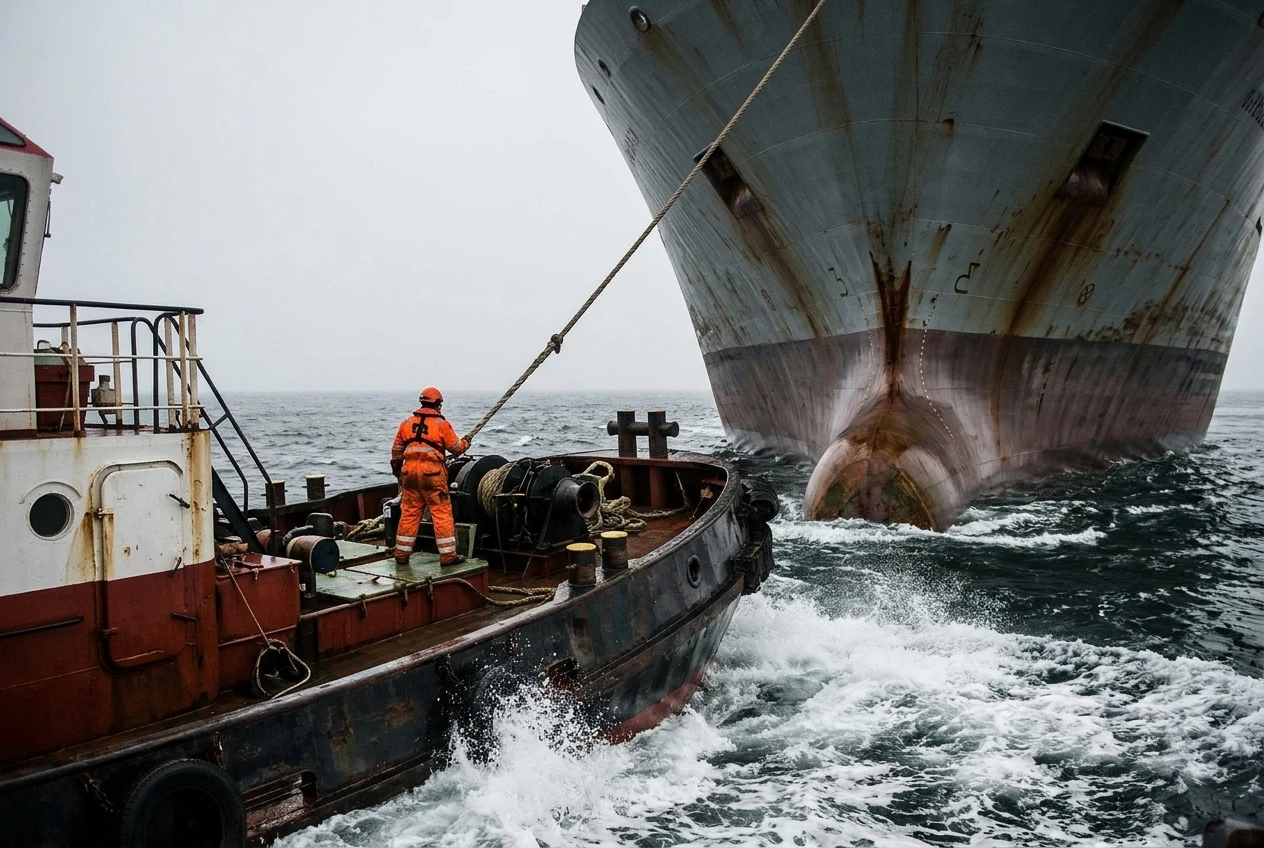
The third is ship-tug interaction. A tug close to a moving ship is affected by the ship’s flow, and a poorly positioned tug can be drawn in or pulled over. Girting, where a tug is dragged sideways by its own towline, is a well-known hazard caught more by position and awareness than by rules. Learning to read how each ship and each tug behave together takes hours of close-quarters work.
Operators usually bring tug crew along step by step: observing, then assisting, then taking the controls under supervision. The path varies by company, so ask what it looks like at yours.
Apprenticeship and supervised trips: how local knowledge is actually built and signed off
Many pilotage authorities structure the local stage as an apprenticeship or trainee period. The details differ, but the pattern is common: you ride with licensed pilots, observe, then begin handling movements under supervision, with the range of ships and conditions you are cleared for expanding gradually. Authorities typically require a set number of supervised trips or a minimum training period before assessing you, and examiners or senior pilots sign off your progress.
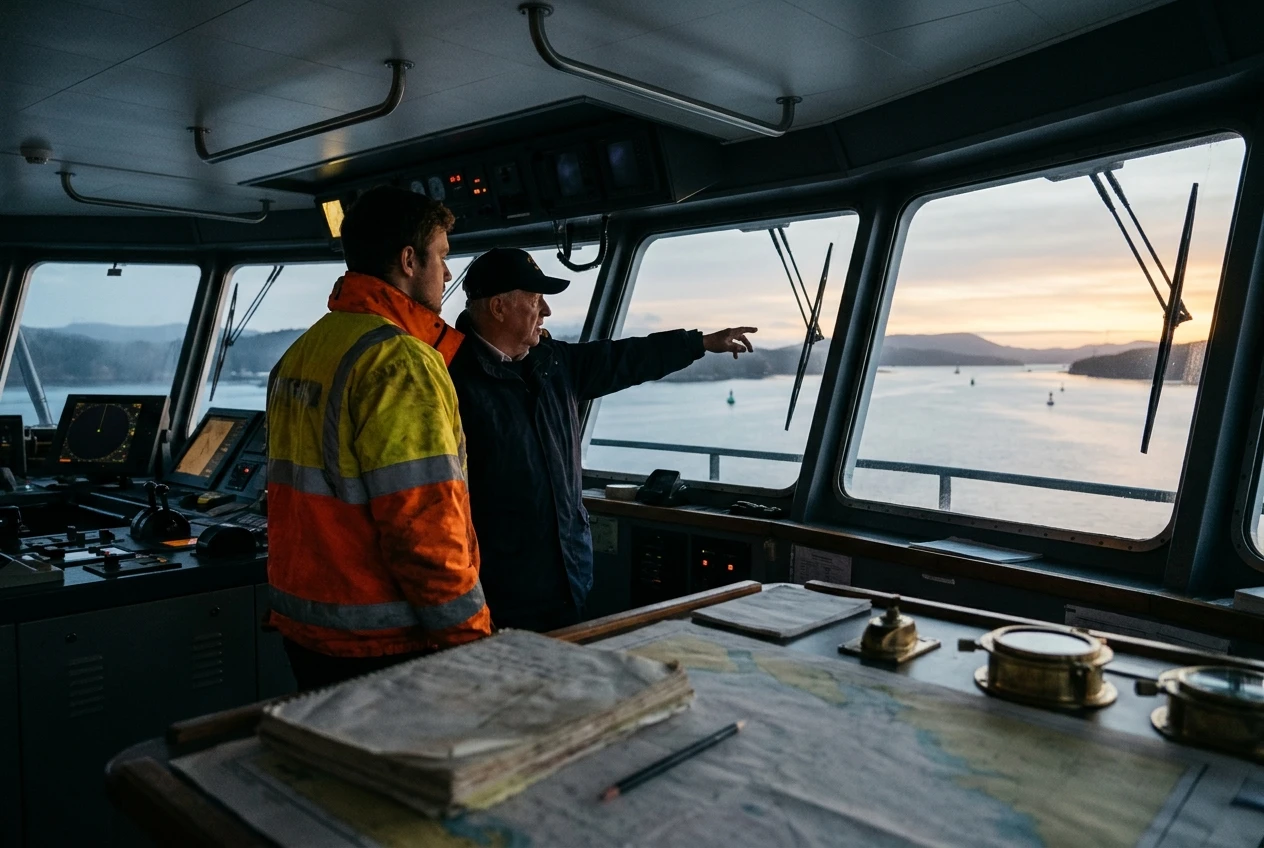
You may also see staged licenses, where you can move smaller or simpler vessels before larger ones, or move vessels in daylight before night. Each step is assessed against that port’s own requirements.
Some practical points follow from this:
- Keep a log. Record each trip, the conditions, the ship, the tide, and what you learned. Even if the authority keeps its own records, your notes help you notice patterns and give you something to review before assessments.
- Ask why, not just what. The pilot who says “swing early here” has a reason. Asking for it turns a single instruction into a rule you can apply elsewhere in the port.
- Expect the timeline to be set by the authority. The licensing body sets hours and trips, and you cannot compress them by going fast. You can use them well.
- Expect to be assessed on judgement. Examiners look for whether you recognize when a situation is outside your authorization and call for help, and whether you can complete the maneuver.
For tug masters, the same logic applies, though sign-off may come from the operator and the national administration, not a port authority. Ask who signs off, and on what.
Using a simulator to prepare for a port without mistaking it for the port
Simulators are valuable for pilots and tug crew. You can rehearse emergencies, practice unfamiliar maneuvers, and repeat difficult approaches without risk. Many authorities use them in training and assessment, and some use port-specific models built from local survey data.
A simulator is a model, though, and a model is only as good as its data. The model may simplify currents. Bank effect and interaction may be approximated. Local traffic and the port’s human habits are usually missing altogether. Practicing in a simulator improves your handling, but it doesn’t make you a local.
Use one this way:
- Rehearse the approach to a berth before you ride the real thing, so the geography is familiar.
- Test what happens when things go wrong: engine failure, steering failure, a tug that does not arrive.
- After a real trip, return to the simulator and recreate what surprised you, then compare the model with what you saw.
- Note where the simulation differs from the harbor, and treat those differences as the things to watch for.
Before you pay for a simulator course, it is worth knowing how to judge one. Our guide on judging a maritime simulator covers what to check.
Planning your path: questions to ask a pilotage authority or tug operator before you commit
Before you spend money on courses or years on a plan, ask the people who will license or employ you. These questions get useful answers.
For a pilotage authority:
- What certificate and minimum sea service do you require for entry?
- How do you select candidates, and how often do you recruit?
- What does the training period involve, and how long does it usually take?
- How many supervised trips are required, and what vessel types and conditions are covered?
- Who assesses me, and what happens if I do not pass a stage?
- Are there medical, age or residency requirements specific to this port?
- Is there a path to larger vessels or additional areas, and what does it require?
For a tug operator:
- What certificates do you require for deckhands, mates, and masters on your tugs?
- How do you train people in towing and escort work, and who signs off each stage?
- What kinds of operations will I be doing: harbor assist, escort, coastal towing?
- How much of the training is on the job, and does the company pay for any of it?
- What is the usual progression from deck to mate to master on your fleet?
Write down the answers and compare them across ports and operators. The training requirements for a maritime pilot or tug master can differ more between two harbors than between two countries, so an answer for one place tells you little about another. For general planning, our advice on choosing a maritime training academy may help you decide where to take formal courses.
Check which certificates and local requirements apply to the port you’re aiming for, then read our guide to judging a maritime simulator before you pay for a course.
This article was created with AI assistance and reviewed by a human editor.
Disclosure: This post contains Amazon affiliate links. If you buy through them, we may earn a small commission at no extra cost to you.